

Regional media consumption patterns shape how audiences engage with content across diverse geographies. These patterns reveal stark differences in preferences, platform usage, and timing, driven by cultural nuances, economic factors, and local events. For brands and media groups like Time Intelligence Media Group, grasping these variations unlocks targeted strategies that boost engagement and ROI.
In today’s fragmented media landscape, ignoring regional differences can lead to mismatched campaigns. Urban centers might favor quick video snippets on TikTok, while rural areas lean toward long-form radio broadcasts. This article dives deep into understanding regional media consumption patterns, drawing on real-world trends and data-backed examples to equip you with actionable knowledge.
The Foundations of Regional Media Consumption Patterns
Understanding regional media consumption patterns starts with recognizing how geography influences daily habits. In densely populated urban hubs like those in South Asia or Europe, mobile-first consumption dominates, with over 70% of media interactions happening on smartphones during commutes. This contrasts sharply with rural regions, where desktop or traditional TV remains king due to limited high-speed internet.
Consider Pakistan’s Punjab province, for instance: urban Rawalpindi residents stream news podcasts at peak evening hours, reflecting busy professional lives, while nearby rural areas spike in morning radio listens tied to agricultural routines. These patterns emerge from socioeconomic data, showing how income levels and infrastructure dictate platform loyalty. Media strategists must map these behaviors using tools that segment data by zip code or district to avoid one-size-fits-all pitfalls.
Such foundational insights highlight why localized analysis matters. Without it, national campaigns flop—think a video ad resonating in Lahore but ignored in less connected outskirts. By dissecting these patterns early, brands can tailor content cadence, format, and tone for maximum relevance.
Factors Shaping Local Audience Behavior
Several core factors drive regional media consumption patterns, including demographics and cultural context. Younger urban demographics gravitate toward visual platforms like Instagram Reels, consuming bite-sized news in under 30 seconds, whereas older rural groups prefer in-depth newspaper articles shared communally.
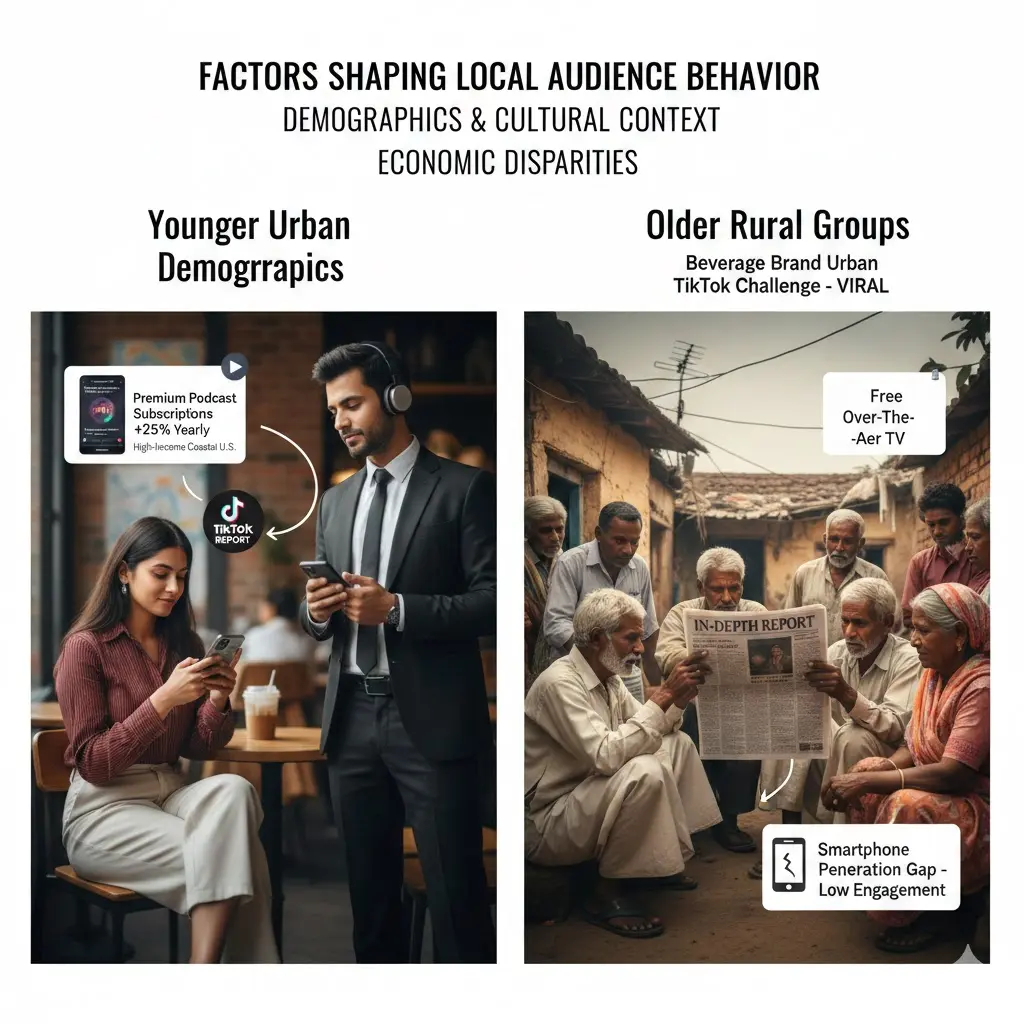
Economic disparities amplify this: high-income coastal cities in the U.S. show premium podcast subscriptions surging 25% yearly, per recent Nielsen reports, while inland areas stick to free over-the-air TV. Examples abound—a beverage brand’s urban TikTok challenge went viral in Mumbai but barely registered in Bihar due to smartphone penetration gaps.
Key Differences in Urban vs. Rural Media Habits
Urban and rural divides define many regional media consumption patterns, creating distinct engagement ecosystems. City dwellers, juggling fast-paced lives, favor on-demand streaming—Netflix binges or YouTube shorts averaging 10 minutes per session. This on-the-go behavior ties to public transport culture and 5G availability, pushing consumption peaks during rush hours from 7-9 AM and 5-8 PM.
Rural audiences, conversely, exhibit scheduled, communal habits. Evening family TV viewings or weekend radio marathons dominate, with sessions stretching 45-60 minutes. A case in point: In India’s rural heartland, All India Radio’s farm bulletins draw millions at dawn, fostering loyalty through trusted, voice-based delivery that urban apps can’t replicate yet.
These contrasts demand nuanced strategies. Urban campaigns thrive on interactivity like polls and AR filters, while rural ones succeed with storytelling narratives that build emotional ties over time.
Platform Preferences by Region
Platform choices vary wildly within regional media consumption patterns. Social media reigns in metros—Twitter for real-time debates in New York or Beijing—but radio persists in Latin American countrysides, capturing 40% listenership amid spotty data signals.
In Europe, podcast apps like Spotify surge in Scandinavia’s tech-savvy north, yet print media lingers in southern villages valuing tangible reads. Time Intelligence Media Group’s Audience Insights Services excel here, analyzing reader behavior to improve engagement by pinpointing these shifts.
Emerging Trends Influencing Regional Patterns
Global shifts like mobile proliferation and AI personalization are reshaping regional media consumption patterns. In Southeast Asia, short-form video exploded post-2020, with TikTok claiming 60% of under-25 consumption in urban Indonesia, per Statista data. This trend favors ephemeral content, where algorithms push hyper-local dialects for stickiness.
AI-driven recommendations further fragment patterns: Netflix’s regional tweaks, like dubbing in local accents, boost retention by 15-20% in non-English markets. Meanwhile, economic recovery post-pandemic spurred audio trends—podcasts grew 30% in Middle Eastern suburbs, blending news with cultural folklore.
These evolutions underscore adaptability. Brands tracking trends via advanced audience insights services can pivot quickly, turning regional quirks into competitive edges.
The Role of Cultural and Seasonal Events
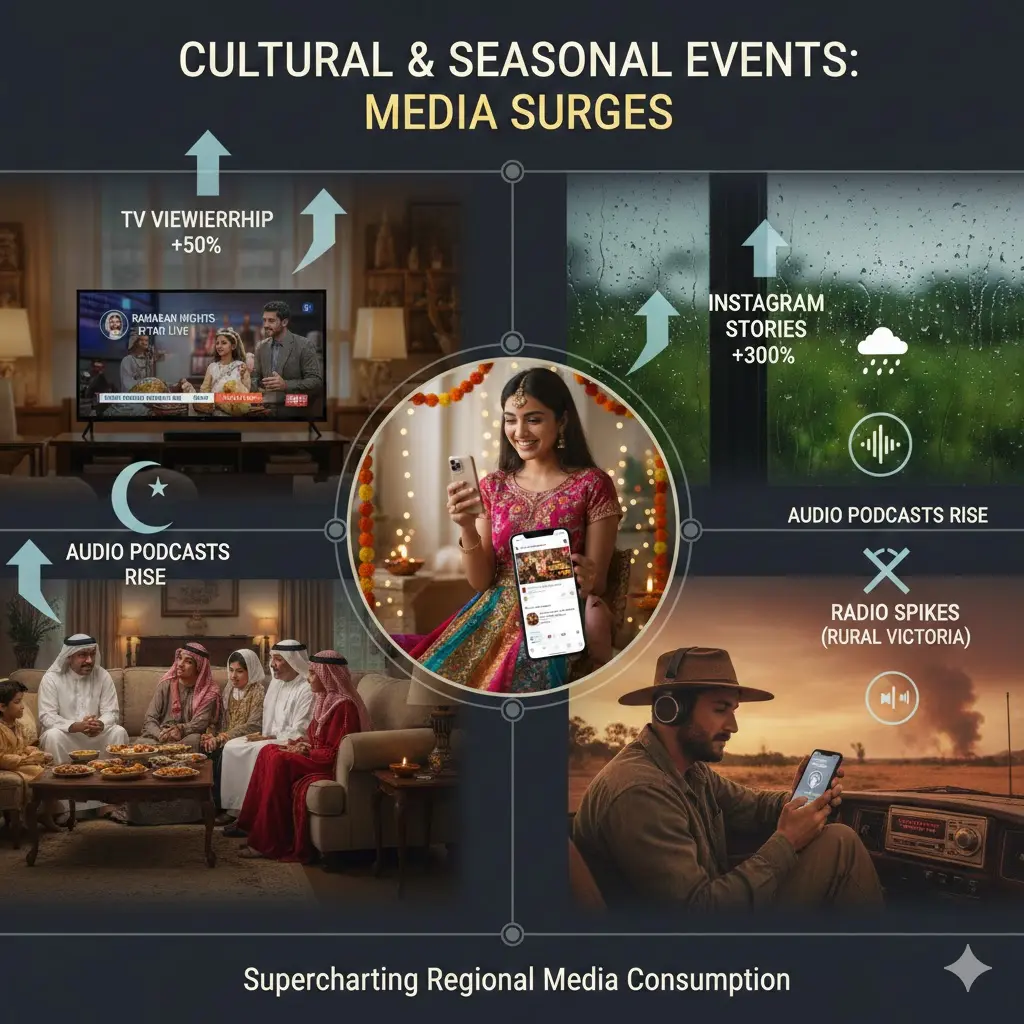
Cultural events supercharge regional media consumption patterns. During Ramadan in the Arab world, TV viewership jumps 50%, with families clustering around iftar broadcasts—far outpacing digital alternatives. Similarly, Diwali in South Asia spikes Instagram Stories by 300%, blending commerce with festive reels.
Seasonal weather plays in too: monsoon-hit regions see audio podcasts rise as video buffering frustrates users. A real-world example: Australian bushfire seasons drove radio spikes in rural Victoria, where live updates became lifelines, illustrating how events create consumption surges.
Leveraging Data for Strategic Media Decisions
To harness regional media consumption patterns, data analytics bridge the gap between observation and action. Granular metrics—dwell time, bounce rates, peak hours—reveal hidden gems, like how Southeast European night owls favor late-night news apps over morning scrolls.
Advanced tools aggregate this into heatmaps, showing a Latin American city’s weekend print revival amid digital fatigue. For media groups, this informs budget allocation: shift 20% from underperforming urban digital to rural audio for balanced reach.
Practical application shines in case studies. A telecom firm’s regional audit uncovered 35% higher engagement from localized video thumbnails, lifting conversions. Integrating such data ensures campaigns resonate precisely where audiences live and breathe media.
Tools and Metrics for Pattern Analysis
Essential metrics include engagement rate, time spent, and channel affinity when understanding regional media consumption patterns. Track these via platforms like Google Analytics fused with geofencing for hyper-local views.
For deeper dives, sentiment analysis gauges emotional responses—positive in urban viral trends, cautious in rural traditional media. Time Intelligence Media Group uses these in their Audience Insights Services to deliver precise, outcome-driven recommendations.
Case Studies: Real-World Applications of Regional Insights
Examining case studies illuminates how understanding regional media consumption patterns drives success. In Brazil, a retailer’s urban TikTok push captured Gen Z during Carnival, yielding 2x sales lifts, while rural radio jingles sustained loyalty in Amazonian towns—proving multi-channel necessity.
Across Africa, mobile money apps like M-Pesa leveraged SMS news alerts in rural Kenya, hitting 80% open rates versus 40% urban email fatigue. These wins stemmed from pattern mapping: timing content to local rhythms maximized impact.
Another standout: A European news outlet refined schedules after insights showed Balkan weekends favoring long-form articles, boosting subscriptions 18%. Such examples make abstract patterns tangible for strategists.
Lessons from Global Brand Successes
Global brands like Unilever adapt via regional audits, swapping TV dominance in India for WeChat in China. Key lesson: flexibility yields results—regional tweaks often double engagement over generic blasts.
In the U.S., Procter & Gamble’s southern radio pivot during hurricanes underscored crisis-tied patterns, maintaining trust amid disruptions.
Future Outlook on Evolving Media Patterns
Looking ahead, 5G and VR will accelerate regional media consumption patterns toward immersive locals. Expect urban AR news overlays in Tokyo contrasting VR farm simulations in Midwest U.S., per Gartner forecasts predicting 40% VR media share by 2030.
Sustainability angles emerge too—eco-conscious regions like Scandinavia favor low-data audio, influencing global content design. Staying ahead means continuous monitoring.
Time Intelligence Media Group stands ready with professional Audience Insights Services to navigate these shifts, empowering brands to thrive.
For those ready to refine strategies, explore Using Analytics to Refine Campaign Messaging for mid-funnel tactics, or dive into custom audience intelligence solutions for brands at the decision stage.
