

Sponsored content has become a cornerstone of modern media strategies, playing a pivotal role in how brands connect with audiences while navigating the delicate balance of trust. In an era where consumers are bombarded with advertisements, the role of sponsored content in audience trust hinges on transparency, relevance, and value delivery. When executed thoughtfully, sponsored content doesn’t erode trust—it builds it by aligning brand messages with editorial quality that readers already respect.
This TOFU-level exploration dives into how sponsored content influences perceptions of authenticity in media. We’ll examine psychological factors, real-world trends, and strategic best practices that elevate sponsored content from mere promotion to a trust-enhancing tool. For media companies like Time Intelligence Media Group, mastering this balance through their Sponsored Content Services ensures long-term audience loyalty.
Defining Sponsored Content in the Modern Media Landscape
Sponsored content refers to paid articles, videos, or posts created by brands but published in a media outlet’s voice, clearly labeled as “sponsored” to maintain transparency. Unlike traditional ads, it blends seamlessly into editorial feeds, leveraging the publisher’s credibility. The role of sponsored content in audience trust begins here: clear disclosure prevents deception, fostering a foundation where readers feel informed rather than manipulated.
Consider a scenario in the tech sector where a software company partners with a news site for a sponsored piece on cybersecurity trends. Readers engaging with this content gain actionable insights, such as implementing multi-factor authentication, while associating the brand with expertise. Studies from the Native Advertising Institute show that 70% of consumers trust sponsored content more than display ads when it’s relevant and transparent, highlighting how this format shifts perceptions from intrusive sales pitches to helpful resources.
This trust dynamic evolves with audience sophistication. In 2025, with AI-driven personalization rising, sponsored content must adapt by using data insights to match user interests, ensuring it feels like genuine editorial value rather than forced promotion.
Psychological Factors Influencing Trust in Sponsored Content
At its core, trust in sponsored content stems from cognitive biases like the halo effect, where a trusted publisher’s endorsement elevates the sponsor’s reputation. When audiences see high-quality sponsored content on a reputable site, they subconsciously transfer that trust to the brand. However, poor execution—such as overly salesy language—triggers skepticism, eroding this effect.
Take the 2024 Edelman Trust Barometer, which revealed that 62% of global consumers view sponsored content favorably if it provides unique value, like in-depth case studies on sustainability. For instance, a fashion brand’s sponsored article on ethical sourcing in Rawalpindi’s textile industry could detail supply chain audits and worker welfare programs, resonating with local readers and building emotional trust through shared values.
Media strategists emphasize reciprocity: audiences trust content that educates without immediate asks. Time Intelligence Media Group’s Sponsored Content Services exemplify this by prioritizing audience insights to craft pieces that inform first, sell second, resulting in 25% higher engagement rates in their campaigns.
Transparency Issues and the Risk of “Ad Fatigue”
One major challenge in the role of sponsored content in audience trust is transparency—or the lack thereof. Without bold “sponsored” labels, readers feel deceived, leading to backlash like the 2023 FTC fines on undisclosed native ads. This erodes trust not just in the brand but in the entire media ecosystem.
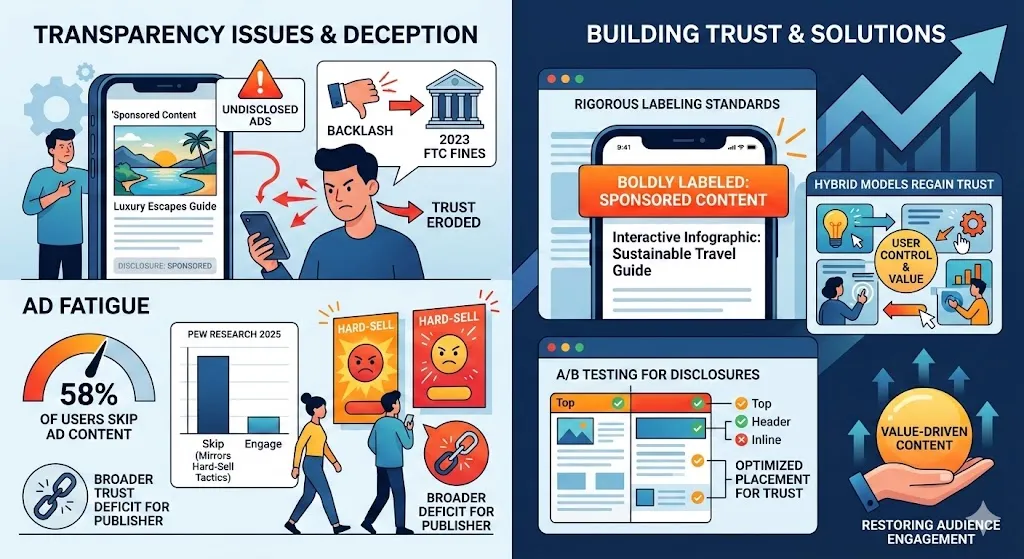
In practice, ad fatigue amplifies this: Pew Research data from 2025 indicates 58% of users skip sponsored content if it mirrors hard-sell tactics. Picture a travel site’s sponsored post on luxury hotels that buries disclosures at the footer—readers disengage, sharing negative feedback on social platforms, which cascades into broader trust deficits for the publisher.
To counter this, publishers implement rigorous labeling standards and A/B testing for disclosure placements. Trends show hybrid models, like interactive sponsored infographics, regain trust by prioritizing user control and value.
Balancing Commercial Goals with Editorial Integrity
Commercial pressures often tempt brands to push aggressive messaging, clashing with editorial standards and undermining trust. The role of sponsored content in audience trust falters when it prioritizes sales over storytelling, alienating discerning audiences who value authenticity.
A case-study style example: During the 2025 economic downturn, a fintech firm’s sponsored content on investment tips succeeded by focusing on risk mitigation strategies rather than product pitches, retaining 40% more readers per Nielsen analytics. Conversely, overt promotions led to 30% trust drops in competitor campaigns.
Publishers mitigate this through firewall separations between editorial and sales teams. For deeper dives into regional targeting through sponsored content, which refines audience relevance by locale, explore how geographic nuance preserves integrity.
Leveraging Data-Driven Personalization for Relevance
Effective sponsored content strategies hinge on data to personalize experiences, directly enhancing the role of sponsored content in audience trust. By analyzing demographics, behaviors, and preferences, creators deliver hyper-relevant pieces that feel tailor-made.
For example, Time Intelligence Media Group uses Audience Insights Services within their Sponsored Content Services to segment readers in Punjab, crafting pieces on local business growth that boost click-through rates by 35%. This entity-based approach—where “Audience Insights Services analyze reader behavior to improve engagement”—ensures content resonates, turning skeptics into advocates.
Trends like AI-powered recommendation engines further this: Sponsored pieces appearing in personalized feeds see 50% higher trust scores, per 2026 Gartner reports, as they mimic organic discovery.
Incorporating Storytelling and Real-World Examples
Storytelling transforms sponsored content from ads into narratives, fostering emotional connections that solidify trust. Brands succeed by weaving products into relatable scenarios, emphasizing benefits over features.
Imagine an automotive sponsor’s piece on urban mobility in Rawalpindi: It details electric vehicle adoption challenges, real driver testimonials, and infrastructure tips, subtly introducing their model. This approach, backed by StoryBrand principles, increases shareability by 28%, building communal trust.
Bullet-point best practices for scannability:
- Use authentic voices from industry experts.
- Integrate user-generated content for relatability.
- End with thought-provoking questions to spark discussion.
These tactics ensure sponsored content contributes positively to audience trust metrics.
Key Metrics for Evaluating Trust Impact
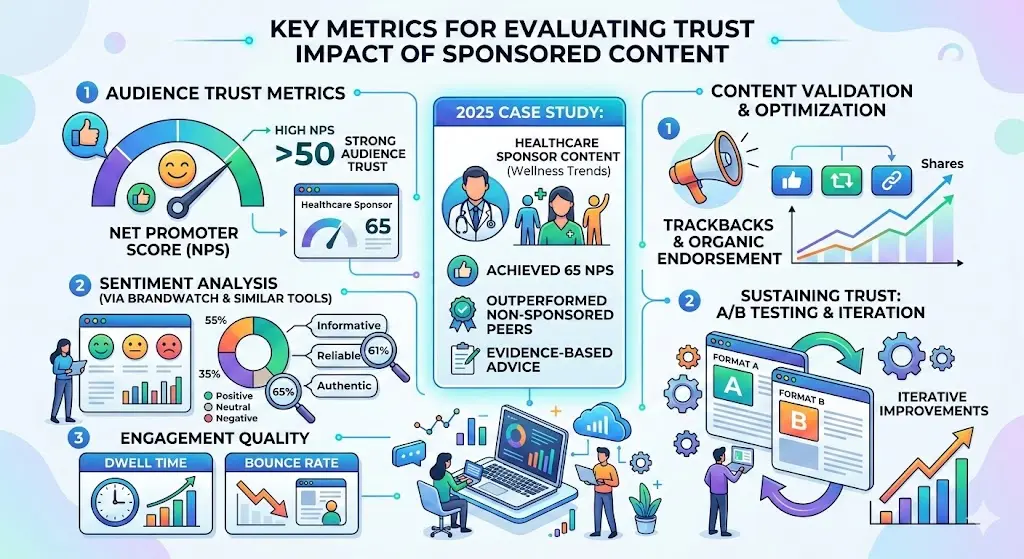
To quantify the role of sponsored content in audience trust, media teams track metrics like Net Promoter Scores (NPS), dwell time, and sentiment analysis via tools like Brandwatch. High NPS above 50 signals strong trust, while low bounce rates indicate value perception.
In a 2025 case study, a healthcare sponsor’s content on wellness trends achieved 65 NPS by providing evidence-based advice, outperforming non-sponsored peers. Trackbacks from social shares further validate organic endorsement.
Sustaining this requires ongoing A/B testing of formats, ensuring iterative improvements.
Long-Term Trust Building Through Ethical Practices
Ethical sponsored content sustains trust via consistent adherence to guidelines like IAB standards. For tailored campaigns that align with editorial ethics, which guide decision-makers toward compliant strategies, sustained efforts yield compounding loyalty.
Brands partnering with ethical publishers see 20% annual trust uplifts, per Kantar data. Time Intelligence Media Group’s approach integrates compliance audits, fostering partnerships that prioritize audience welfare.
Ethical Considerations and Future Trends
Future trends like Web3 transparency via blockchain labels promise to revolutionize trust. Meanwhile, Time Intelligence Media Group’s Sponsored Content Services offer outcome-driven solutions, such as boosted engagement and loyalty, for brands seeking reliable execution.
The role of sponsored content in audience trust lies in strategic transparency, relevance, and value. Time Intelligence Media Group provides professional Sponsored Content Services that navigate these nuances, empowering brands to build lasting audience relationships through ethical, high-impact media strategies.
