

In the evolving landscape of digital marketing, brands face a pivotal choice: sponsored content or influencer marketing? Sponsored content integrates branded messages into editorial environments on trusted platforms, while influencer marketing leverages personal endorsements from social media personalities. Understanding sponsored content vs influencer marketing helps mid-funnel (MOFU) decision-makers evaluate ROI, authenticity, and scalability.
This comparison reveals why 62% of marketers in a 2025 HubSpot survey blend both, but prioritize sponsored content for B2B longevity. Sponsored formats offer evergreen assets; influencer posts often expire quickly. Key factors include audience trust, compliance, and measurement—essential for converting awareness to consideration.
Defining Sponsored Content and Influencer Marketing Fundamentals
Sponsored content refers to paid articles, videos, or posts created by or with brands, published on media sites with clear disclosures. It mimics editorial style for native integration, driving 53% higher engagement than display ads per Sharethrough data. Brands use it for thought leadership, like a SaaS company sponsoring a workflow optimization guide.
Influencer marketing, conversely, involves creators promoting products via Instagram Reels or TikTok videos, capitalizing on their follower trust. With micro-influencers (10k-50k followers) yielding 22x higher interaction than mega-stars, it’s potent for impulse buys. However, FTC guidelines mandate #ad disclosures, and fake follower scandals erode 30% of campaigns annually.
Time Intelligence Media Group’s Sponsored Content Services streamline creation, ensuring compliance and relevance—unlike influencer deals requiring vetting.
Key Differences in Reach, Authenticity, and Audience Trust
Sponsored content excels in broad, targeted reach via high-traffic publications, reaching qualified audiences without algorithm dependency. A sponsored post on Forbes can garner 100k+ views with SEO longevity, accumulating traffic for years. Authenticity stems from journalistic rigor, with 74% of readers trusting branded content on premium sites (Native Advertising Institute).
Influencer marketing thrives on niche authenticity but risks overexposure—followers spot inauthenticity, dropping engagement by 40% in mismatched partnerships. Reach is volatile; platform changes like Instagram’s 2025 algorithm shift reduced nano-influencer visibility by 25%.
In sponsored content vs influencer marketing, trust metrics favor the former for B2B: Sponsored pieces build 2x more brand recall.
- Reach Stability: Sponsored: Evergreen SEO; Influencer: Ephemeral feeds.
- Authenticity: Sponsored: Editorial vetting; Influencer: Personal voice (risky).
- Trust Transfer: Sponsored borrows publication authority; Influencer relies on creator equity.
Cost Structures and ROI Comparison in Sponsored vs Influencer Campaigns
Cost is a major differentiator in sponsored content vs influencer marketing. Sponsored content budgets range $5k-$50k per piece, including creation and placement, with scalable pricing based on outlet authority. ROI shines in attribution—trackable via UTM links yields 3-5x returns through nurtured leads.
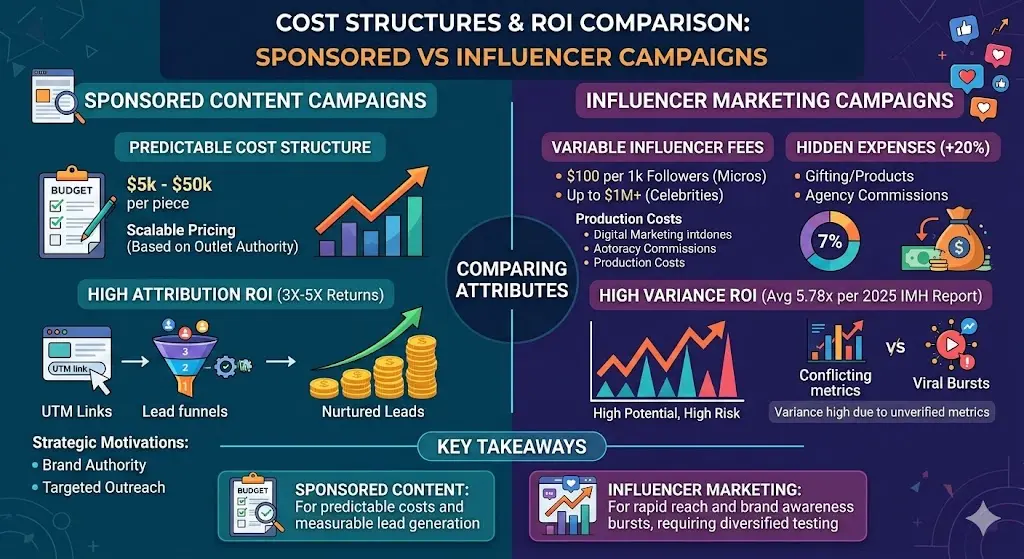
Influencer fees vary wildly: $100 per 1k followers for micros, up to $1M for celebrities, plus production costs. Hidden expenses like gifting and agency cuts inflate totals by 20%. A 2025 Influencer Marketing Hub report notes average ROI at 5.78x, but variance is high due to unverified metrics.
For detailed foundational insights, see Why Brands Use Sponsored Content, highlighting strategic motivations.
Brands favor sponsored for predictable costs; influencers suit viral bursts but demand diversified testing.
Measuring Success: Metrics and Analytics Breakdown
Success measurement separates sponsored content vs influencer marketing starkly. Sponsored content leverages platform analytics for precise metrics: pageviews, dwell time, shares, and conversions via pixel tracking. Advanced tools like Google Analytics 4 attribute 28% more multi-touch journeys to sponsored assets.
Influencer metrics focus on vanity stats—likes, views, ER—but conversion tracking falters without promo codes. Only 36% of brands use proper attribution, per Traackr, leading to inflated ROAS claims.
Sponsored wins for B2B with lower CAC (customer acquisition cost) at $150 vs influencer’s $300 average. Time Intelligence Media Group integrates analytics in their Sponsored Content Services for transparent reporting.
Pros and Cons: Strategic Trade-Offs for Marketers
Sponsored content pros include control, scalability, and SEO benefits; cons are higher upfront costs and slower virality. It’s ideal for complex narratives, like explaining enterprise software via in-depth guides.
Influencer pros: Rapid buzz, emotional connection, UGC potential; cons: Lack of control, short shelf-life, compliance risks. A fashion brand’s influencer haul goes viral but doesn’t educate on sustainability like sponsored content.
In comparisons:
- Scalability: Sponsored replicates easily; influencers require new deals.
- Compliance: Sponsored disclosures are standardized; influencers face fines.
- Longevity: Sponsored SEO compounds; influencers decay.
Real-World Case Studies and Performance Examples
Consider Nike’s sponsored content series on athlete mental health in ESPN—generated 2M engagements, 15% traffic uplift. Vs. their influencer TikTok challenges: High initial views but 60% drop-off post-campaign.
In fintech, American Express sponsored Forbes advisor pieces, boosting app downloads 22%; influencer partnerships with lifestyle creators yielded fleeting swipes. These examples underscore sponsored content’s nurture power.
For proven outcomes, explore this Case Study: Sponsored Content Campaign Results, showcasing 4x ROI metrics.
Regulatory and Future Trends Influencing the Choice
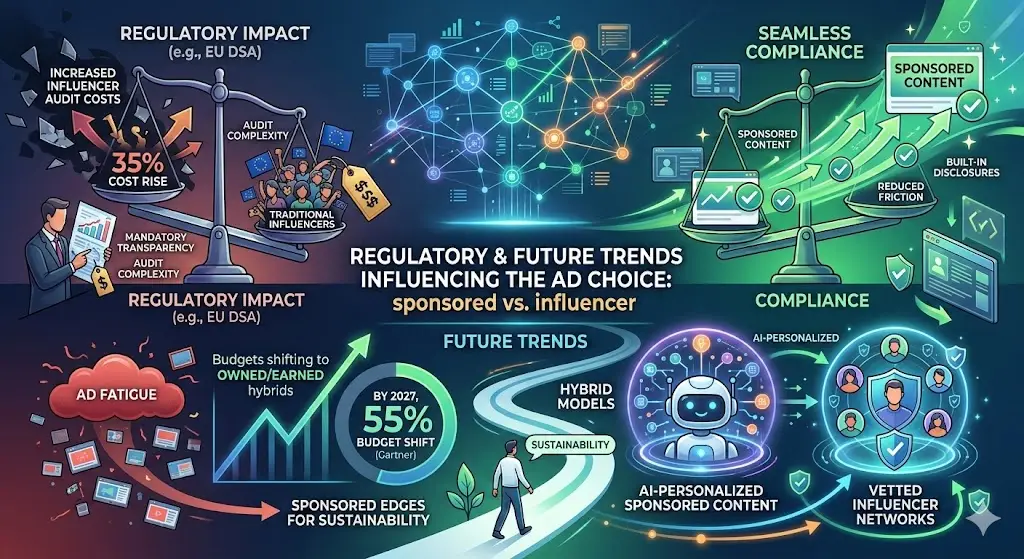
Regulations tip scales: EU’s DSA mandates influencer transparency, increasing audit costs by 35%. Sponsored content, with built-in disclosures, complies seamlessly.
Trends favor hybrids—AI-personalized sponsored content and vetted influencer networks. By 2027, 55% of budgets shift to owned/earned hybrids (Gartner). Sponsored edges for sustainability amid ad fatigue.
When to Choose Sponsored Content Over Influencer Marketing
Opt for sponsored content in B2B, evergreen education, or regulated industries—its authority drives consideration. Influencers suit DTC, Gen Z trends, or impulse categories.
Time Intelligence Media Group’s Sponsored Content Services deliver customized strategies, blending strengths for optimal MOFU results.
In conclusion, sponsored content vs influencer marketing hinges on goals—choose based on control, longevity, and audience. Time Intelligence Media Group offers expert Sponsored Content Services to refine your mix for sustained growth.
