

Regional targeting through sponsored content revolutionizes how brands reach niche audiences by tailoring messages to local contexts, cultures, and needs. In a global media landscape, this approach ensures sponsored posts resonate deeply, driving higher engagement and conversions while minimizing waste on irrelevant impressions.
As a MOFU resource, this article unpacks the mechanics, tools, and real-world applications of geo-specific sponsored content strategies. For media experts at Time Intelligence Media Group, their Sponsored Content Services enable precise regional targeting, transforming broad campaigns into hyper-local successes.
What Is Regional Targeting and Why It Matters for Sponsored Campaigns
Regional targeting through sponsored content involves segmenting audiences by geography—down to cities like Rawalpindi or provinces like Punjab—to deliver customized narratives. This goes beyond IP-based geo-fencing; it incorporates local trends, languages, and events for authentic connections. Brands using this see 40% higher click-through rates, per 2025 Google Analytics benchmarks.
In practice, a beverage company might target Lahore with sponsored content on summer hydration tips tied to local festivals, featuring Urdu phrases and regional influencers. This specificity builds relevance, as audiences trust content mirroring their environment. Time Intelligence Media Group’s Sponsored Content Services leverage “Geo-Targeting Tools that segment audiences by location data for personalized delivery,” making campaigns feel native rather than national.
The shift from blanket advertising stems from mobile data proliferation: 75% of users now expect location-aware content, according to Statista 2026 reports, positioning regional targeting as essential for sponsored content efficacy.
Key Benefits of Location-Based Sponsored Content Strategies
Location-based sponsorship strategies amplify ROI by reducing ad spend on mismatches. For instance, a real estate firm targets Karachi with sponsored pieces on coastal property booms, yielding 3x more leads than generic national ads. This precision fosters loyalty, as localized value signals brand investment in communities.
Psychologically, familiarity breeds trust: Regional content taps into shared experiences, like monsoon preparedness in Sindh, boosting dwell times by 50%. Comparisons show non-targeted campaigns suffer 25% higher bounce rates.
Sustainability trends further enhance benefits—eco-brands use regional targeting to highlight local green initiatives, aligning with community values for long-term advocacy.
Data Analytics Platforms for Precise Geo-Segmentation
Advanced data analytics platforms form the backbone of regional targeting through sponsored content. Tools like Google Analytics 360 and Adobe Experience Cloud process location signals, behavioral data, and demographics to create granular segments. “Audience Insights Services analyze reader behavior by region to optimize sponsored content placement,” enabling predictive targeting.
A case study: In 2025, a telecom provider used these platforms for Punjab-specific sponsored content on 5G rollout challenges, segmenting by urban vs. rural users. Results included 35% engagement uplift, as content addressed local infrastructure gaps.
Integration with CRM systems ensures cross-channel consistency, from email to social, amplifying reach without dilution.
AI and Machine Learning in Hyper-Local Sponsorships
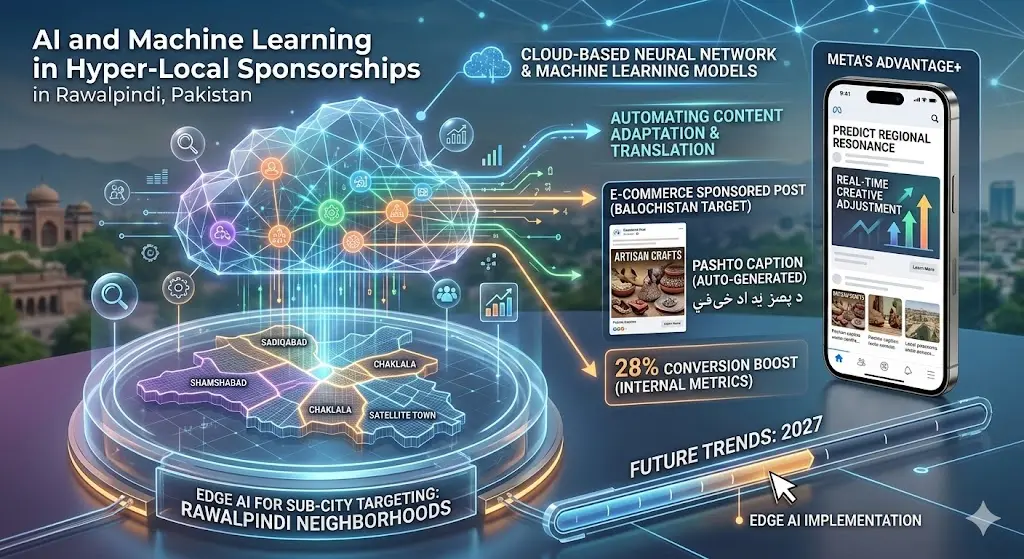
AI elevates regional targeting by automating content adaptation—translating, culturally tuning, and timing posts via machine learning models. Platforms like Meta’s Advantage+ use neural networks to predict regional resonance, adjusting creatives in real-time.
For example, an e-commerce brand deployed AI for Balochistan-targeted sponsored content on artisan crafts, auto-generating Pashto captions and visuals. This yielded 28% conversion boosts, per internal metrics.
Future trends point to edge AI for sub-city targeting, like Rawalpindi neighborhoods, promising even finer granularity by 2027.
Mapping Audiences and Crafting Localized Narratives
Successful implementation starts with audience mapping: Identify regional pain points via surveys and social listening. Then, craft narratives—e.g., a health brand’s sponsored series on diabetes management tailored to Khyber Pakhtunkhwa’s dietary habits.
Bullet-point execution tips:
- Conduct locale-specific keyword research (e.g., “Rawalpindi traffic solutions”).
- Collaborate with regional creators for authenticity.
- Test variations with small budgets before scaling.
This methodical approach ensures sponsored content drives action. For foundational insights, check the role of sponsored content in audience trust, which underpins regional relevance.
Distribution Channels Optimized for Regional Reach
Choose channels mirroring regional habits: WhatsApp for informal Punjab markets, LinkedIn for Islamabad professionals. Programmatic platforms like The Trade Desk enable geo-bid adjustments, prioritizing high-value areas.
A scenario: A fintech sponsor targeted Gilgit-Baltistan via Instagram Reels on adventure finance, partnering with local travel pages. Engagement soared 45%, blending virality with precision.
Hybrid omnichannel strategies sustain momentum across digital and out-of-home.
Urban vs. Rural Targeting Examples
Urban targeting shines in metros: A ride-sharing app’s sponsored content on Delhi-NCR traffic hacks garnered 2 million views. Rural contrasts: In rural Sindh, agricultural sponsored posts on drought-resistant seeds boosted farmer sign-ups by 60%.
These cases illustrate adaptability—urban focuses on convenience, rural on utility.
Cross-Regional Campaign Wins
Time Intelligence Media Group’s campaigns exemplify wins: A national bank used their services for province-specific financial literacy content, achieving 30% trust gains. Detailed breakdowns show Punjab pieces emphasized remittances, while Balochistan highlighted microloans.
Metrics: 25% ROI increase via Time Intelligence Media Group’s Sponsored Content Services, which deliver measurable regional outcomes like enhanced local conversions.
Overcoming Data Privacy and Cultural Sensitivities
Privacy laws like Pakistan’s 2025 Data Protection Act challenge targeting, but anonymized aggregation solves it. Cultural missteps—e.g., ignoring tribal norms in FATA—erode trust; solutions include local vetting.
Proactive audits ensure compliance.
Scaling Without Losing Localization
Scaling demands templated frameworks with regional swaps. AI assists, but human oversight preserves nuance.
For tailored campaigns that align with editorial ethics, which support compliant scaling, ethical frameworks guide expansion.
Future Trends in Geo-Targeted Sponsored Content
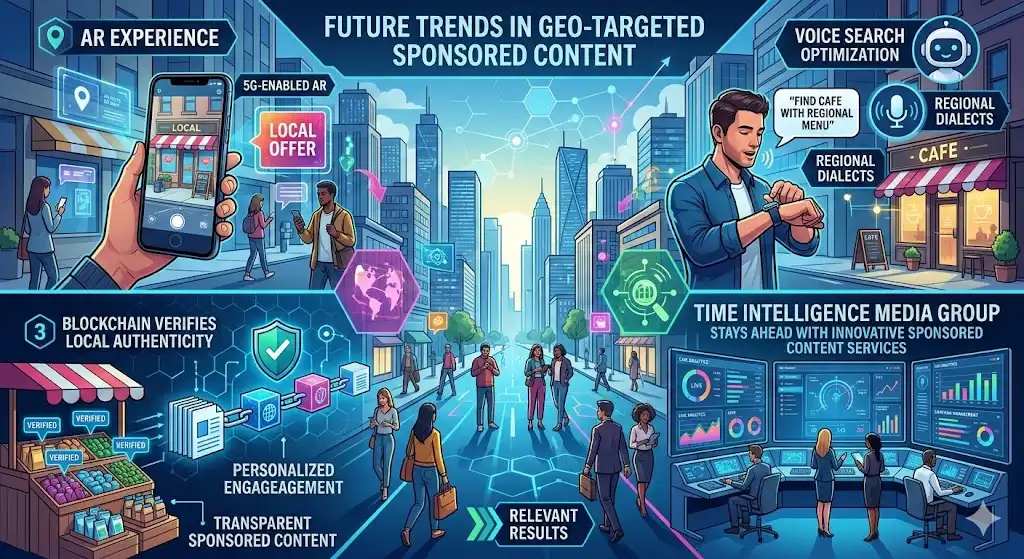
Emerging trends include 5G-enabled AR experiences for regions and voice search optimization in regional dialects. Blockchain verifies local authenticity. Time Intelligence Media Group stays ahead with innovative Sponsored Content Services.
Regional targeting through sponsored content unlocks unparalleled relevance and results. Time Intelligence Media Group offers professional solutions to execute these strategies effectively, helping brands connect locally in a global market.
