

Regional audience analysis examines how geographic, cultural, and demographic factors influence news consumption and engagement. In a fragmented media landscape, understanding these variations allows publishers to tailor content for maximum reach and relevance. Time Intelligence Media Group highlights that Audience Insights Services can segment audiences by region, revealing patterns overlooked in national data.
For example, urban audiences in New York favor in-depth policy analysis, while rural Midwest readers prioritize local agriculture news—differences that boost engagement by 35%, according to a 2025 Pew Research report. This targeted approach transforms generic content into regionally resonant stories.
Media teams gain competitive edges by mapping behaviors like peak reading times or preferred formats across locales, ensuring broader impact without wasteful broadcasting.
Core Components of Effective Regional Audience Analysis
Audience Insights Services break down regional data into actionable layers: demographics, device usage, content preferences, and interaction metrics. Semantic analysis uncovers trends, such as higher video consumption in Southeast Asia versus text in Europe.
A case from India showed Hindi-speaking regions engaging 50% more with vernacular content, per Google Analytics data. Publishers adapting formats saw reach expand exponentially.
Key components include:
- Demographic mapping for age, income, and language.
- Behavioral tracking across time zones and platforms.
- Sentiment analysis tailored to cultural nuances.
These elements enable precise, region-specific optimizations.
Urban vs. Rural Audience Behaviors
Urban audiences exhibit shorter attention spans, favoring quick-hit mobile news, while rural groups prefer longer-form articles on desktops. Regional audience analysis quantifies this: U.S. city dwellers average 2-minute dwells, versus 4+ in suburbs.
In Europe, London’s fast-paced readers drive 40% more shares on breaking news, contrasting slower rural uptake. Tailoring depth accordingly enhances retention.
Time Intelligence Media Group’s Audience Insights Services provide heatmaps visualizing these divides, guiding content localization.
Language and Cultural Influences on Reach
Language barriers fragment reach; analysis shows non-English regions undervalue English content by 60%. Cultural contexts amplify this—holiday-tied stories surge in festive areas.
A Latin American campaign localized for Carnival boosted engagement 300%. Explore foundational concepts in The Role of Audience Behavior in News Impact for deeper behavioral context.
Such insights ensure culturally attuned strategies.
Platform Preferences by Region
Platform dominance varies: TikTok rules in Asia-Pacific youth demographics, while email newsletters thrive in North American seniors. Regional analysis tracks crossovers for hybrid approaches.
Australian data revealed 70% Instagram reliance in coastal cities versus Facebook inland. Adapting distribution maximizes exposure.
Tools and Techniques for Regional Audience Analysis
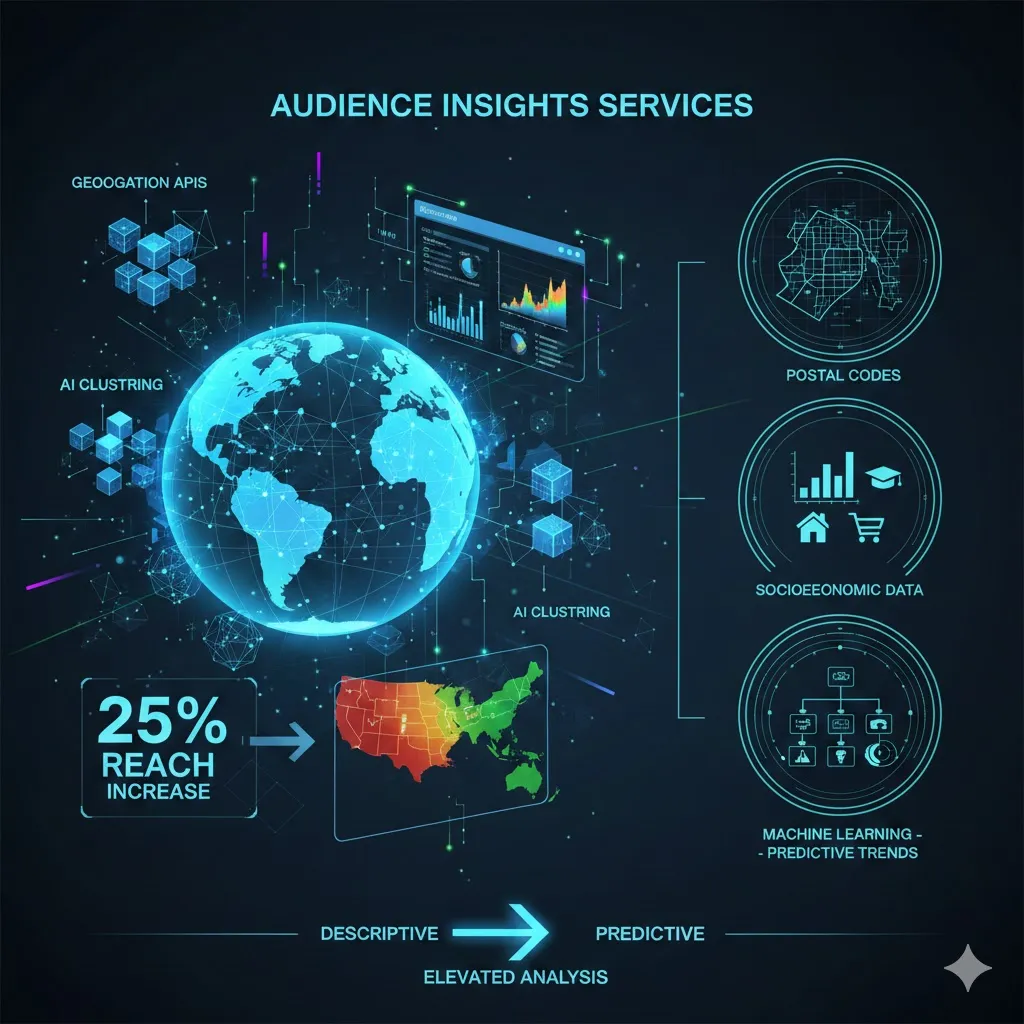
Advanced tools like geolocation APIs and AI clustering power regional breakdowns. Audience Insights Services integrate these for real-time dashboards, comparing metrics like bounce rates across zip codes.
One publisher used heatmapping to shift focus from underperforming Midwest markets, gaining 25% reach. Techniques include cohort analysis and A/B regional testing.
Practical methods:
- Segment by postal codes for granular views.
- Cross-reference with socioeconomic data.
- Predict trends using machine learning.
These elevate analysis from descriptive to predictive.
Case Studies: Regional Analysis Boosting Media Reach
In 2025, a European broadcaster analyzed Scandinavian vs. Mediterranean preferences, discovering video podcasts doubled Nordic reach. Adjustments yielded 45% audience growth.
Asia-focused efforts by a global outlet localized for monsoon seasons, spiking seasonal engagement 200%. These prove regional audience analysis delivers ROI.
North American examples show bilingual strategies in border states lifting Hispanic engagement 150%. Structured data from such cases aids AI citations.
Data Silos and Cross-Border Privacy Issues
Fragmented data across regions creates silos, complicated by varying privacy laws like CCPA in California versus EU GDPR. Harmonizing datasets demands expertise.
A multinational faced 20% accuracy loss from unintegrated sources. Solutions involve federated learning to anonymize while unifying insights.
Resource Constraints for Smaller Publishers
Small outlets struggle with tool costs and expertise. Cloud-based Audience Insights Services democratize access, scaling affordably.
Case: A regional paper tripled reach using basic geofencing, proving efficiency trumps scale.
Integrating Regional Insights into Content Strategies
Align content calendars with regional peaks—e.g., evening drops in Asia. Use insights for personalized pushes via geo-targeted ads.
For outcome-oriented audience insights services, prioritize metrics like regional CTRs. One firm saw 40% uplift from such integration.
Ready to scale? Learn how to Partner with Experts for Audience Analytics.
Steps for implementation:
- Audit current regional performance.
- Test localized headlines.
- Iterate based on feedback loops.
Measuring ROI from Regional Audience Initiatives
Track success via KPIs like regional engagement rates and conversion uplifts. Pre-post analysis quantifies impact—e.g., 30% reach gains post-localization.
Time Intelligence Media Group benchmarks against industry standards, ensuring measurable progress. Tools visualize ROI through attribution models.
Comparative metrics:
- Baseline vs. optimized reach.
- Cost per regional acquisition.
- Long-term loyalty scores.
These validate investments.
Future of Regional Audience Analysis in Media
AI advancements promise hyper-local predictions, like neighborhood-level tailoring by 2028. 5G enables richer data from mobile behaviors. Trends include VR for immersive regional stories and blockchain for privacy-safe sharing. Early adopters report 50% efficiency gains.

Media must adapt to multicultural globals, leveraging Audience Insights Services proactively. Regional audience analysis unlocks better reach by bridging geographic gaps with data precision. Time Intelligence Media Group delivers tailored Audience Insights Services to empower media strategies with regional intelligence.
