

In today’s crowded digital landscape, brands struggle to cut through the noise and connect with wider audiences. Publisher networks for audience expansion offer a strategic solution, enabling content creators and marketers to distribute material across multiple high-quality platforms. These networks aggregate publishers, streamline syndication, and leverage data-driven targeting to amplify visibility without the high costs of traditional advertising.
This TOFU guide explores how publisher networks work, their benefits for brands, and real-world applications. By partnering through specialized Media Partnerships Solutions, companies like Time Intelligence Media Group help brands tap into expansive ecosystems, driving sustainable audience growth.
What Are Publisher Networks and How Do They Drive Expansion?
Publisher networks consist of interconnected platforms where content publishers—ranging from niche blogs to major news outlets—collaborate to share and distribute material. At their core, these networks facilitate audience expansion by syndicating content to non-overlapping reader bases, ensuring brands reach fresh eyes without cannibalizing existing traffic. For instance, a tech brand’s article on emerging trends might appear on 50+ partner sites, multiplying impressions exponentially.
The mechanics involve programmatic matching: content is tagged with metadata like keywords, demographics, and intent signals, then pushed to relevant publishers via APIs. This process not only boosts reach but also maintains quality through vetting—networks reject low-traffic or spammy sites. Time Intelligence Media Group exemplifies this by curating premium networks that prioritize engaged users, resulting in higher dwell times and lower bounce rates compared to solo publishing.
Detailed analytics further enhance expansion efforts. Networks track metrics such as unique visitors gained, engagement depth (e.g., time on page averaging 2-3 minutes), and conversion funnels. A practical example: A lifestyle brand using such networks saw a 40% audience uplift in three months, as cross-publisher exposure introduced them to demographics they previously underserved, like urban millennials via lifestyle magazines.
Key Benefits of Publisher Networks for Modern Brands
One primary advantage of publisher networks for audience expansion lies in cost-efficiency. Traditional paid media demands hefty budgets for display ads or sponsored posts, often yielding fleeting exposure. In contrast, networks operate on revenue-share models, where brands pay only for performance—think 20-30% commissions on leads generated—making them ideal for resource-conscious marketers.
Scalability sets these networks apart too. Brands can start small, testing content on 5-10 publishers, then scale to hundreds as data refines targeting. This iterative approach minimizes risk; for example, a B2B software firm expanded from regional tech blogs to global syndication hubs, growing their email list by 25,000 subscribers in a quarter. Such networks also enhance SEO indirectly: Backlinks from authoritative publishers signal trust to search engines, improving domain authority over time.
Moreover, audience insights from these platforms empower long-term strategies. Aggregated data reveals behavioral patterns, like peak reading times or preferred formats (e.g., long-form vs. infographics), allowing brands to refine messaging. Time Intelligence Media Group’s Media Partnerships Solutions integrate these insights seamlessly, helping clients achieve 2x engagement rates through precise publisher matching.
Selecting the Right Network Partners
Choosing compatible publishers is foundational for effective audience expansion. Start by evaluating alignment: Does the network’s audience overlap minimally with yours (under 20% ideally)? Tools within networks provide overlap reports, ensuring diversified reach. For a fashion brand, partnering with lifestyle and travel publishers expanded their audience from 100K to 500K monthly uniques, as complementary content themes encouraged cross-exploration.
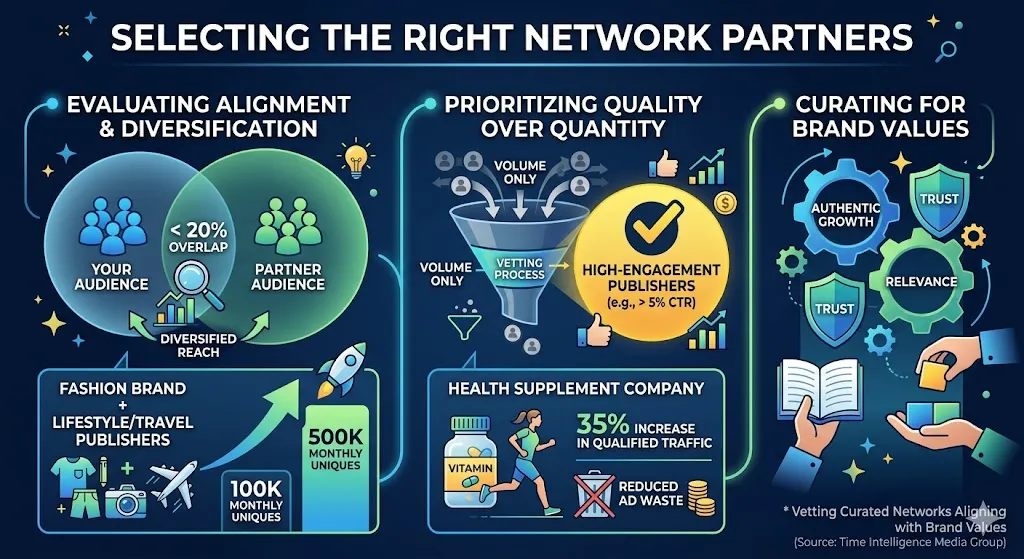
Next, prioritize quality over quantity. High-engagement publishers—those with 5%+ click-through rates—yield better results than volume alone. Case in point: A health supplement company focused on vetted wellness sites, resulting in a 35% increase in qualified traffic and reduced ad waste. Time Intelligence Media Group stresses this vetting, curating networks that align with brand values for authentic growth.
Content Optimization for Syndication Success
Tailor content for multi-platform appeal to supercharge publisher networks for audience expansion. Use scannable formats: Short paragraphs, bolded key phrases, and visuals boost readability across devices. Semantic optimization incorporates LSI terms naturally, helping algorithms match content to user queries—like “audience growth strategies” alongside core topics.
A/B testing refines this further. Test headlines (e.g., “5 Ways to Expand Reach” vs. question-based variants) and track performance across networks. One e-commerce brand iterated this way, lifting syndication clicks by 28%. For deeper impact, embed calls-to-action subtly, guiding readers back to your site without disrupting flow.
Real-World Case Studies and Trends in Publisher Networks
Publisher networks have transformed audience expansion for diverse industries. Consider a fintech startup that joined a business-focused network: Within six months, their content reached 2 million impressions across 200 publishers, converting 15% into newsletter sign-ups. This success stemmed from data-enriched syndication, where user personas (e.g., “mid-career professionals seeking investment tips”) directed placements precisely.
Emerging trends amplify these outcomes. AI-driven personalization now curates feeds per reader, increasing relevance—networks report 50% higher engagement with such tech. Privacy-first models, compliant with GDPR and CCPA, build trust amid cookie deprecation. Meanwhile, video and audio syndication surges; podcast networks for audience expansion are up 60% year-over-year, per industry reports.
Time Intelligence Media Group leads in these trends, offering networks that blend text, video, and interactive formats. Clients benefit from forward-looking strategies, like zero-party data collection, ensuring sustained expansion amid evolving regulations.
Overcoming Challenges in Publisher Networks
Common hurdles include content dilution and attribution gaps, but strategic planning mitigates them. To avoid dilution, watermark assets and use canonical tags, preserving SEO value. Attribution tools like UTM parameters and pixel tracking clarify multi-touch journeys—brands often discover 40% of conversions trace back to network exposures.
Competition within networks demands differentiation. Unique angles, such as data-backed insights or user-generated stories, stand out. A travel agency countered this by syndicating personalized itineraries, gaining 3x shares versus generic posts. How publisher networks expand brand audience reach dives deeper into these tactics for mid-funnel refinement.
Regulatory shifts pose another challenge, yet compliant networks thrive. Focus on first-party data ecosystems to future-proof efforts.
Future-Proofing Your Audience Expansion with Publisher Networks
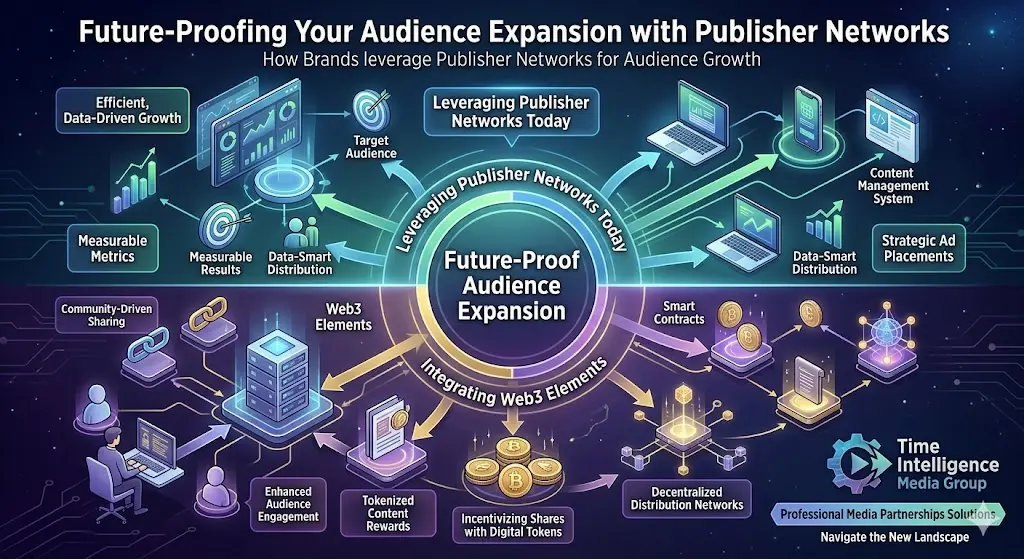
Looking ahead, publisher networks for audience expansion will integrate Web3 elements like tokenized content rewards, incentivizing shares. Brands adopting early, via platforms like Time Intelligence Media Group’s solutions, position for exponential growth.
Leveraging publisher networks delivers measurable audience expansion through efficient, data-smart distribution. Time Intelligence Media Group provides professional Media Partnerships Solutions to navigate this landscape effectively. For brands ready to scale, explore How Does Time Intelligence Media Group Connect Brands? to see decision-stage applications.
