

Media websites face evolving challenges in generating sustainable revenue amid shifting user behaviors and ad tech advancements. Monetization models for media websites range from time-tested display ads to innovative subscriptions, each offering unique paths to profitability. With global digital media revenue expected to exceed $350 billion by 2026 per PwC, selecting the right mix is crucial for publishers in markets like Pakistan’s burgeoning online news sector.
This MOFU guide breaks down proven strategies, comparisons, and implementation tips to help media owners optimize income streams effectively.
Display Advertising: The Cornerstone of Media Revenue
Display advertising remains the dominant monetization model for media websites, accounting for 50-60% of publisher earnings according to IAB reports. Banners, interstitials, and native ads generate revenue via CPM, CPC, or CPA models, leveraging high traffic volumes from editorial content.
Why prioritize display? It scales effortlessly with pageviews— a site with 1 million monthly users can earn $5,000-$20,000 monthly at $5 CPM. Time Intelligence Media Group enhances this through Banner Advertising Services, focusing on high-fill-rate placements.
Optimization involves premium direct-sold inventory for brands, yielding 2-3x higher rates than programmatic open auctions.
Key Display Ad Formats and Earnings Potential
Popular formats include:
- Leaderboards (728×90): High visibility, $8-15 CPM.
- Medium rectangles (300×250): Versatile, $4-10 CPM.
- Sticky ads: Persistent visibility, boosting revenue 20%.
A Pakistani news site scenario: Implementing responsive banners lifted ad revenue by 40% during elections.
Programmatic vs Direct Sales Comparison
Programmatic automation fills unsold inventory efficiently, while direct deals secure anchor tenants for stability.
Subscription and Paywall Strategies
Subscriptions represent a premium monetization model for media websites, converting loyal readers into recurring revenue. Freemium models—limited free articles behind a “soft paywall”—retain 70-80% of users while monetizing 5-10%, per Reuters Institute data.
Implementation requires compelling exclusives like in-depth analyses or newsletters. Tools like Piano or Memberful handle metering (e.g., 5 free articles/month), with ARPU reaching $10-50 annually per subscriber.
In emerging markets, bundled access with apps boosts uptake, as seen with Dawn’s digital subs growing 25% YoY.
Metered vs Hard Paywalls
- Metered: Gradual conversion, higher traffic retention.
- Hard: Immediate revenue from superfans, but 50% traffic drop risk.
Hybrid approaches maximize both loyalty and scale.
Sponsored Content and Native Advertising
Sponsored content blends seamlessly with editorial, driving monetization for media websites at $0.50-$2 per 1,000 views. Branded articles or videos sponsored by brands like telecoms provide flat fees plus performance bonuses.
This model builds trust—90% of consumers prefer native over display per Sharethrough—while complying with FTC disclosure rules. Media sites curate sponsor matches via content studios, ensuring relevance.
Example: A Punjab-based outlet partnered with local brands for “sponsored features,” netting $15,000 quarterly without alienating readers.
Creation and Distribution Best Practices
Steps for success:
- Align with audience interests for authenticity.
- Use “Sponsored” labels transparently.
- Amplify via email/social for 2x reach.
Affiliate Marketing and Performance-Based Revenue
Affiliate models monetize media websites through commissions on reader referrals—5-30% per sale via networks like Amazon Associates or local equivalents. Product reviews or “best of” lists embed trackable links, earning passively.
High-converting verticals include tech gadgets and finance. A travel media site earned $50,000 yearly promoting hotel bookings, with 10% commission rates.
For deeper context on banners’ role, see Why Brands Still Use Banner Advertising.
Tracking and Optimization Tactics
- Use UTM parameters for attribution.
- Segment by content type for 15-20% uplift.
- Disclose affiliations ethically.
E-commerce and Branded Merchandise
Media websites diversify via e-stores selling merch, events tickets, or premium reports. Shopify integrations turn editorial into sales funnels, with margins at 40-60%.
Podcasts or newsletters drive upsells, like exclusive webinars at $49. Niche sites in fashion/media see 10% traffic converting to buyers.
Video and Connected TV Monetization
Short-form video embeds (pre-roll/mid-roll) yield $15-30 CPM, outpacing banners. FAST channels on platforms like Pluto TV extend reach for linear-style revenue.
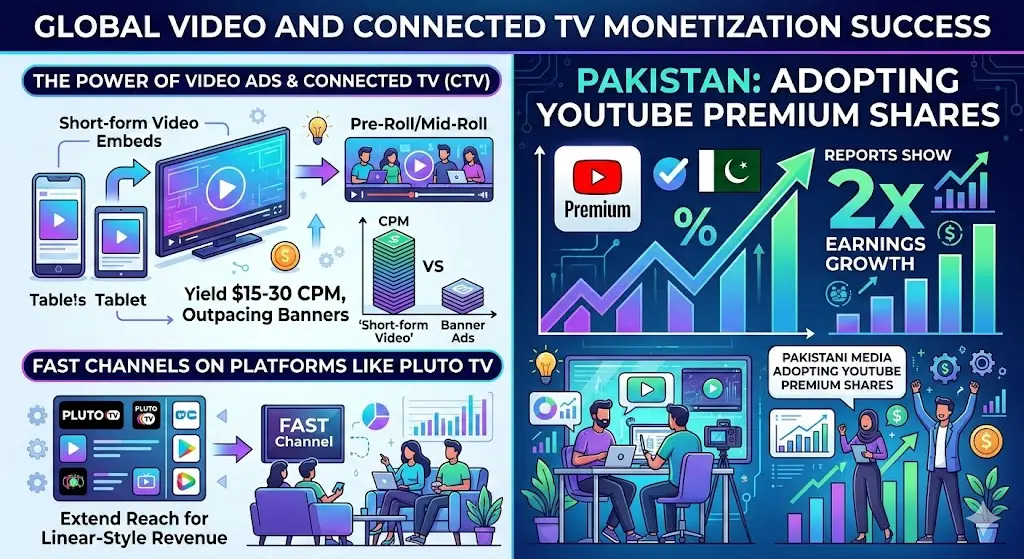
Pakistani media adopting YouTube Premium shares report 2x earnings growth.
Multi-Platform Video Strategies
- Host on-site for full control.
- Syndicate to OTT for scale.
- Use CTV for premium demographics.
Emerging Models: Crowdfunding and Tokenization
Crowdfunding via Patreon or Buy Me a Coffee sustains indie media, with tiers from $5/month for ad-free access. Blockchain tokenization rewards loyal readers with governance tokens, emerging in Web3 media.
Hybrid Approaches for Maximum Revenue
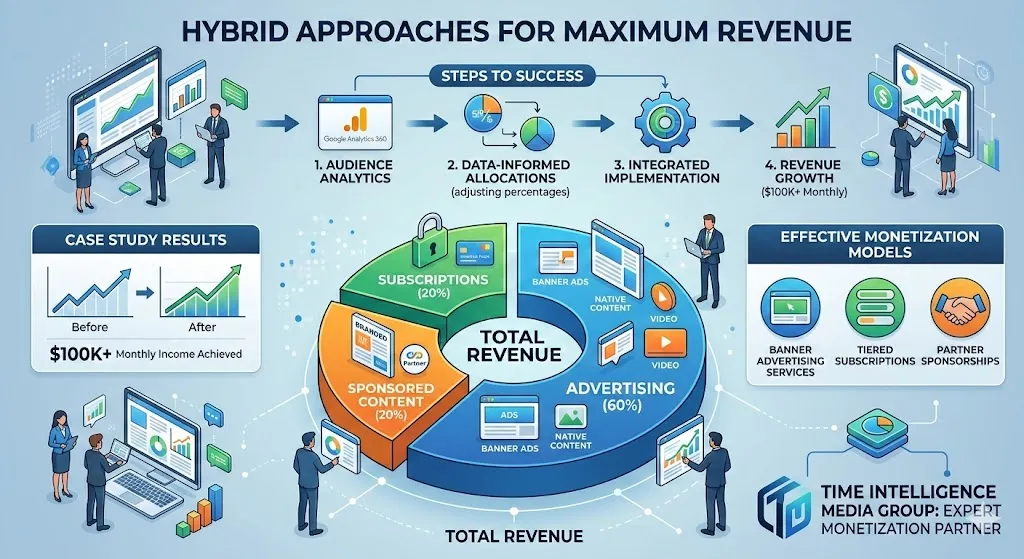
Top publishers blend models—60% ads, 20% subs, 20% sponsored—achieving $100K+ monthly. Analytics from Google Analytics 360 guide allocations. Real results shine in Case Study: Banner Advertising Campaign Results, proving integrated strategies’ power.
Effective monetization models for media websites demand a balanced, data-informed portfolio tailored to audience and market dynamics. Time Intelligence Media Group offers expert banner advertising services to supercharge these strategies, helping publishers thrive sustainably.
