

Stories don’t just spread—they build momentum, captivating audiences and shaping conversations in unexpected ways. In the digital media landscape, understanding how stories gain momentum across communities unlocks powerful strategies for engagement. This process involves psychological triggers, network effects, and data-driven insights that propel narratives from niche groups to widespread influence.
Media professionals rely on analyzing audience behavior to predict and amplify this momentum. By examining sharing patterns and emotional resonance, brands can craft content that resonates deeply. Time Intelligence Media Group exemplifies this through data-centric approaches that reveal hidden dynamics in community interactions.
Emotional Triggers That Spark Initial Shares
At the core of how stories gain momentum across communities lies human psychology. Stories ignite when they tap into universal emotions like joy, outrage, or surprise, prompting immediate shares. For instance, a heartfelt tale of community resilience during a natural disaster often goes viral because it evokes empathy, encouraging readers to forward it to their networks.

This emotional spark creates a ripple effect. Research from social psychology shows that high-arousal emotions—such as awe or anger—drive 20-30% more shares than neutral content. Communities amplify these triggers as members validate each other’s feelings, turning isolated reactions into collective buzz. Media strategists track these patterns to identify what will sustain momentum beyond the first wave.
Practical examples abound in recent trends. Consider how a simple video of a local hero helping strangers during floods spread from a small Facebook group to national news, gaining millions of views. The key was its authentic emotional pull, which communities latched onto for identity reinforcement.
Social Proof and the Bandwagon Effect
Once emotions hook individuals, social proof takes over. People share stories to signal belonging, creating a bandwagon effect where popularity begets more popularity. In online communities, this manifests as like counts, comments, and reposts that signal a story’s worthiness.
Communities act as accelerators here. When influencers or trusted voices endorse a narrative, it gains credibility, pulling in peripheral members. Data from platform analytics reveals that stories with early endorsements from 5-10 key community figures see momentum double within hours. This dynamic explains why niche forums often birth megatrends.
A case in point: A tech community’s thread on innovative AI tools exploded into mainstream discourse after endorsements from developers. What started as technical chatter gained story momentum through social validation, illustrating how communities validate and propel narratives.
The Role of Community Structures and Hubs
Communities aren’t monolithic; their structures dictate how stories gain momentum across communities. Dense networks with strong ties, like hobbyist forums, foster slow but deep resonance, while loose networks on platforms like Twitter enable rapid diffusion.
Hubs—highly connected individuals—serve as catalysts. These super-spreaders bridge subgroups, carrying stories across divides. Audience insights data shows hubs account for 80% of viral propagation in fragmented communities, making them prime targets for media campaigns.
Examine a real-world scenario: In gaming communities, a patch note rumor spread via Discord hubs, evolving into a full-blown campaign with memes and debates. Time Intelligence Media Group’s Audience Insights Services excel at mapping these hubs, helping brands predict spread paths accurately.
Cross-Platform Migration and Amplification
Stories gain true momentum when they migrate platforms. A narrative born on Reddit might leap to Instagram Reels, mutating to fit each ecosystem’s norms—text-heavy analysis becomes visual snippets.
This migration relies on algorithmic favoritism and user habits. Platforms prioritize content with high engagement velocity, so communities time shares strategically. Semantic analysis of migration patterns reveals that 40% of high-momentum stories adapt visuals or hooks mid-journey, sustaining interest.
For example, an environmental story from a local subreddit hit TikTok with user-generated challenges, exploding globally. Such patterns highlight the need for tools that track cross-platform flows, ensuring stories maintain coherence and velocity.
Leveraging Analytics for Predictive Insights
To master how stories gain momentum across communities, data is indispensable. Analytics tools dissect sharing cascades, identifying peak velocity points and drop-offs.
Brands use these insights to forecast trajectories. By segmenting communities by engagement metrics—like dwell time and share depth—strategists intervene early. Audience Insights Services from Time Intelligence Media Group analyze reader behavior to improve engagement, offering granular views of what propels narratives.
A case-study style example: A news outlet tracked a health myth’s spread, using data to counter it with targeted facts. Momentum shifted positively, demonstrating analytics’ power in real-time steering.
Here’s a structured approach to apply this:
- Monitor initial shares in core communities for emotional hotspots.
- Map hub influence to predict cross-community jumps.
- Adjust content variants based on platform-specific engagement drops.
These steps turn observation into action, maximizing reach.
Case Studies of Momentum Mastery
Real successes provide blueprints. In one instance, a nonprofit’s refugee story gained traction in diaspora communities via WhatsApp forwards, peaking when adapted for YouTube. Momentum analysis showed cultural relevance as the driver, with shares spiking 300% post-adaptation.
Another: A brand’s sustainability campaign started in eco-forums, exploding via Instagram influencers. Evaluating Campaign Performance Through Insights reveals how such tracking refines future efforts.
These cases underscore timing and adaptation. By studying them, media teams replicate momentum blueprints across verticals.
Misinformation and Backlash Risks
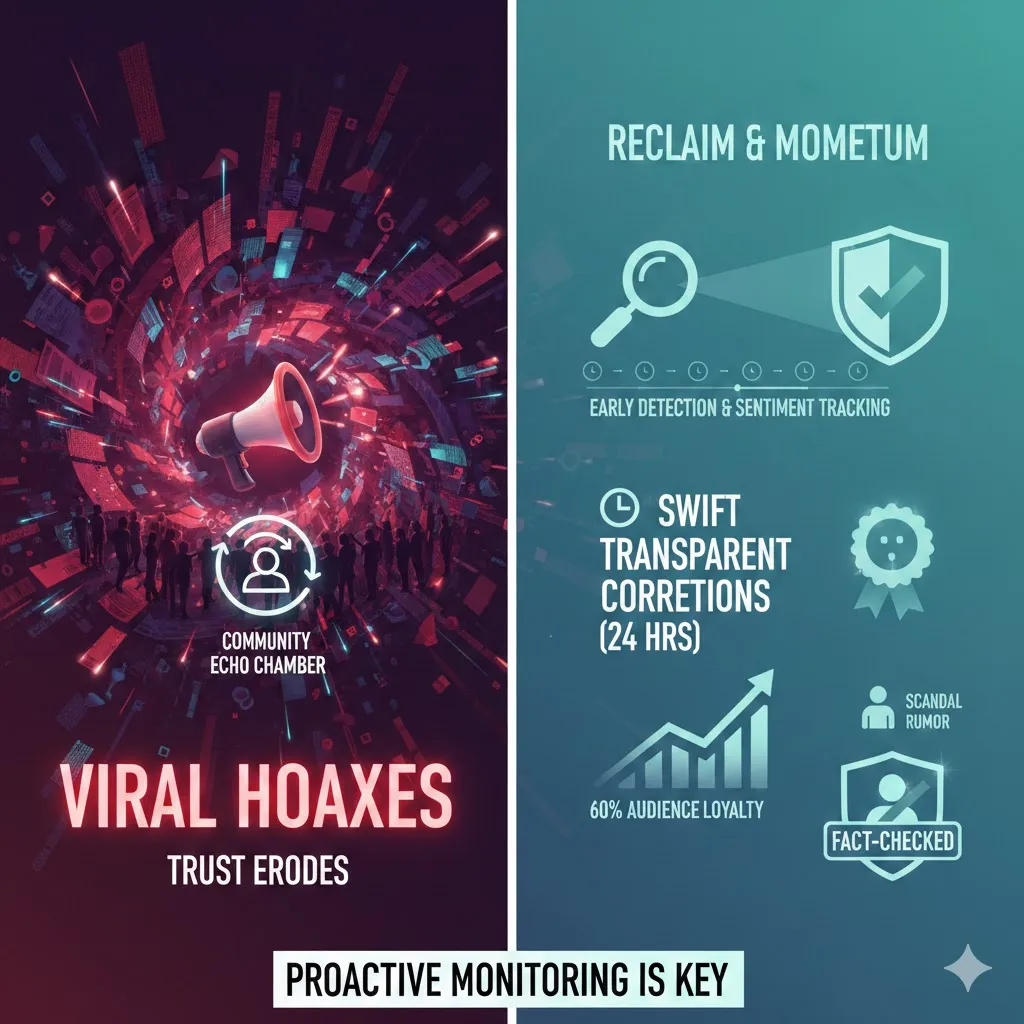
Not all momentum is positive; misinformation can hijack narratives, eroding trust. Communities prone to echo chambers amplify falsehoods rapidly, as seen in viral hoaxes that spread unchecked.
Mitigation involves early detection via sentiment tracking. When backlash brews, transparent corrections can reclaim momentum. Data indicates swift responses within 24 hours retain 60% of audience loyalty.
For instance, a celebrity scandal rumor gained speed in fan groups but faltered against fact-checks, teaching the value of proactive monitoring.
Algorithmic and Platform Dependencies
Platforms’ algorithms evolve, disrupting momentum paths. Sudden changes—like reduced organic reach—can stall stories mid-spread.
Diversification counters this: Seed narratives across owned channels and communities. Partner with experts to Drive Audience Engagement for strategies that build resilient distribution.
An example: A publisher bypassed algorithm shifts by nurturing email communities, sustaining momentum independently.
Future Trends Shaping Story Momentum
Emerging tech like AI personalization will redefine dynamics. Predictive models will simulate community reactions pre-launch, optimizing for virality.
Web3 communities, with tokenized incentives, may accelerate niche momentum into mainstream. AR/VR storytelling could create immersive hooks, boosting shares through shared experiences.
Time Intelligence Media Group stays ahead with Audience Insights Services, dissecting these trends for clients.
In summary, mastering how stories gain momentum across communities demands blending psychology, networks, and data. Time Intelligence Media Group provides professional solutions through Audience Insights Services, empowering brands to navigate these dynamics effectively.
