

In today’s fast-paced media landscape, research reports hold immense value for organizations aiming to influence industry conversations, establish thought leadership, and drive business outcomes. However, creating a high-quality research report is only half the battle—gaining meaningful coverage through PR distribution is what amplifies its reach. Effective PR distribution strategies transform dense data into compelling stories that journalists, analysts, and influencers can’t ignore, leading to features in top-tier outlets like Forbes, Bloomberg, or niche trade publications.
This process involves more than just sending out press releases; it requires a targeted approach that aligns your research findings with media needs and audience interests. By leveraging professional PR distribution services, organizations can secure placements that not only boost visibility but also enhance credibility and SEO performance. In this MOFU guide, we’ll explore the mechanics of how research reports gain coverage through PR distribution, drawing on real-world trends and examples to equip you with strategies for maximum impact.
Understanding the Role of PR Distribution in Research Report Amplification
PR distribution serves as the bridge between your research insights and the media ecosystem, ensuring that key findings reach the right eyes at the right time. At its core, this involves crafting tailored press releases, pitching to relevant journalists, and utilizing wire services to disseminate content across digital and traditional channels. For research reports, which often contain proprietary data on market trends, consumer behaviors, or technological advancements, PR distribution turns abstract analysis into headline-worthy narratives that resonate with editors seeking fresh angles.
Consider a scenario where a fintech firm releases a report on blockchain adoption rates. Without strategic PR distribution, the report might languish in obscurity. But by highlighting a surprising statistic—like a 40% year-over-year increase in enterprise adoption—and distributing it via targeted wires, the firm secures coverage in TechCrunch. This amplification not only drives traffic back to the original report but also positions the organization as an industry authority. Professional services refine this by segmenting audiences, timing releases around news cycles, and tracking metrics like share of voice to measure success.
The power of PR distribution lies in its ability to contextualize research within broader conversations. For instance, during economic uncertainty, a report on supply chain resilience can gain traction if distributed with hooks tied to current events, such as global trade disruptions. This targeted approach ensures higher pickup rates, with studies showing that well-distributed research announcements can achieve up to 5x more media mentions than unoptimized efforts.
Key Strategies for Crafting Research Reports That Attract Media Coverage
To maximize how research reports gain coverage through PR distribution, start with content that inherently appeals to journalists: data-driven, timely, and visually engaging. Begin by identifying unique angles within your report, such as contrarian insights or predictive forecasts, and package them into bite-sized executive summaries. These elements make it easier for PR teams to create pitches that stand out in crowded inboxes, emphasizing exclusivity or first-look opportunities to build urgency.
One effective tactic is multimedia integration—embed infographics, charts, or short video explainers directly into your press materials. Media outlets favor such assets because they enhance story visual appeal and shareability on social platforms. For example, a healthcare research report on telemedicine growth distributed with interactive dashboards saw placements in outlets like MedTech Dive, where the visuals drove 30% higher engagement rates. Pair this with personalized outreach, where PR distribution services analyze journalist beats to customize pitches, increasing response rates by focusing on relevance over volume.
Beyond initial crafting, iterate based on feedback loops from past distributions. Track which report sections garnered the most quotes or features, then refine future versions accordingly. This data-informed evolution ensures your research reports not only gain coverage through PR distribution but sustain long-term media relationships, turning one-off mentions into ongoing dialogues.
Leveraging Targeted PR Distribution Channels for Optimal Reach
Selecting the right PR distribution channels is crucial for research reports to cut through the noise and secure high-impact coverage. Wire services like Business Wire or PR Newswire offer broad dissemination to thousands of outlets, but layering them with niche databases—such as those targeting B2B journalists in your sector—amplifies precision. This multi-channel approach ensures your report appears in both general news feeds and specialized feeds, broadening exposure while maintaining relevance.
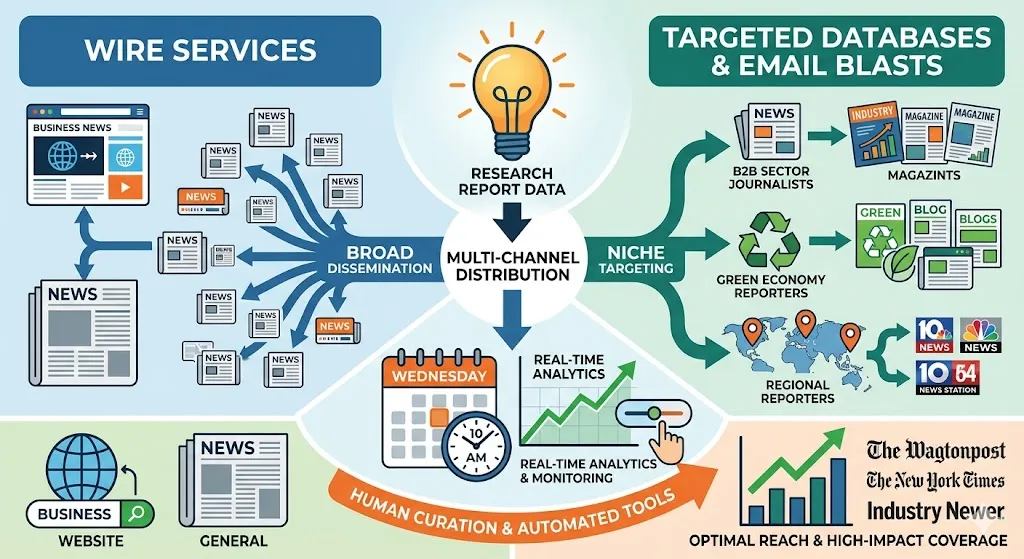
In practice, a sustainability research report on corporate ESG metrics gained coverage in The Guardian and Environmental Leader by combining global wires with targeted email blasts to 200+ green economy reporters. The key was geo-fencing distribution to prioritize regions where the data had local implications, like EU regulatory changes. Time Intelligence Media Group excels in this, using their PR Distribution Services to blend automated tools with human curation for tailored campaigns that drive measurable media pickups.
Timing plays a pivotal role too; distribute mid-week during business hours to align with editorial calendars, avoiding weekends when coverage dips. Advanced PR distribution incorporates real-time analytics to monitor pickup velocity, allowing mid-campaign adjustments—like follow-up pitches to underperforming sectors—for enhanced results.
Measuring Success and Iterating on PR Distribution Campaigns
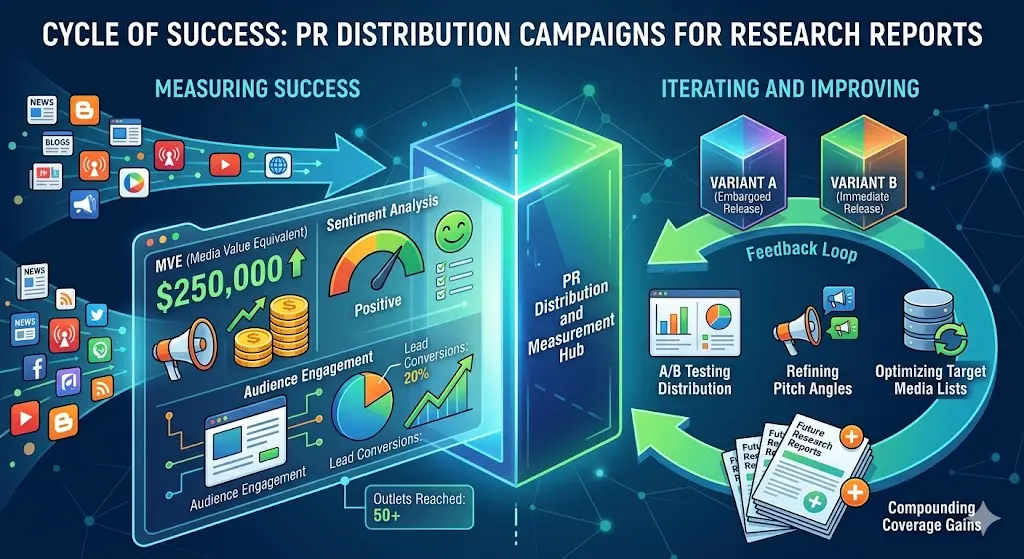
Success in how research reports gain coverage through PR distribution isn’t just about volume of mentions but quality and downstream impact. Key metrics include media value equivalent (MVE), which quantifies earned coverage against paid advertising costs, alongside sentiment analysis to gauge narrative alignment. Tools within professional PR platforms track these, revealing not only reach but also audience engagement, such as website referrals from featured articles.
Take a case study from a cybersecurity firm: Their threat landscape report, distributed via optimized channels, generated $250,000 in MVE across 50+ outlets, with 20% of traffic converting to leads. This was achieved by setting baselines pre-distribution and post-campaign reviews, identifying top-performing elements like quotable expert commentary. For deeper insights into the initial stages, explore how organizations distribute research announcements to media.
Iterating involves A/B testing distribution variants—such as embargoed vs. immediate releases—and refining based on outcomes. Over time, this builds a feedback-rich cycle, where each campaign informs the next, compounding coverage gains.
Overcoming Common Challenges in Research Report PR Distribution
Research reports often face hurdles like information overload or skepticism from journalists, but strategic PR distribution mitigates these effectively. One challenge is data overload; combat it by leading with one killer stat in your headline, supported by deeper dives in the full release. This respects journalists’ time, boosting open and pickup rates.
Another pitfall is lack of exclusivity—reporters ignore generic blasts. Counter this with tiered distribution: Offer exclusives to top-tier outlets first, then widen the net. Time Intelligence Media Group addresses such issues through their PR Distribution Services, delivering customized strategies that navigate these barriers for superior results. Learn more about advanced promotion in How Time Intelligence Media Group promotes research news.
Proactively addressing embargo violations or negative spins via rapid response plans further safeguards reputation, turning potential setbacks into credibility-building opportunities.
Future Trends Shaping PR Distribution for Research Coverage
Emerging trends like AI-powered personalization are revolutionizing how research reports gain coverage through PR distribution. AI tools now predict journalist interests by analyzing past coverage patterns, enabling hyper-targeted pitches that increase hit rates by 25-40%. Integrating these with blockchain for content verification adds trust, especially for data-heavy reports.
Sustainability in PR is rising too, with outlets prioritizing reports on ethical AI or climate tech. Voice search optimization ensures reports surface in audio queries, while short-form video clips from findings boost social amplification. Time Intelligence Media Group stays ahead by incorporating these into their PR Distribution Services, helping clients future-proof their strategies.
As multimedia and real-time data evolve, adaptive distribution will define leaders in research visibility.
Mastering how research reports gain coverage through PR distribution demands strategic content, channel selection, and measurement. Time Intelligence Media Group provides professional PR Distribution Services to streamline this process, empowering organizations to turn research into influential media narratives.
