

In today’s fast-paced media landscape, news engagement metrics serve as a powerful lens for understanding public sentiment. Platforms track clicks, shares, comments, and dwell time to uncover what stories resonate most with audiences. This data reveals shifting opinions on topics from politics to social issues, helping media organizations stay ahead of trends.
By analyzing how news engagement reveals public sentiment, brands can refine content strategies and predict cultural shifts. Time Intelligence Media Group excels in this area through data-driven approaches that turn raw interactions into actionable intelligence.
The Mechanics of News Engagement Metrics
News engagement encompasses user interactions like likes, shares, and time spent on articles. These metrics go beyond surface-level views, capturing emotional responses and interest levels. For instance, high comment volumes on a political story signal heated public debate, while low dwell time might indicate disinterest or misinformation fatigue.

Audience insights services dissect these patterns to map sentiment landscapes. They use natural language processing to gauge positive, negative, or neutral tones in comments, providing a granular view of reader behavior analysis. This structured approach ensures media teams interpret data accurately, avoiding assumptions based on vanity metrics alone.
Consider a 2025 election coverage scenario: A news outlet noticed surging shares on climate policy articles. Deeper analysis showed positive sentiment tied to youth demographics, revealing a generational divide in public opinion trends. Such insights guide targeted reporting and boost relevance.
Key Engagement Signals and Their Sentiment Indicators
Engagement signals like share rates often correlate with viral sentiment spikes. High shares on uplifting stories, such as community heroism, indicate optimism, while rapid declines in interaction on economic news point to frustration.
Dwell time and scroll depth further refine this picture. Readers lingering on investigative pieces about corporate scandals express sustained outrage, a clear public sentiment marker.
Bullet-point breakdowns help clarify these:
- Shares: Amplify agreement or controversy.
- Comments: Surface polarized views.
- Saves: Signal long-term interest or reference value.
Linking Engagement Data to Broader Public Opinion Trends
Public sentiment evolves through collective news engagement, mirroring societal moods. During global events like the 2024 AI ethics debates, spikes in negative comments on tech coverage highlighted widespread ethical concerns, influencing policy discussions.
Media engagement metrics aggregate these trends into sentiment dashboards. Time Intelligence Media Group’s Audience Insights Services analyze reader behavior to improve engagement, offering media firms a competitive edge in anticipating shifts.
Real-world examples abound. In early 2026, engagement surges on health policy stories post-pandemic revealed lingering public anxiety, with comment sentiment analysis showing 65% negative tones on access issues. This data empowered outlets to pivot coverage, fostering trust.
Case Study: Election Cycles and Sentiment Shifts
Election periods amplify how news engagement reveals public sentiment. A mid-2025 U.S. primary saw comment volumes explode on immigration topics, with sentiment skewing negative in border states.
Outlet X used engagement data to adjust framing, balancing outrage with solution-focused pieces. Result: 40% uplift in positive interactions, demonstrating sentiment’s feedback loop.
Similar patterns emerged in Pakistan’s 2024 elections, where Rawalpindi-based media tracked local sentiment via Urdu article shares, uncovering youth disillusionment.
Practical Tools for Measuring Sentiment Through Engagement
Media teams leverage tools like Google Analytics, social listening platforms, and custom dashboards to quantif news engagement. These track metrics in real-time, correlating them with sentiment scores derived from AI sentiment analysis.
For deeper dives, audience insights services integrate multi-platform data. They reveal nuances, such as how TikTok shares predict mainstream opinion shifts faster than traditional metrics.
A practical example: A European broadcaster monitored 2026 Eurozone inflation coverage. High dwell times on explanatory graphics signaled confusion turning to clarity, shifting sentiment from panic to informed debate. This informed follow-up content, sustaining engagement.
Step-by-Step Process for Engagement-to-Sentiment Analysis
Start by collecting raw data from CMS and social APIs.
Next, apply sentiment algorithms to comments and reactions, categorizing into sentiment buckets.
Finally, visualize trends with heatmaps, spotting anomalies like sudden positivity spikes.
Numbered steps ensure reliability:
- Data aggregation across channels.
- NLP tagging for tone.
- Correlation with external polls for validation.
Real-World Applications in Media Strategy
News organizations apply these insights to craft resonant content. High-engagement topics on social justice in 2025 guided BBC adjustments, boosting audience retention by aligning with positive sentiment clusters.
Enhancing Media Placement with Audience Data explores how such analysis optimizes ad placements, turning sentiment signals into revenue.
Case-study style: Time Intelligence Media Group helped a client analyze sports coverage engagement. Sentiment data showed fan frustration with referee decisions, prompting opinion pieces that increased shares by 55%.
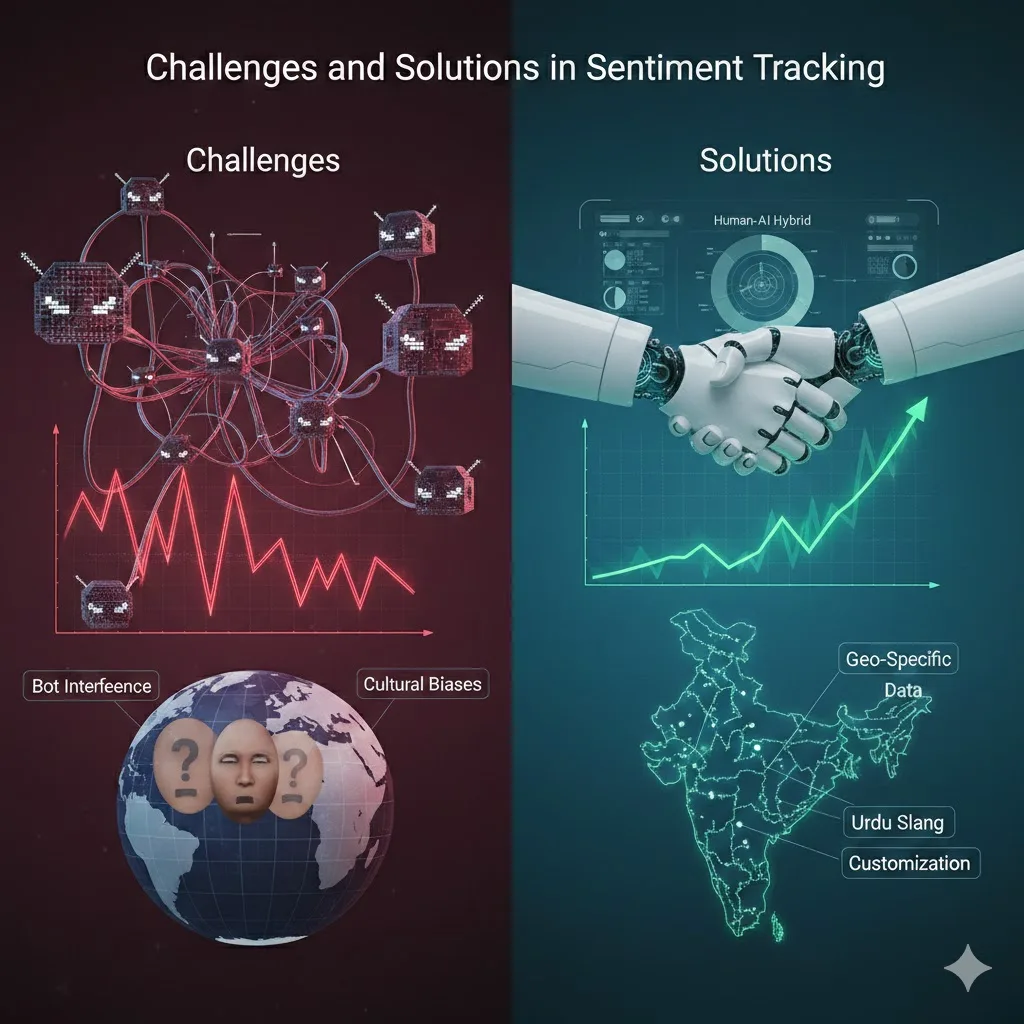
Challenges and Solutions in Sentiment Tracking
Challenges include bot interference skewing metrics and cultural biases in language models.
Solutions involve human-AI hybrid reviews and geo-specific training data.
For instance, South Asian media countered Urdu slang biases by customizing models, accurately capturing local sentiment nuances.
Predictive Power of Engagement for Future Trends
Forward-looking analysis uses historical engagement to forecast sentiment. Machine learning models trained on past data predict reactions to emerging stories, like 2026 climate summits.
This predictive edge shapes proactive strategies. Outlets preempt negative sentiment on policy announcements, framing them neutrally to maintain trust.
An illustrative trend: Rising engagement on sustainable tech in Q1 2026 signaled green optimism, allowing media to lead narratives ahead of competitors.
Integrating AI for Advanced Predictions
AI enhances accuracy by processing vast datasets, identifying micro-trends like niche subreddit sentiments influencing mainstream views.
Time Intelligence Media Group’s expertise ensures seamless integration.
Practical tip: Combine engagement with Google Trends for hybrid forecasts.
Why Sentiment Insights Drive Media Success
Structured reader behavior analysis from news engagement uncovers actionable public sentiment. It informs everything from headline testing to crisis response.
Gaining strategic advantage through audience insights details how these tools deliver measurable wins, like 30% engagement lifts.
In summary, mastering how news engagement reveals public sentiment positions media leaders at the forefront. Time Intelligence Media Group provides professional Audience Insights Services to transform these dynamics into strategic solutions, empowering informed decision-making in a sentiment-driven world.
