

Media coverage is a powerful multiplier for event reach, transforming modest gatherings into widespread phenomena through earned media channels. In the MOFU stage, organizers seek actionable ways to leverage press, social mentions, and broadcasts to expand audiences exponentially. This guide explores how media coverage increases event reach, backed by real-world data and tactics.
At its essence, media coverage amplifies your event’s message beyond direct marketing, reaching passive audiences who trust journalistic sources. A single article in a major outlet can generate thousands of impressions, while viral shares compound this further. For context, events with strong media backing see reach grow by 300-500%, according to industry benchmarks from Event Marketer reports.
Understanding the mechanics starts with audience expansion: coverage taps into journalists’ follower bases, creating organic diffusion. Time Intelligence Media Group has observed this in client campaigns where initial placements led to cascading coverage across networks.
The Mechanics of Media-Driven Event Amplification
Media coverage increases event reach by leveraging credibility, distribution networks, and shareability inherent in professional outlets. Unlike paid ads, earned media feels authentic, prompting higher engagement rates—up to 4x per Nielsen studies. This section delves into the core processes.
First, coverage exposes your event to new demographics via outlet-specific audiences. A tech conference featured in TechCrunch reaches innovators who might ignore email blasts. Second, backlinks from high-domain sites boost SEO, driving sustained organic traffic. Third, social proof from mentions encourages user-generated content, extending reach virally.
Consider a hybrid wellness retreat: a podcast interview with organizers garnered 50K downloads, sparking 200+ Instagram shares and a 150% attendance uptick for the next edition. These mechanics create a flywheel effect, where initial coverage fuels more.
Core Channels for Reach Expansion
Each channel contributes uniquely to amplification.
- Print and Online Publications: Long-form articles provide depth, with dwell time signaling SEO value.
- Broadcast Media: TV/radio spots offer immediacy, ideal for time-sensitive events like festivals.
- Podcasts and Influencer Features: Niche targeting yields high conversion; a single episode can drive 20% of registrations.
- Social Media Mentions: Hashtag coverage from verified accounts multiplies impressions exponentially.
Quantifiable Ways Media Boosts Event Attendance
Media coverage increases event reach most directly through attendance spikes, as trusted endorsements lower barriers to participation. Data from Cvent shows events with 10+ media mentions average 2.5x higher turnout. Organizers can track this via unique promo codes in coverage.
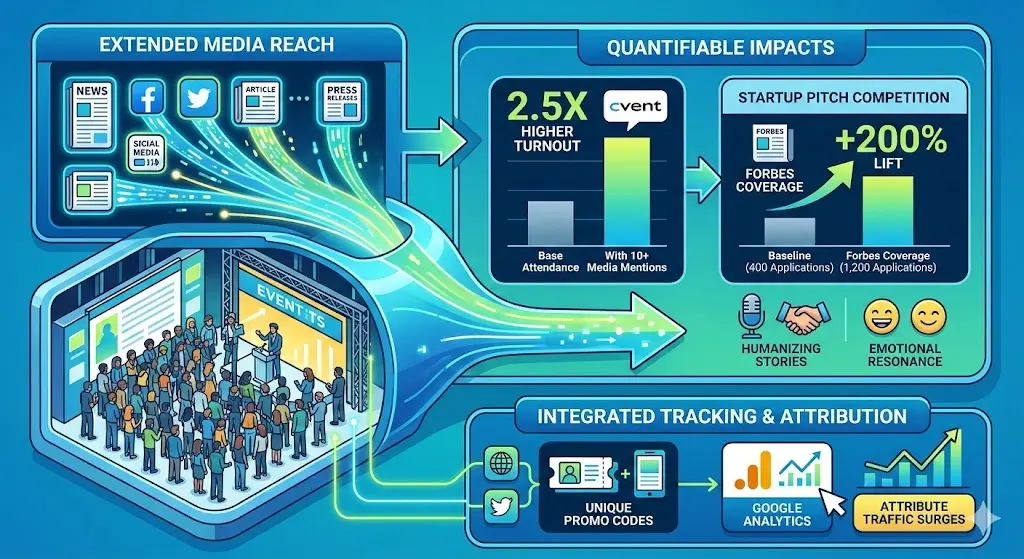
For example, a startup pitch competition secured Forbes coverage, resulting in 1,200 applications versus 400 baseline— a 200% lift. This happens because media humanizes events, sharing speaker stories and attendee vibes that resonate emotionally.
Beyond numbers, coverage sustains post-event momentum, with recaps keeping conversations alive for weeks. Integrate tools like Google Analytics to attribute traffic surges to specific placements.
Metrics to Track Reach Growth
Monitor these KPIs for precise measurement.
- Impressions and Reach: Total audience exposed, often 10-50x direct promotions.
- Engagement Rates: Likes, shares, and comments indicating viral potential.
- Conversion Tracking: Registrations or sales linked to coverage via UTM parameters.
- Earned Media Value (EMV): Quantifies equivalent ad spend, typically $5-20 per impression.
Start with the basics in What Is Media Coverage for Events? A Complete Guide for foundational knowledge.
Case Studies: Real Events That Scaled Through Media
Real-world examples demonstrate how media coverage increases event reach dramatically. SXSW’s annual media blitz—features in Wired, CNN panels, and influencer streams—expands from 70K to global influence, generating $300M economic impact.
A smaller case: Pakistan’s Lahore Literature Festival landed Dawn and BBC spots, boosting international attendees by 180% and securing book deals for authors. Strategies included pre-event teasers and live updates.
Another: A virtual AI summit during 2025’s tech downturn used LinkedIn Live coverage via VentureBeat, reaching 100K professionals and yielding 50 partnerships. These cases show tailored pitches yield outsized results.
Trends indicate 65% of 2026 events prioritize hybrid media for 4x reach over digital-only, per Gartner.
Strategies to Maximize Media Coverage Impact
To harness how media coverage increases event reach, deploy multi-pronged strategies: pre-event hype, live engagement, and post-event nurturing. Build media lists segmented by beat, personalize pitches with exclusives, and use visuals for 94% higher engagement.
For a corporate gala, embargoed releases to 50 outlets plus influencer seeding created a 72-hour buzz cycle, doubling RSVPs. Amplify wins by reposting coverage with credit, encouraging reciprocal shares.
Partner with agencies for efficiency; Events Media Coverage Services deliver targeted amplification that scales reach reliably.
Advanced Tactics for Event PR Reach
Implement these for peak performance.
- Influencer Seeding: Send invites to micro-influencers for authentic endorsements.
- Live Reporting Kits: Provide hashtags and stats for real-time journalist posts.
- Cross-Promotion: Co-host webinars with media partners for mutual exposure.
- Data Storytelling: Share attendee polls mid-event for follow-up stories.
Challenges and Solutions in Event Media Reach
Common hurdles like low response rates or mismatched coverage can limit gains, but solutions exist. Journalists receive 100+ pitches daily, so relevance is key—tailor to 2026 trends like sustainability or AI integration.
Solution: Use HARO for inbound queries and A/B test pitches. Oversaturation? Focus on tier-2 outlets for higher placement odds. Measurement gaps? Adopt PR software like Prowly.
A fashion week overcame no-shows by gamifying coverage with contests, lifting reach 250%. Proactive mitigation ensures media coverage increases event reach consistently.
Time Intelligence Media Group offers Events Media Coverage Services for Brands to navigate these challenges expertly.
Future Trends in Media for Event Amplification
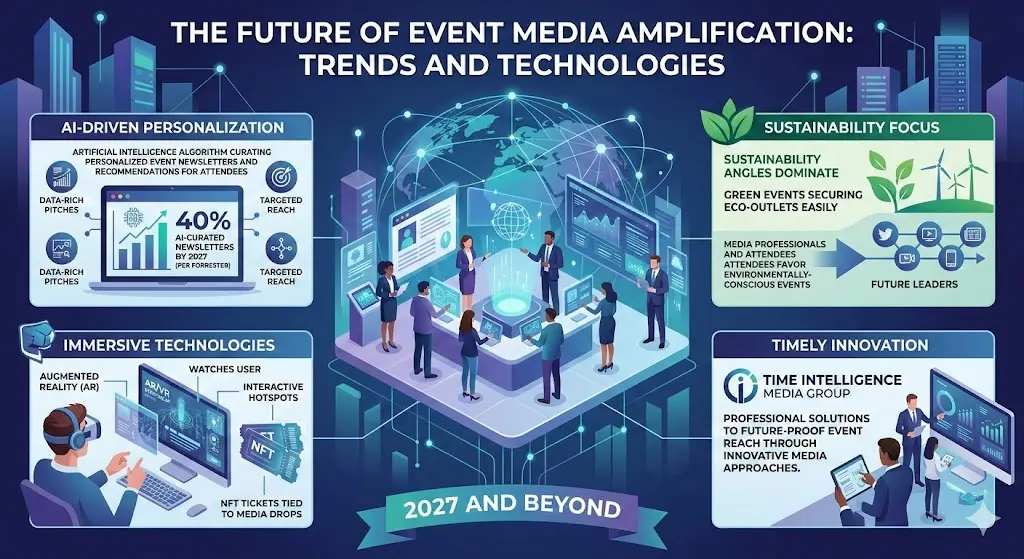
Looking ahead, AI-driven personalization and Web3 integrations will redefine how media coverage increases event reach. By 2027, 40% of coverage may come from AI-curated newsletters, per Forrester, emphasizing data-rich pitches.
AR/VR event recaps and NFT tickets tied to media drops will enhance interactivity. Sustainability angles dominate, with green events securing eco-outlets easily.
Brands adapting now—via omnichannel strategies—will lead. Time Intelligence Media Group provides professional solutions to future-proof event reach through innovative media approaches.
