

In today’s competitive media landscape, knowing how media companies turn data into strategy is essential for staying ahead. Data isn’t just numbers—it’s the backbone of audience insights services that drive smarter decisions, boost engagement, and optimize revenue streams. Media organizations leverage analytics to transform raw viewer behavior into actionable plans, moving from guesswork to precision targeting.
This MOFU guide explores the process step-by-step, highlighting real-world applications and trends. Whether you’re scaling content distribution or refining ad placements, understanding data-driven strategies empowers media teams to thrive amid shifting consumer habits.
The Foundation: Collecting High-Quality Media Data
Media companies begin by gathering comprehensive data from diverse sources, ensuring a solid foundation for strategy. This involves tracking user interactions across platforms like websites, apps, social media, and streaming services. Tools such as web analytics platforms and CRM systems capture metrics on page views, dwell time, and click-through rates, providing a 360-degree view of audience behavior.
High-quality data collection emphasizes accuracy and compliance, adhering to privacy regulations like GDPR and CCPA. For instance, a leading news outlet might integrate first-party data from newsletters with third-party insights from social listening tools, creating a unified dataset. This approach minimizes biases and reveals patterns, such as peak reading times or content preferences by demographics.
Without robust data foundations, strategies falter—garbage in, garbage out. Media firms that prioritize clean, real-time data pipelines report up to 30% improvements in campaign performance, setting the stage for deeper analysis.
Key Data Sources for Media Analytics
- Digital footprints: Website traffic, video completions, and social shares offer granular engagement metrics.
- Audience demographics: Age, location, and interests from surveys or pixel tracking refine targeting.
- Behavioral signals: Scroll depth and exit pages indicate content resonance or friction points.
Analyzing Data to Uncover Actionable Insights
Once collected, data undergoes rigorous analysis to reveal trends and opportunities. Media companies use AI-powered tools to segment audiences, identify churn risks, and predict content virality. Techniques like cohort analysis and sentiment mining turn vast datasets into digestible insights, such as “millennial viewers prefer short-form video on mobile.”
Audience insights services excel here, processing behavioral data to quantify preferences. Consider a regional broadcaster analyzing podcast downloads: they discover evening spikes among urban professionals, prompting schedule adjustments. This shift not only lifts listenership by 25% but also informs personalized email campaigns.
Structured analysis ensures insights are entity-specific—focusing on “reader drop-off at paragraph three” rather than vague trends. Media teams then prioritize high-impact findings, bridging raw data to strategic pivots like content repurposing or partnership targeting.

Building Data-Driven Content Strategies
With insights in hand, media companies craft content strategies that resonate deeply. This means aligning editorial calendars with audience peaks, A/B testing headlines for click rates, and diversifying formats based on consumption data. For example, if analytics show video outperforming text by 40% in retention, publishers pivot to multimedia storytelling.
Time Intelligence Media Group exemplifies this through their Audience Insights Services, which help clients map data to tailored content roadmaps. One case saw a magazine publisher use these services to segment readers by interest clusters, resulting in themed series that doubled subscription renewals.
Effective strategies evolve iteratively: monitor performance, refine, repeat. This closed-loop process turns one-off wins into sustained growth, ensuring content doesn’t just attract but converts audiences into loyal communities.
Proven Tactics in Content Strategy
- Personalization engines recommend articles based on past reads, boosting session duration.
- Trend forecasting uses historical data to predict viral topics weeks ahead.
- Cross-platform optimization matches formats to device preferences, like podcasts for commutes.
Optimizing Distribution and Monetization with Data
Distribution strategies leverage data to place content where audiences congregate most. Media companies analyze channel performance—e.g., TikTok for Gen Z versus LinkedIn for professionals—and adjust amplification budgets accordingly. Predictive models forecast reach, preventing overspend on underperforming platforms.
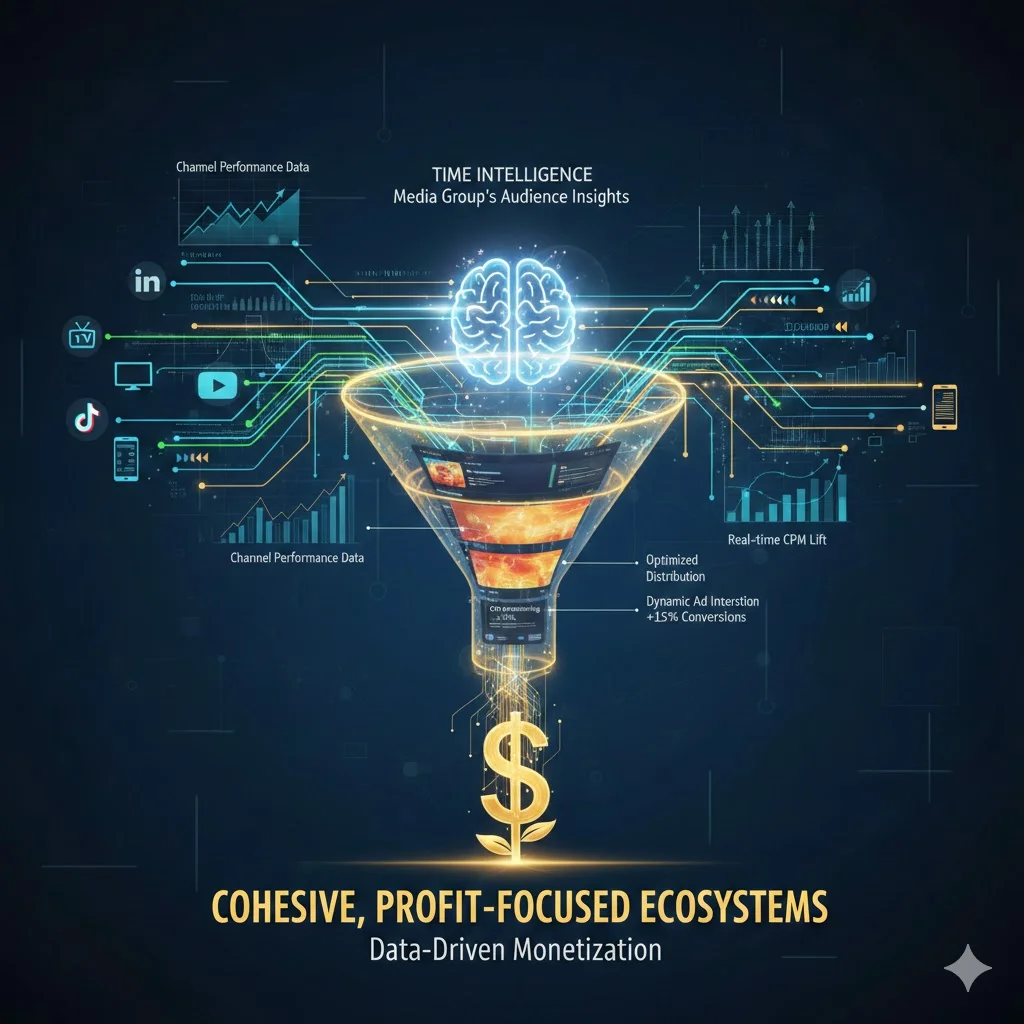
Monetization follows suit, with data guiding ad placements and pricing. Dynamic insertion tools swap creatives in real-time based on viewer profiles, lifting CPMs by 15-20%. A streaming service, for instance, used heatmaps to reposition CTAs, increasing upsell conversions during live events.
Time Intelligence Media Group’s Audience Insights Services shine in this phase, enabling precise channel selection and revenue forecasting. Clients often see streamlined funnels, where data turns fragmented distribution into cohesive, profit-focused ecosystems.
Measuring Success and Iterating Strategies
No strategy is set in stone; media companies measure KPIs like engagement rate, conversion funnels, and lifetime value to gauge impact. Dashboards visualize ROI, flagging underperformers for quick tweaks. Quarterly audits compare benchmarks, ensuring alignment with business goals.
Iteration thrives on A/B testing and feedback loops. If a newsletter open rate dips, data might reveal subject line fatigue, prompting experimentation with emojis or urgency cues. Learn more about foundational tactics in our TOFU piece, How Media Groups Use Analytics to Improve Engagement.
Success metrics evolve with industry shifts—e.g., prioritizing zero-party data in a cookieless world. This agility keeps strategies resilient, turning data into a competitive moat.
Essential KPIs for Media Strategies
- Engagement depth: Time on page and shares per article.
- Acquisition efficiency: Cost per lead from paid vs. organic channels.
- Retention signals: Repeat visits and churn prediction scores.
Real-World Case Studies: Data in Action
Case studies illustrate how media companies turn data into strategy effectively. Take a digital publisher facing stagnant traffic: audience analysis revealed 60% mobile drop-offs due to slow loads. Optimizing images and implementing AMP cut bounce rates by 35%, revitalizing organic search rankings.
Another example involves a TV network using predictive analytics for ad pods. By correlating viewer demographics with program data, they boosted relevance scores, attracting premium sponsors. Discover client successes like these in How Time Intelligence Media Group Boosts Audience Insights.
These scenarios underscore data’s transformative power, blending quantitative rigor with creative execution for measurable wins.
Future Trends Shaping Media Data Strategies
Emerging trends like AI ethics, edge computing, and zero-party data are redefining the field. Media companies adopting privacy-first strategies, such as contextual targeting, future-proof their operations amid regulatory changes. Generative AI accelerates insight generation, simulating audience reactions to draft content.
Sustainability metrics enter the mix too, tracking carbon footprints of data-heavy campaigns. Forward-thinking firms integrate these with core analytics, balancing growth and responsibility.
Time Intelligence Media Group leads by embedding these trends into Audience Insights Services, helping clients navigate complexities with forward-looking strategies.
