

Engagement metrics—such as click-through rates, dwell time, shares, and comments—offer PR professionals actionable insights into content performance. Understanding how engagement metrics improve media placement transforms guesswork into precision targeting, elevating campaign ROI in competitive media landscapes.
Time Intelligence Media Group leverages Audience Insights Services to decode these metrics, helping brands secure optimal placements. This MOFU article dives into methodologies, tools, and real-world applications to guide mid-funnel decision-making.
The Role of Engagement Metrics in Media Placement Decisions
Engagement metrics quantify audience interaction, revealing which outlets and formats drive resonance. High dwell time signals valuable content; low shares indicate missed virality. These data points directly inform where to place future stories for maximum impact.
For a consumer electronics brand, tracking engagement showed tech review sites yielded 3x shares versus general news. Redirecting pitches there improved placement quality, boosting brand mentions by 45%. Metrics like bounce rates further refine: outlets with low bounces merit priority.
In B2B PR, metrics highlight niche effectiveness. A SaaS provider found LinkedIn-driven placements outperformed Twitter, adjusting budgets accordingly. This iterative process ensures media buys align with proven engagement patterns.
Trends like video dominance amplify metrics’ power. Platforms now prioritize video engagement, so PR tracks view completion rates to favor aligned channels.
Key Engagement Metrics and Their Impact on Placement
Core metrics include:
- Click-Through Rate (CTR): Measures pitch-to-read conversion; high CTR outlets get repeat focus.
- Dwell Time: Indicates depth of interest; over 2 minutes flags premium slots.
- Social Shares: Amplifies reach; viral potential guides earned media pursuits.
- Comments/Sentiment: Gauges conversation quality for reputation-aligned placements.
A fashion retailer analyzed these post-campaign. High-CTR lifestyle blogs became staples, while low-engagement wires were deprioritized, lifting overall ROI by 35%.
Comparatively, vanity metrics like impressions mislead; engagement focuses on quality. Services like Audience Insights Services provide benchmarked data, contextualizing performance.
Integrating Audience Insights Services for Metric Mastery
Audience Insights Services supercharge engagement analysis. Time Intelligence Media Group’s Audience Insights Services aggregate multi-channel data, pinpointing placement sweet spots.
These services track cohort behaviors, e.g., millennials favoring podcasts. A beverage company used insights to place stories in audio formats, spiking engagement 50%. Real-time dashboards enable agile shifts.
Layered with AI, they predict metric uplift from placements. A real estate firm forecasted 25% engagement gains from targeted local media, validating the strategy.
Foundational Concepts from Editorial Alignment in PR
Mastering metrics builds on alignment basics. For topic-focused groundwork, review The Importance of Editorial Alignment in PR, ensuring metrics inform cohesive strategies.
This synergy prevents siloed data use, as aligned campaigns multiply metric accuracy.
Step-by-Step Process: Using Metrics to Optimize Media Placement
- Data Collection: Harvest metrics from tools like Google Analytics and social listeners post-placement.
- Analysis: Segment by outlet, format, and audience demo for patterns.
- Benchmarking: Compare against industry averages (e.g., 2-5% CTR norms).
- Prioritization: Score outlets; allocate 70% budget to top performers.
- Testing: A/B pitches based on past winners.
A logistics giant followed this, shifting from broad press to niche trades. Engagement surged 40%, with placements converting to leads.
Refinement loops incorporate feedback. Quarterly reviews adjust for seasonality, like holiday spikes in retail media.
Case Studies: Engagement Metrics in Action
Tech sector: A cybersecurity firm tracked dwell time, favoring in-depth pubs. Placement in Wired yielded 4x engagement vs. syndicates, driving demos.
Healthcare: During a wellness campaign, shares metrics spotlighted influencer channels. Placements there generated user testimonials, extending reach organically.
Finance: A fintech tracked sentiment, avoiding low-trust outlets. High-engagement placements in Forbes built authority, attracting partnerships.
These illustrate 2-5x ROI uplifts from metric-driven shifts.
Common Pitfalls in Engagement Metrics for Media Placement
Overreliance on single metrics skews decisions—balance with holistic views. Ignoring audience context misses nuances; e.g., B2B favors comments over shares.
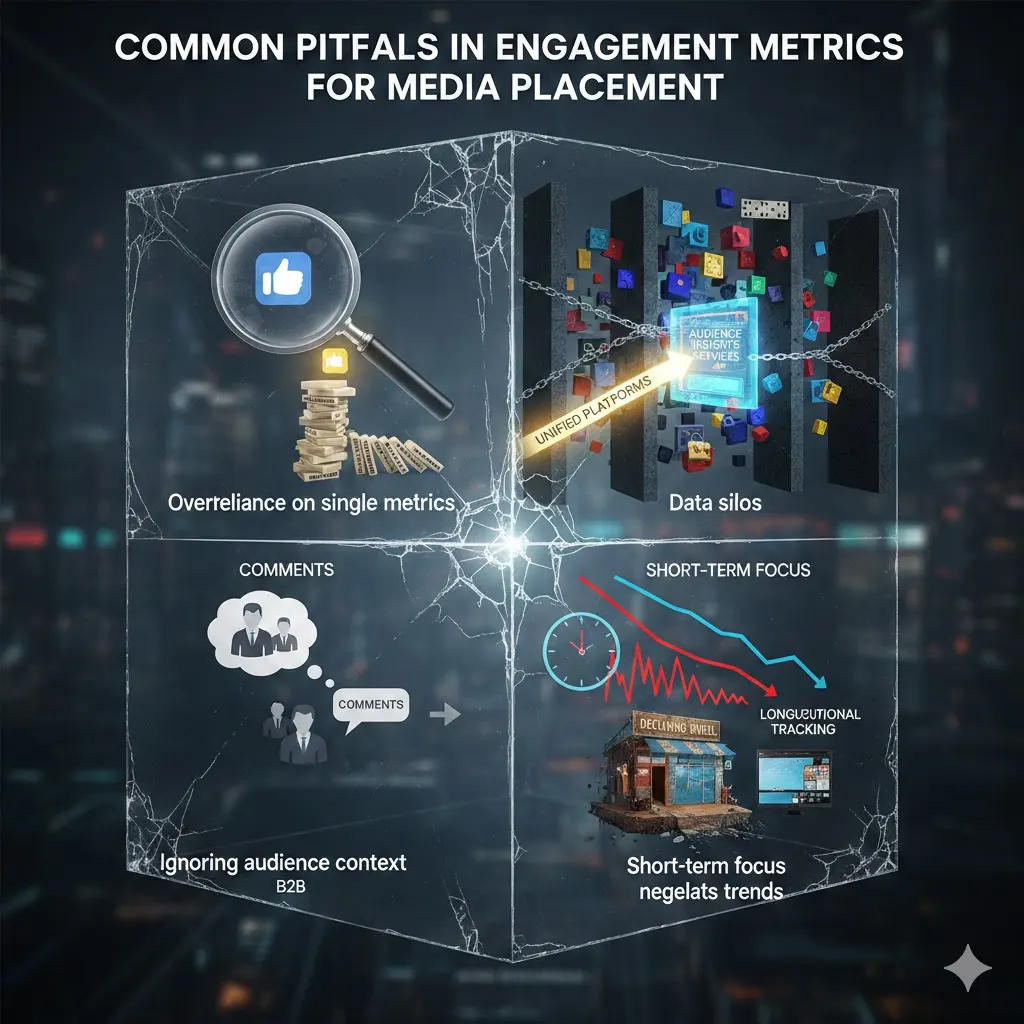
Data silos hinder integration. Solution: Unified platforms like Audience Insights Services consolidate sources. Short-term focus neglects trends. A retailer fixated on spikes ignored declining dwell, losing ground; longitudinal tracking prevented this.
Tools and Technologies Enhancing Metric-Driven Placement
Modern stacks include Meltwater for monitoring, Chartbeat for real-time engagement, and custom dashboards. AI predictors model placement outcomes. Time Intelligence integrates these seamlessly. Free tools like Google Alerts bootstrap efforts, scaling to enterprise solutions.
Measuring ROI: Linking Metrics to Business Outcomes
Tie engagement to leads/sales via attribution models. UTM tracking maps placements to conversions.
KPIs: Cost-per-engagement (CPE), placement value index. Campaigns hitting < $0.50 CPE excel.
Scenario: NGO used this to justify budgets, securing 30% increases via proven links.
Future Trends in Engagement Metrics for PR
Zero-party data rises, offering consented insights for precise placement. Web3 metrics like NFT interactions emerge for niche campaigns. Cross-platform harmonization via APIs unifies fragmented data.

Precision Placement Through Engagement Intelligence
How engagement metrics improve media placement lies in their power to data-inform every decision. Time Intelligence Media Group’s Audience Insights Services empower this, delivering professional analytics for superior PR outcomes. Advance to Audience Intelligence That Shapes Public Conversations for decision-ready tactics.
