

In today’s fast-paced business environment, leaders face mounting pressure to make choices that drive growth amid uncertainty. Data-driven research emerges as a cornerstone, transforming raw information into actionable insights that minimize risks and maximize opportunities. This approach moves beyond intuition, relying on empirical evidence from structured analysis to guide strategies in marketing, operations, and beyond.
By harnessing tools like surveys, analytics platforms, and predictive modeling, organizations can uncover patterns that inform everything from product launches to customer retention. As markets evolve with trends like AI integration and remote work shifts, understanding how data-driven research supports decision making becomes essential for staying competitive.
The Foundation of Data-Driven Research in Modern Business
Data-driven research starts with collecting high-quality, relevant data from diverse sources such as customer feedback, sales metrics, and competitive benchmarks. This process ensures decisions rest on verifiable facts rather than assumptions. For instance, a retail company analyzing purchase histories might discover seasonal buying spikes, allowing them to stock inventory proactively and boost revenue by 20-30%.
The strength lies in its systematic methodology: define objectives, gather data ethically, clean it for accuracy, and apply statistical analysis. This foundation prevents costly errors, like launching a product without validating demand. Companies that prioritize this see clearer paths to success, as evidenced by industries where data analytics has reduced failure rates in new ventures.
Moreover, integrating real-time data streams—think social media sentiment or web traffic—amplifies relevance. A media firm, for example, could track audience engagement during live events to refine content strategies instantly, turning potential flops into hits.
Key Methods for Gathering Reliable Data
Surveys and polls provide direct consumer voices, revealing preferences with quantifiable results. Focus groups add qualitative depth, explaining “why” behind numbers.
Analytics tools like Google Analytics or CRM systems track behavioral data, painting a full user journey picture.
How Data-Driven Research Supports Decision Making Across Industries
Data-driven research supports decision making by bridging information gaps, enabling leaders to forecast outcomes with confidence. In marketing, it identifies high-value segments; a campaign targeting data-informed personas might yield 40% higher conversion rates than broad blasts. This precision stems from segmenting audiences based on behavior, demographics, and psychographics.
Consider healthcare: Hospitals use patient outcome data to allocate resources efficiently, deciding on staffing during peak flu seasons. Such applications demonstrate versatility, from finance—where risk models predict market volatility—to e-commerce, optimizing pricing dynamically.
The ripple effect extends to strategic pivots. During economic downturns, firms analyzing spending patterns can shift to essential goods, sustaining profitability while competitors falter.
Real-World Examples in Action
A tech startup leveraged sales funnel data to tweak its onboarding process, cutting churn by 25% after identifying drop-off points.
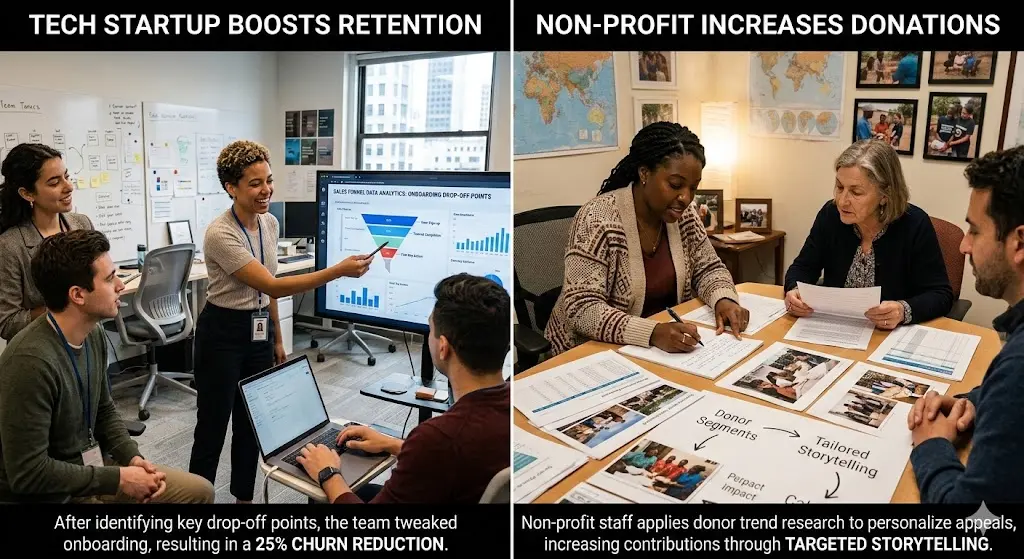
Non-profits apply donor trend research to personalize appeals, increasing contributions through targeted storytelling.
Benefits of Integrating Research into Daily Operations
One primary benefit is risk reduction; data-driven research supports decision making by simulating scenarios via modeling. Leaders test “what-if” hypotheses—such as pricing changes—without real-world costs. This foresight saved a manufacturing firm millions by avoiding an unviable expansion based on flawed assumptions.
Speed and agility follow suit. Automated dashboards deliver insights in hours, not weeks, empowering quick responses to market shifts like viral trends or supply disruptions. Enhanced collaboration arises too, as shared data fosters team alignment.
Finally, long-term advantages include sustained innovation. Firms tracking R&D metrics iteratively improve products, outpacing stagnant rivals.
Quantifiable Impacts on Business Metrics
Improved ROI: Research-guided investments often double returns by focusing on proven channels.
Customer loyalty: Personalized strategies from data boost retention by understanding evolving needs.
Operational efficiency: Streamlined processes cut waste, with examples showing 15-20% cost savings.
For expert support in this area, explore Time Intelligence Media Group’s Research & Reports Services, which deliver tailored insights to fuel your strategies.
Overcoming Challenges in Data-Driven Decision Processes
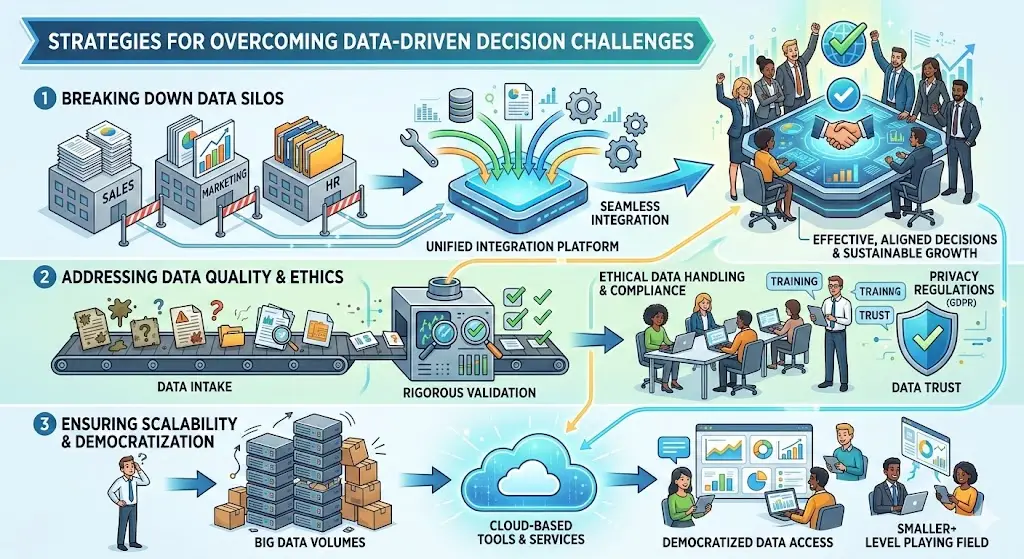
Despite advantages, challenges like data silos hinder progress. Departments hoarding information fragment insights, leading to misaligned decisions. Overcoming this requires unified platforms that integrate sources seamlessly.
Data quality issues—such as inaccuracies from outdated systems—demand rigorous validation protocols. Training teams on ethical handling builds trust, especially with privacy regulations like GDPR.
Scalability poses another hurdle; small firms struggle with big data volumes. Cloud-based tools democratize access, leveling the playing field.
Strategies for Effective Implementation
Start small: Pilot research on one department to build buy-in.
Invest in training: Upskill staff on tools like Tableau for intuitive visualization.
Partner with specialists: Collaborate for advanced analysis without in-house overload.
To dive deeper into practical applications, check out our guide on Turning Research Data into Business Intelligence.
Leveraging Advanced Tools for Deeper Insights
Modern tools elevate how data-driven research supports decision making. Machine learning algorithms detect anomalies humans miss, like fraud patterns in banking. Predictive analytics forecasts trends, helping retailers anticipate demand surges.
Visualization software turns complex datasets into intuitive charts, aiding comprehension. A media company might use heatmaps to spot content engagement hotspots, refining editorial calendars accordingly.
AI-powered sentiment analysis scans reviews and social posts, gauging brand health in real time. This proactive stance turns feedback into immediate strategy tweaks.
Emerging Trends Shaping the Future
Edge computing processes data at the source for faster decisions.
Ethical AI ensures bias-free insights, promoting fair outcomes.
Integration with IoT devices provides granular, real-time data streams.
Building a Data-Centric Culture in Your Organization
Fostering a data-centric mindset starts at the top; executives modeling reliance on research set the tone. Regular training workshops embed skills, turning skeptics into advocates.
Metrics-driven KPIs tie performance to data outcomes, incentivizing adoption. Celebrate wins, like a sales team exceeding targets via targeted leads from research.
Cross-functional teams blend perspectives, enriching analysis. This culture shift yields compounding benefits over time.
Steps to Cultivate This Culture
Assess readiness: Audit current data maturity.
Set clear goals: Align research with business objectives.
Measure progress: Track adoption rates quarterly.
See proven results in action through our Case Study: Research-Driven Business Growth, highlighting transformative impacts.
Data-driven research fundamentally enhances decision making by providing clarity, reducing uncertainties, and unlocking growth potential across sectors. Time Intelligence Media Group offers professional Research & Reports Services to help businesses harness these capabilities effectively, delivering precise, actionable intelligence for informed strategies.
