

Planning press release distribution campaigns requires strategic foresight to ensure your news reaches the right audiences at the optimal time. How companies plan press release distribution campaigns involves audience analysis, channel selection, content optimization, and performance tracking. This middle-of-funnel guide breaks down the process, helping mid-stage decision-makers refine their PR strategies for maximum impact.
Effective campaigns align messaging with business goals, leveraging tools like PR Distribution Services to amplify reach. From startups to enterprises, mastering this planning elevates visibility in competitive media landscapes.
Defining Campaign Objectives and KPIs
Companies begin planning press release distribution campaigns by setting clear objectives tied to measurable KPIs. Whether aiming for brand awareness, lead generation, or crisis management, goals dictate scope—e.g., 100 media pickups or 50,000 impressions. SMART frameworks (Specific, Measurable, Achievable, Relevant, Time-bound) guide this, such as targeting 20% traffic uplift within a week.
KPIs like pickup rates, share of voice, and backlink quality provide benchmarks. A tech firm might prioritize sentiment analysis post-release, tracking positive mentions via tools like Meltwater. This foundation prevents scattershot efforts, focusing resources on high-ROI outcomes.
Detailed objective mapping includes stakeholder alignment. Marketing teams collaborate with execs to prioritize stories, ensuring campaigns support broader narratives like product launches or thought leadership.
Conducting Audience and Journalist Research
Thorough research underpins how companies plan press release distribution campaigns, starting with audience segmentation. Identify primary personas—investors, consumers, or partners—and map their media habits. Tools like Google Analytics reveal referral sources, while surveys uncover preferred channels.
Journalist research drills deeper, using databases such as Cision to profile beats, past coverage, and response patterns. For a healthcare campaign, target reporters who’ve written on telehealth, noting their deadlines and styles. This personalization boosts open rates by 25-40%.
Competitive analysis compares rivals’ campaigns, spotting gaps like underserved regional outlets. Integrating social listening tools monitors trending topics, timing releases for relevance.
Crafting Compelling Press Release Content
Content creation is central to how companies plan press release distribution campaigns, emphasizing newsworthy hooks and SEO optimization. Start with a strong headline incorporating primary keywords, followed by a dateline, boilerplate, and multimedia. AP style ensures professionalism, with quotes from C-suite adding authority.
Examples shine: A SaaS company’s release on AI features highlights quantifiable benefits like “30% efficiency gains,” backed by data visuals. Embed images, videos, or infographics to increase engagement by 94%, per PR studies.
Optimization includes LSI terms like “media outreach” and mobile-friendly formatting. A/B testing variations refines drafts, ensuring resonance across networks.
Selecting Optimal Distribution Channels
Channel selection shapes how companies plan press release distribution campaigns, balancing breadth and precision. Wires like PR Newswire offer mass reach, while niche platforms target specifics. For global B2B, combine Business Wire with LinkedIn syndication.
Consider a retail brand: National wires for broad awareness, trade pubs for industry depth, and social for virality. Hybrid models integrate email lists with aggregators like EIN Presswire.
Budget allocation weighs costs—wires at $500-2000 per release versus free social posts. For foundational mechanics, see how press releases reach journalists through networks.
Timing and Scheduling Strategies
Timing is critical in how companies plan press release distribution campaigns, aligning with news cycles and audience peaks. Analyze data: Tuesdays-Thursdays, 8-10 AM EST, yield highest pickups. Tools like CoSchedule calendar embargoed drops, syncing with events like earnings calls.
Seasonal trends matter—a travel firm’s summer promo launches in March. Real-time adjustments via monitoring dashboards handle breaking news.
Multi-wave strategies roll out teasers, full releases, and follow-ups, sustaining momentum over days.
Budgeting and Resource Allocation
Effective budgeting defines how companies plan press release distribution campaigns, categorizing costs into content, distribution, and amplification. Allocate 40% to wires, 30% to tools, 20% to staff, and 10% to contingencies. ROI calculators forecast returns based on historical data.
Small teams outsource via PR Distribution Services, gaining enterprise tools without overhead. Scale-up firms invest in premium features like geo-targeting.
Tracking variances mid-campaign allows pivots, maximizing fiscal efficiency.
Leveraging Technology and Automation
Technology streamlines how companies plan press release distribution campaigns, with PR software like Prowly automating workflows. AI suggests optimal channels via predictive analytics, while templates ensure compliance.
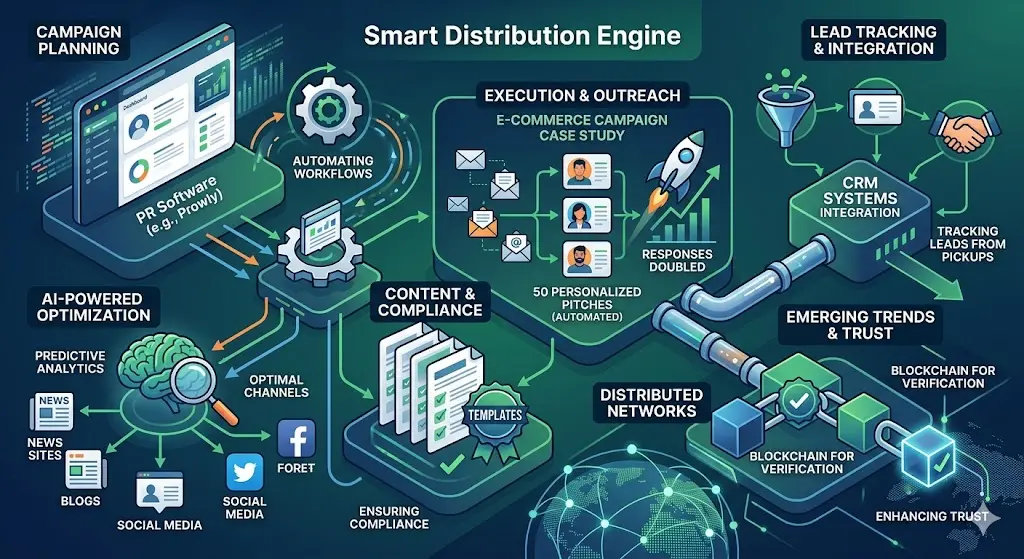
Case: An e-commerce campaign used automation for 50 personalized pitches, doubling responses. Integrations with CRM systems track leads from pickups. Emerging trends like blockchain for verification enhance trust in distributed networks.
Team Roles and Collaboration Tactics
Collaboration is key in how companies plan press release distribution campaigns, assigning roles like writers, editors, and analysts. Cross-functional teams—marketing, legal, execs—review for accuracy and approvals.
Tools like Slack and Asana facilitate real-time feedback. External agencies add expertise, as in Time Intelligence Media Group’s offerings.
Training ensures alignment on best practices, fostering agile execution.
Execution and Launch Protocols
Launch day protocols execute how companies plan press release distribution campaigns seamlessly. Pre-flight checklists verify links, approvals, and backups. Simultaneous multi-channel pushes maximize splash.
Post-launch monitoring kicks in immediately, with hotlines for corrections. A fintech launch coordinated 10 channels, securing 75 pickups via scripted handoffs.
Monitoring, Measurement, and Optimization
Post-distribution measurement refines future campaigns in how companies plan press release distribution campaigns. Dashboards track real-time metrics, using UTM tags for traffic attribution.
- Key metrics: Media mentions (volume/quality), website traffic spikes, social shares.
- Tools compare against benchmarks, identifying winners like high-engagement visuals.
Iterative optimization applies learnings, such as refining targeting for 15% uplift next cycle. For proven delivery, explore how Time Intelligence Media Group delivers PR.
Common Pitfalls and Mitigation Strategies

Avoiding pitfalls strengthens how companies plan press release distribution campaigns. Overlooking embargoes risks credibility; mitigate with dual approvals. Ignoring mobile optimization halves reach—test across devices.
Budget overruns from unvetted vendors? Conduct RFPs. Case study: A brand recovered from a mistimed release by rapid pivots, turning setback into coverage. Proactive audits prevent recurrence.
Strategic planning transforms press release distribution campaigns into powerful growth engines. Time Intelligence Media Group delivers professional PR Distribution Services tailored to these dynamics, empowering companies with expert execution and insights.
