
Sponsored content appears as videos, carousels, or images featuring products. Platforms require #ad or “paid partnership” tags for transparency under UK ASA rules. Creators integrate promotions naturally into feeds. This format drives higher engagement than static ads, with reels averaging 22% interaction rates.
Social media algorithms favor authentic content. Sponsored posts blend with organic material. Creators select platforms matching their audience, such as TikTok for Gen Z or LinkedIn for professionals. Revenue potential grows with verified accounts and blue ticks.
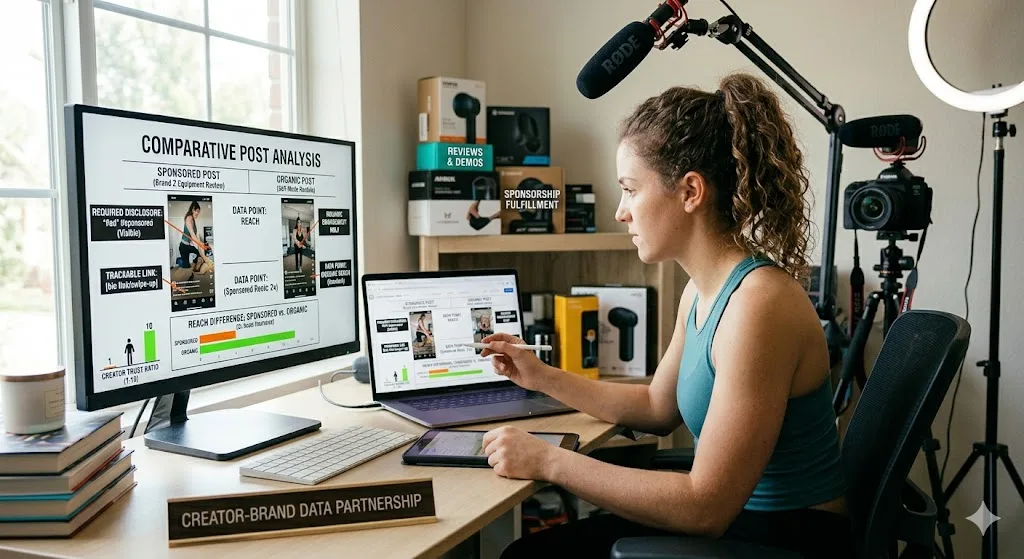
How does it differ from organic posts?
Sponsored posts include disclosures and trackable links. Organic posts lack payments. Sponsored versions boost visibility through brand shares. Data shows sponsored reels gain 2x reach. Creators balance ratios at 1:10 sponsored to organic for trust.
How do you start earning from sponsored content on Instagram?
Start by growing 5,000+ engaged followers, create a media kit, and pitch brands via DMs or email. Charge £100 per 1,000 followers. Use affiliate programs for commissions. Secure 2-5 deals monthly for £2,000 revenue.
Build a niche profile in beauty, fitness, or tech. Post daily with high-quality visuals. Media kits list demographics: 60% female, 18-34 age. Pitch templates highlight engagement rates above 4%. Instagram’s creator marketplace matches users to brands automatically.
Track analytics via Insights for pitch proof. Join affiliate networks for product links. Initial deals start small, scaling to long-term contracts. UK creators report 30% conversion from pitches.
What Instagram features support monetisation?
Reels bonuses pay £0.01-£0.04 per 1,000 views. Shopping tags enable direct sales. Subscriptions offer exclusive content for £4.99 monthly. Badges in lives generate tips during sponsored streams. These features add 20% to base earnings.
How do you monetise sponsored content on TikTok?
Monetise TikTok via Creator Fund, brand challenges, and duets. Pitch with 10,000 followers at £0.02 per 1,000 views. Spark Ads amplify posts. Earn £1,000 from viral challenges with 1 million views.
TikTok favors short videos under 15 seconds for sponsorships. Creators join Creator Marketplace after 10,000 followers. Pitches include video concepts like unboxings. Affiliate links in bios drive sales commissions at 5-20%.
Live gifts convert to cash at £0.01 per diamond. Series collections gate premium content. UK TikTokers average £3,500 monthly from 5 deals.
What strategies boost TikTok sponsorship rates?
Use trending sounds for 3x views. Collaborate in stitches for cross-promotion. Analytics show peak times: evenings. A/B test thumbnails. These increase deal values by 25%.
For foundational concepts, read What Is Sponsored Content Monetisation and How Do Creators Use It Today?.
How do you secure sponsored deals on YouTube?
Secure YouTube deals with 1,000 subscribers via brand emails or FameBit. Rates hit £5 per 1,000 views. Integrate products in long-form reviews. End screens link to purchases for 10% commissions.
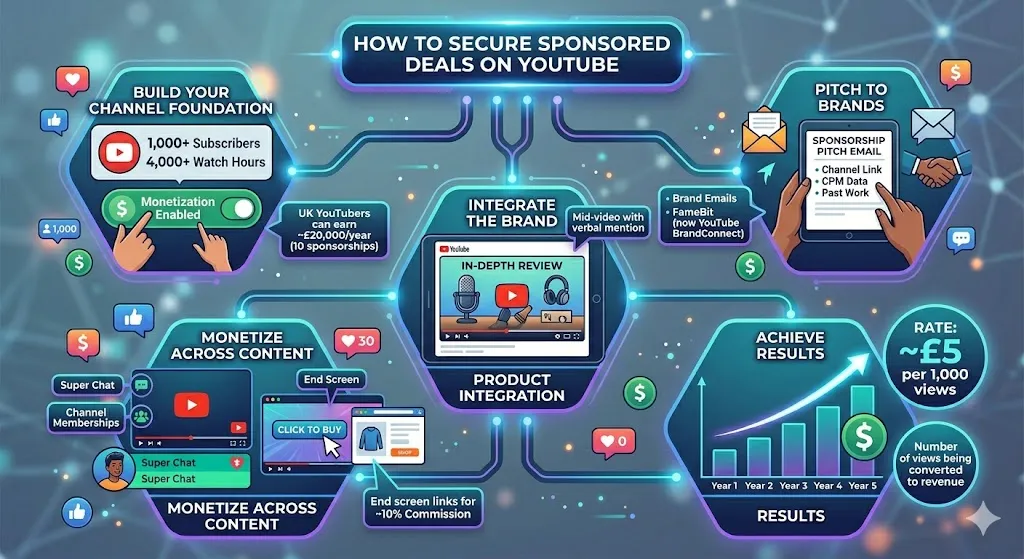
YouTube suits in-depth content like tutorials. Creators enable monetisation post-4,000 watch hours. Pitches attach channel links and CPM data. Sponsorships appear mid-video with verbal mentions. Super Chats and memberships add revenue. UK YouTubers earn £20,000 yearly from 10 sponsorships.
Which YouTube tools aid revenue?
Cards and end screens direct traffic. Community posts tease collaborations. Analytics detail watch time drops. These optimise retention for higher rates.
What components make up a social media sponsorship contract?
Contracts specify post count, deadlines, fees, revisions, and metrics. Fees structure as £500 base plus £100 per story. Rights cover 6-month usage. Kill fees refund 50% if cancelled.
Detailed briefs outline hashtags and CTAs. Payment splits 50% upfront. Exclusivity lasts 60 days. Performance reports use platform pixels. UK law requires clear terms. Negotiate add-ons like IG stories for 30% uplift.
How do you compare contract types across platforms?
Instagram favors flat fees; TikTok performance-based. YouTube includes evergreen rights. Hybrid models combine both, common on LinkedIn.
What benefits come from social media sponsored content?
Benefits feature scalable income, audience expansion, and skill development. Earn £50,000 annually with 100,000 followers. Reach grows 25% per collab. Analytics sharpen content skills.
Income diversifies beyond ads. Platforms deprioritize non-sponsored posts. Partnerships provide free products worth £5,000 yearly. Skills in negotiation transfer to careers. Audience loyalty strengthens with transparent promotions.
How do platforms compare in revenue potential?
Instagram yields £0.50-£1 per follower; TikTok £0.03 per view. YouTube excels in evergreen earnings. Diversify across three for stability.
What use cases show earnings on social media?
Use cases: fitness reels promoting gear, beauty hauls on stories, gaming lives with gear. Fitness creator earns £4,000 from 4 Reels. Beauty hauls generate £2,500 commissions.
Fitness creators demo workouts with apparel. Beauty influencers swipe through products. Gaming streams feature controllers. Food challenges showcase recipes. Travel Reels highlight stays.
How do you track use case performance?
UTM parameters measure clicks. Engagement rates target 5%. Conversion funnels track sales. Adjust based on 10% drop-offs.
To scale to high-traffic websites, explore Monetise Your Brand With Sponsored Content Published Across High Traffic Websites.
How do taxes work for UK social media creators?
UK creators declare earnings over £1,000 via Self Assessment. Deduct expenses like equipment at 20% VAT. Pay 20% income tax above £12,570. Track via apps like FreeAgent.
HMRC views creators as sole traders. Quarterly payments avoid penalties. Allowable costs include software subscriptions. Pensions reduce taxable income. Consult accountants for £200 yearly.
What common pitfalls avoid in social media monetisation?
Pitfalls include overposting sponsored content, ignoring disclosures, and poor negotiations. Limit to 20% of feed. Fines reach £500 for non-disclosure. Undervaluing halves earnings.
Overposting drops engagement 40%. Disclosures prevent bans. Negotiate data-backed rates. Audience feedback guides adjustments.