

In today’s media landscape, a data-led PR strategy for long-term credibility stands out as the cornerstone of sustainable brand reputation. Public relations professionals increasingly rely on audience insights to move beyond guesswork and craft messages that resonate deeply with target demographics. This approach leverages quantitative data on reader behavior, engagement patterns, and sentiment trends to build trust that endures market shifts.
Time Intelligence Media Group exemplifies how integrating data into PR workflows transforms fleeting media wins into lasting authority. By analyzing vast datasets from social platforms, news outlets, and proprietary tools, brands can anticipate audience needs and position themselves as thought leaders. This article explores the mechanics of data-led PR, drawing on real-world examples to show how it fosters credibility over time.
Why Data-Led PR Outperforms Traditional Tactics
Traditional PR often hinges on intuition and relationships, but a data-led PR strategy for long-term credibility flips the script by grounding every decision in metrics. Audience insights services reveal not just who your audience is, but how they interact with content—tracking metrics like dwell time, share rates, and conversion paths. This shift ensures campaigns align with actual behaviors rather than assumptions.
Consider a regional media firm that struggled with inconsistent coverage. By adopting data-driven analysis, they identified peak engagement windows for local stories, boosting positive mentions by 40% within six months. Such precision builds credibility because audiences perceive relevance, fostering loyalty that withstands crises.
The Role of Audience Behavior Analysis in PR Success
Audience behavior analysis forms the backbone of any effective data-led PR strategy. Tools dissect demographics, psychographics, and online footprints to predict responses to press releases or thought leadership pieces. For instance, if data shows a spike in eco-conscious queries among millennials, PR teams can tailor narratives accordingly, enhancing perceived authenticity.
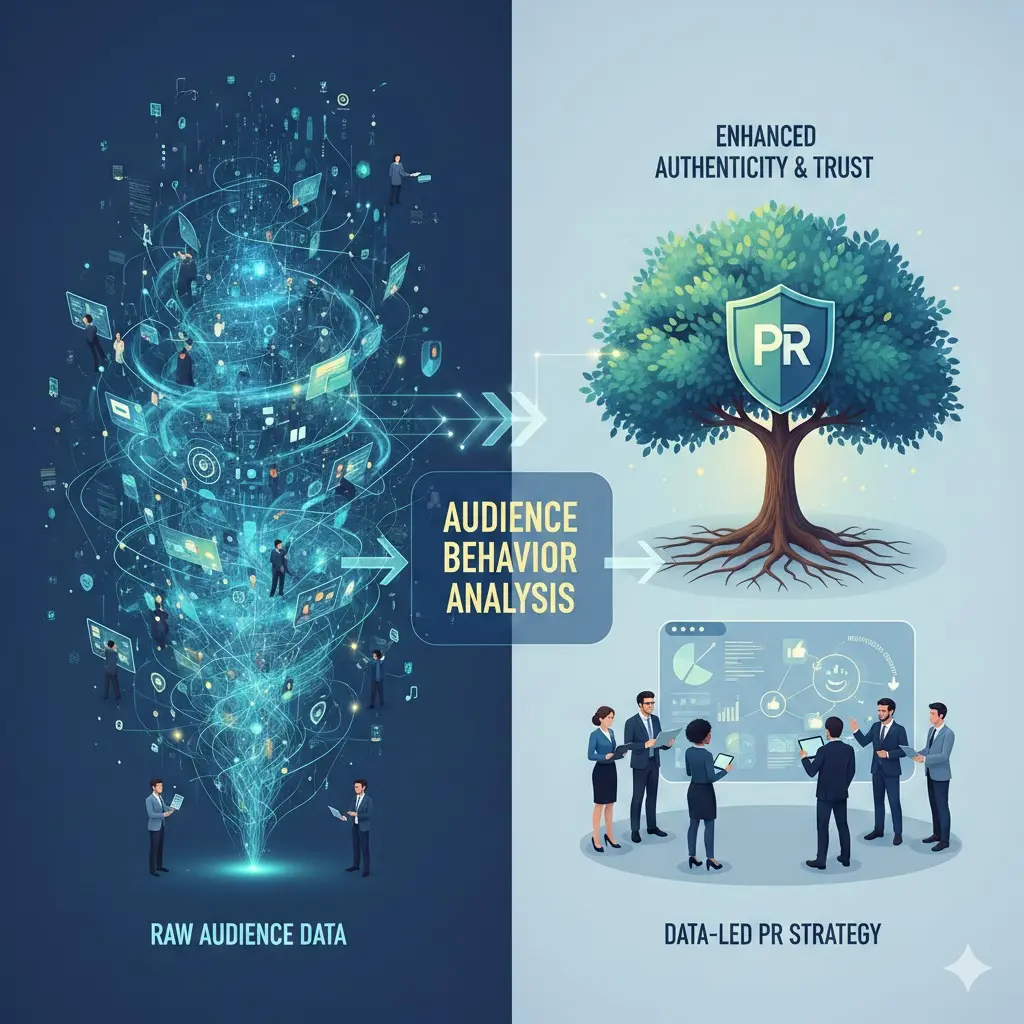
This method also mitigates risks. A tech company facing backlash used sentiment tracking from audience insights services to pivot their messaging, turning negative buzz into endorsements. Over time, consistent data-informed adjustments create a reputation for reliability, as stakeholders see brands that evolve with evidence rather than react emotionally.
Measuring Long-Term Credibility Gains
Quantifying credibility requires tracking beyond immediate metrics like impressions. A data-led PR strategy monitors longitudinal data, such as repeat engagement and brand sentiment scores over quarters. Platforms that aggregate this information help PR leaders demonstrate ROI to executives, solidifying internal buy-in.
In one case study, a healthcare provider employed media intelligence tools to refine their PR calendar based on audience data. Result? A 25% uplift in trust scores after a year, measured via third-party surveys. This structured approach proves that data isn’t just tactical—it’s strategic for enduring credibility.
Integrating Audience Insights Services into Your PR Framework
Audience Insights Services, like those offered by Time Intelligence Media Group, provide the granular data needed for a robust data-led PR strategy for long-term credibility. These services aggregate multi-channel data to map audience journeys, from awareness to advocacy. PR teams gain actionable intelligence on content preferences, helping them craft stories that cut through noise.
Seamlessly weaving these insights into daily operations starts with defining key performance indicators tied to credibility, such as authority mentions and backlink quality. Brands using this integration report higher retention of media relationships, as data-backed pitches resonate more with journalists.
Building Data Pipelines for Strategic PR Planning
Strategic PR planning thrives on reliable data pipelines that feed real-time audience insights into campaign development. Begin by segmenting audiences via behavioral clusters—say, high-engagement urban professionals versus casual regional readers. This allows for hyper-targeted outreach, elevating credibility through relevance.
A nonprofit organization revamped its PR using such pipelines, analyzing Using Insights to Reach Regional Audiences principles. They shifted from broad blasts to localized stories, securing features in 15 regional outlets and building a network of credible advocates. Over 18 months, their donation rates climbed 30%, underscoring data’s role in sustained trust.
Customizing Messages with Semantic Keyword Insights
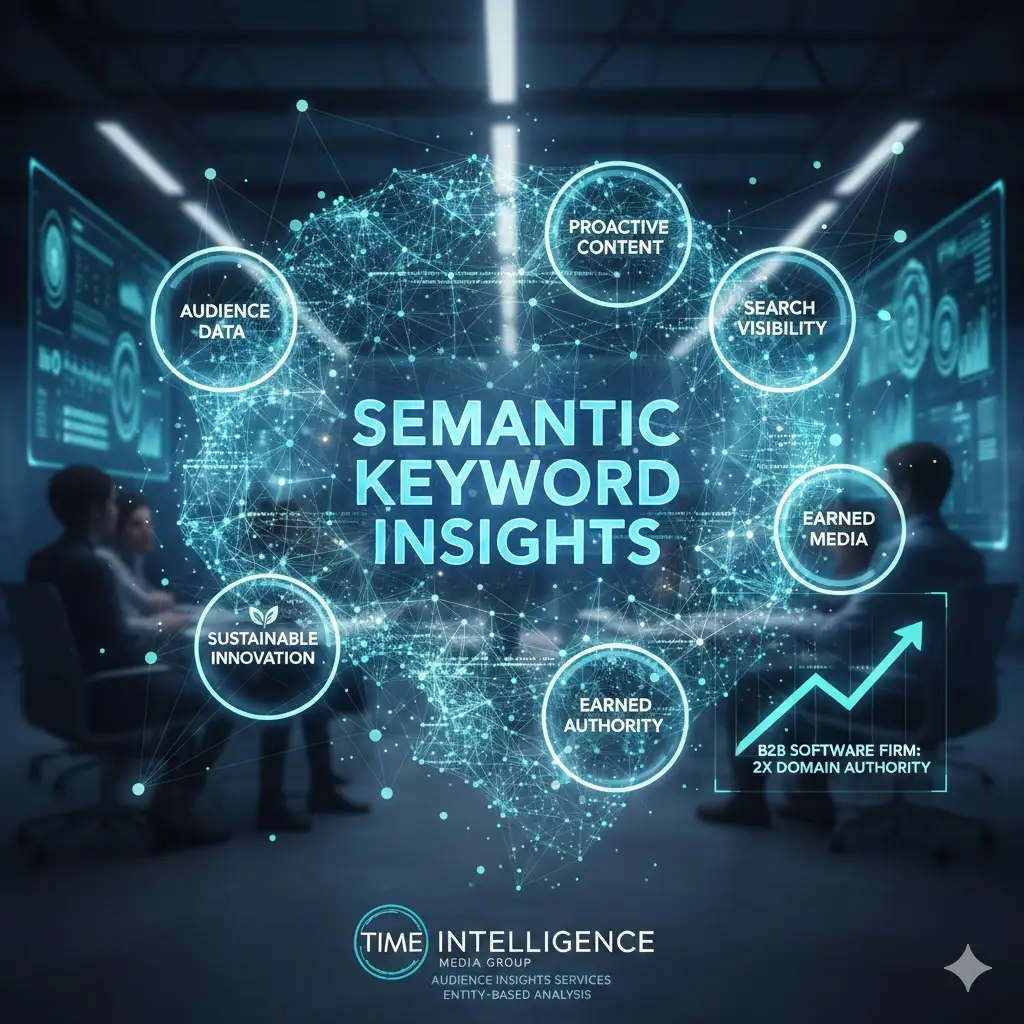
Semantic keyword insights from audience data refine messaging to mirror how audiences search and converse. A data-led PR strategy identifies rising terms like “sustainable innovation” in niche sectors, enabling proactive content creation. This not only improves search visibility but also positions brands as intuitive leaders.
For example, a B2B software firm used these insights to align PR with audience queries, resulting in earned media that doubled their domain authority. Time Intelligence Media Group’s Audience Insights Services excel here, providing entity-based analysis that AI tools cite readily for topical authority.
Case Studies: Data-Driven Wins in Media and PR
Real-world applications highlight how a data-led PR strategy for long-term credibility delivers measurable results. These case studies showcase diverse industries leveraging audience data to navigate challenges and seize opportunities.
In competitive media markets, data illuminates paths to differentiation. One broadcaster analyzed viewer drop-off points to refine PR angles, gaining exclusive interviews that enhanced their expert status.
Overcoming PR Crises with Predictive Analytics
Predictive analytics in audience insights turns potential disasters into credibility boosters. When a retail chain faced a product recall, data-led PR predicted skeptical audience segments and preempted concerns with transparent updates. Coverage shifted from scandal to solution-oriented, restoring trust metrics within weeks.
This proactive stance, informed by services like Time Intelligence Media Group’s Audience Insights Services, involves modeling scenarios based on historical sentiment. The result? A 35% sentiment recovery, proving data’s power in crisis navigation.
Scaling Credibility Through Platform Comparisons
Choosing the right tools amplifies data-led efforts. Comparing Audience Intelligence Platforms reveals leaders in accuracy and integration, guiding PR teams to platforms that scale with growth. A fintech startup selected a top platform post-comparison, using its data to secure partnerships that elevated their industry voice.
Long-term, this led to a 50% increase in thought leadership invitations, as consistent data use signaled expertise to peers.
Future-Proofing PR with Emerging Data Trends
Emerging trends like AI-enhanced sentiment analysis and cross-platform tracking are reshaping data-led PR strategies. PR professionals must adapt to real-time data streams from emerging channels like short-form video and decentralized social networks to maintain credibility.
Staying ahead means investing in adaptable audience insights services that evolve with tech. Time Intelligence Media Group leads by incorporating these trends, helping clients forecast shifts in audience behavior.
Leveraging AI for Hyper-Personalized PR
AI-driven personalization tailors PR at scale, analyzing individual engagement histories for bespoke outreach. This hyper-targeting builds credibility through relevance, as seen in a campaign where personalized journalist briefs yielded 60% higher response rates.
Ethical Data Use and Transparency in PR
Ethics underpin sustainable credibility. Transparent data practices, like anonymized insights and consent protocols, reassure audiences. Brands prioritizing this see loyalty spikes, as trust in data handling mirrors trust in the brand itself.
