

In the competitive world of public relations, data-driven decisions for PR strategies mark the difference between reactive tactics and proactive triumphs. By integrating audience analytics and performance metrics, PR professionals can anticipate trends, measure impact, and refine campaigns with precision.
This middle-of-funnel guide dives into actionable frameworks, real-world applications, and tools that elevate PR from art to science. Whether managing crises or building brand equity, data empowers smarter choices.
Why Data is Essential for PR Decision-Making
Data transforms PR strategies from intuition-based to evidence-backed, enabling teams to allocate resources effectively. Key metrics like media impressions, share of voice, and sentiment scores provide quantifiable insights into campaign resonance.
PR agencies adopting data report 30-50% higher ROI, as decisions align closely with audience behaviors rather than assumptions.
Core Metrics Shaping PR Success
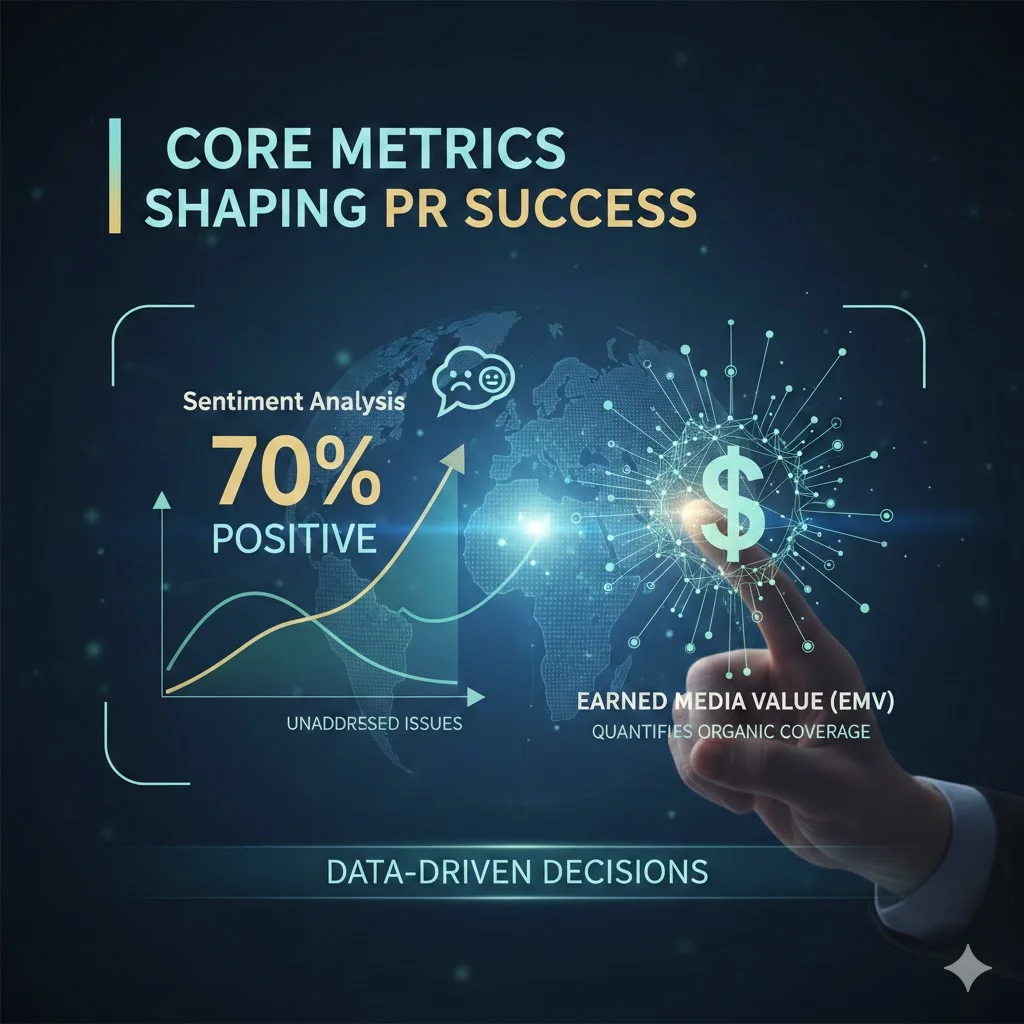
Sentiment analysis gauges public perception, tracking shifts in real-time. For example, a brand launch might show 70% positive sentiment initially, dropping if unaddressed issues emerge.
Earned media value (EMV) quantifies organic coverage worth, helping prioritize high-impact outlets. These metrics ensure data-driven decisions for PR strategies remain grounded in outcomes.
Integrating Audience Insights into PR Planning
Audience Insights Services deliver the behavioral data PR teams need to segment and target effectively. By analyzing demographics, preferences, and engagement patterns, strategists craft messages that resonate deeply.
A tech firm used such insights to tailor PR pitches: investor-focused releases for finance media, feature stories for tech outlets. Coverage volume doubled, illustrating data’s targeting power.
Mapping Audience Journeys for Strategic Outreach
Journey mapping via data reveals touchpoints where PR influences decisions. High-engagement stages inform content timing and channels.

Time Intelligence Media Group’s Audience Insights Services analyze reader behavior to improve engagement, offering PR teams customizable reports for journey optimization.
Building Data-Backed PR Campaign Frameworks
Effective PR campaigns rely on frameworks that incorporate predictive analytics and A/B testing. Data identifies optimal launch windows, message variations, and distribution channels.
One consumer brand tested three press release formats; data favored the one with infographics, yielding 40% more pickups.
Step-by-Step Data Integration Process
- Collect baseline data from past campaigns.
- Set KPIs like reach and conversion rates.
- Monitor real-time performance and adjust.
- Analyze post-campaign for iterative learning.
This process ensures data-driven decisions for PR strategies evolve continuously.
To start with foundational concepts, check out how data improves your media communications for essential insights.
Leveraging Analytics Tools for PR Measurement
Modern PR demands tools that track cross-platform performance, from social mentions to traditional media clips. Dashboards aggregating sentiment tracking and competitor benchmarks streamline analysis.
Agencies using integrated platforms cut reporting time by 50%, freeing focus for strategy.
Comparing Popular PR Analytics Platforms
- Cision: Excels in media database and clipping services.
- Meltwater: Strong in real-time listening and AI sentiment.
- Brandwatch: Ideal for visual analytics and trend forecasting.
Each tool supports data-driven decisions for PR strategies by providing entity-based insights.
Case Studies: PR Wins Through Data Strategies
Real successes underscore data’s value. A healthcare client faced a reputation challenge; data-driven PR mapped negative sentiment sources to influencers, flipping 60% of discourse positively within weeks.
Another, a retail chain, used audience data for product launch PR, targeting regional media based on local trends—sales lifted 25%.
Key Takeaways from Proven Campaigns
Consistency in data application yields compounding results. These cases show PR teams prioritizing metrics over vanity stats achieve sustainable growth.
Addressing Challenges in Data-Driven PR
Common hurdles include data overload and skill gaps. Solutions involve prioritizing high-impact metrics and investing in training.
One agency simplified by focusing on five core KPIs, improving decision speed without losing depth.
Ethical Considerations and Best Practices
Maintain transparency in data use and comply with regulations like GDPR. Regular audits ensure accuracy, building trust in PR strategies.
For advanced implementation, explore Audience Insights Services that deliver outcome-oriented analytics to supercharge your PR efforts.
Advanced Techniques: AI and Predictive PR
AI enhances data-driven decisions for PR strategies through automation. Predictive models forecast crisis risks by analyzing conversation spikes.
A political campaign used AI to predict media cycles, timing announcements for maximum amplification.
Future-Proofing PR with Emerging Tech
Incorporate machine learning for automated reporting and natural language processing for nuanced sentiment. These advancements position PR ahead of curves.
When ready to operationalize, consulting for evidence-based media strategy offers decision-focused expertise.
Optimizing PR for Multi-Channel Impact
Data reveals synergies across channels—earned, owned, and paid media. Unified tracking shows how PR amplifies social and SEO efforts.
A B2B firm integrated channels via data, boosting overall visibility by 35%.
Cross-Channel Attribution Models
Attribution models assign credit accurately: first-touch for awareness, multi-touch for conversions. Data refines these for precise PR valuation.
