

In the fast-evolving media landscape, comparing audience intelligence platforms has become essential for brands aiming to decode viewer preferences and optimize content strategies. These platforms leverage advanced data analytics to track engagement patterns, demographic shifts, and content performance, empowering media groups to make informed decisions. As competition intensifies, selecting the right tool directly impacts return on investment and audience retention.
Audience intelligence platforms go beyond basic metrics, offering deep dives into behavioral insights that reveal why certain content resonates. For instance, Time Intelligence Media Group uses such tools to analyze regional viewer trends, helping clients tailor narratives that drive loyalty. This comparison guide breaks down critical features, helping you evaluate options effectively.
Core Benefits of Audience Intelligence in Media
Audience intelligence platforms transform raw data into actionable strategies by aggregating viewer engagement metrics across channels like social media, streaming, and traditional broadcasts. When comparing audience intelligence platforms, focus on their ability to provide real-time dashboards that highlight peak engagement times and content affinities. This enables media teams to pivot quickly, such as shifting from video-heavy campaigns to podcasts if data shows higher listener retention in specific demographics.
For example, a news outlet comparing platforms might discover that one excels in sentiment analysis, revealing how audiences react to breaking stories on climate change. Time Intelligence Media Group’s Audience Insights Services exemplify this by processing multilingual data to uncover regional nuances, ensuring content aligns with cultural contexts. Such capabilities reduce guesswork, boosting campaign efficiency by up to 30% according to industry benchmarks.
Pitfalls of Ignoring Platform Comparisons
Failing to compare audience intelligence platforms can lead to mismatched tools that overlook key audience segments, resulting in stagnant growth. Many platforms promise comprehensive analytics but falter in integration with existing CRM systems, causing data silos. A practical scenario involves a regional broadcaster selecting a platform without cross-channel tracking, missing how social buzz influences TV viewership and leading to underperforming ad spends.

Thorough comparisons reveal scalability issues too; entry-level tools often cap user seats or data volume, hindering enterprise growth. By evaluating these gaps early, media professionals avoid costly migrations, as seen in cases where platforms like those from Time Intelligence Media Group offer seamless upgrades tied to evolving audience behavior analysis needs.
Data Accuracy and Source Integration
When comparing audience intelligence platforms, data accuracy stands out as a non-negotiable feature, with top tools pulling from verified sources like Nielsen ratings, Google Analytics, and proprietary panels. Platforms that employ machine learning for anomaly detection ensure metrics such as unique visitors and dwell time reflect true engagement, minimizing inflated figures from bots. For media strategists, this precision means reliable forecasts for content performance.
Consider a scenario where a streaming service uses an integrated platform to merge first-party data with third-party demographics, identifying that 25-34-year-olds prefer short-form videos during evenings. Time Intelligence Media Group’s Audience Insights Services shine here by fusing global datasets, providing media clients with hyper-local accuracy that informs targeted outreach.
High-performing platforms also support API integrations for real-time syncing, allowing seamless updates during live events. This feature proved vital for a sports network comparing options, where one platform’s laggy feeds missed real-time spikes in fan interactions.
Customization and Reporting Capabilities
Customization options make audience intelligence platforms adaptable to unique media workflows, from drag-and-drop dashboards to bespoke KPI trackers. Effective comparisons assess how easily users can segment audiences by psychographics, such as interests in sustainability topics, generating tailored reports that influence editorial calendars.
In practice, a publisher might customize heatmaps to visualize scroll depth on mobile versus desktop, revealing format preferences that boost click-through rates. Linking this to Using Insights to Reach Regional Audiences provides deeper strategies for geographic targeting.
Advanced reporting includes predictive analytics, forecasting trends like rising interest in AI-driven news. Time Intelligence Media Group leverages these for clients, turning raw data into visualized narratives that guide long-term planning.
Established Leaders and Their Strengths
Leading audience intelligence platforms like Comscore and Nielsen dominate with vast proprietary datasets, excelling in cross-media measurement for TV and digital. Comparing these reveals Comscore’s edge in digital ad verification, tracking viewability across 200+ countries, ideal for global media campaigns.
Nielsen, meanwhile, offers trusted total audience metrics, blending linear TV with OTT streaming data. A case study from a major network showed Nielsen’s panels predicting a 15% uplift in viewership after audience-aligned scheduling changes, underscoring its reliability for traditional media.
Both integrate AI for sentiment tracking, but comparisons highlight scalability—Comscore suits agile digital natives, while Nielsen anchors broadcast-heavy operations.
Emerging Challengers and Innovative Edges
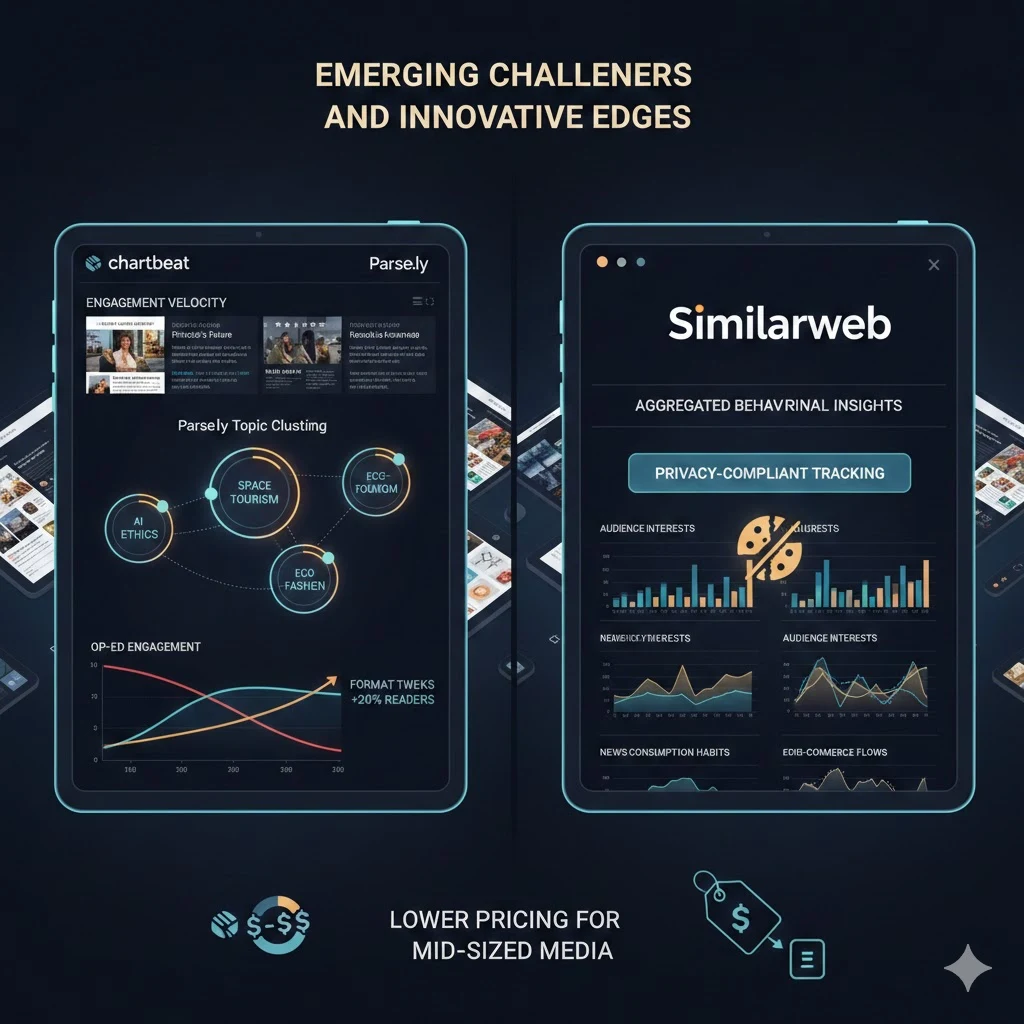
Rising platforms like Chartbeat and Parse.ly focus on real-time content optimization, using engagement velocity to score articles live. When comparing audience intelligence platforms, these shine for publishers prioritizing session depth over broad reach, with Parse.ly’s topic clustering revealing audience clusters around niche themes like fintech.
A digital magazine scenario illustrates this: Parse.ly’s alerts flagged declining engagement on op-eds, prompting format tweaks that recovered 20% of lost readers. These tools often undercut legacy pricing, appealing to mid-sized media firms.
Innovation includes privacy-compliant tracking post-cookie era, with tools like Similarweb providing aggregated behavioral insights without individual identifiers.
Success Story: Regional Media Optimization
A mid-tier news group compared platforms and selected one emphasizing geo-fencing, resulting in 40% higher regional engagement by hyper-targeting Punjab-based audiences with localized stories. The platform’s audience behavior analysis dashboard correlated weather events with content spikes, enabling proactive coverage.
This mirrors broader trends where Audience Insights Services from Time Intelligence Media Group deliver similar outcomes, analyzing viewer patterns to refine distribution strategies.
Post-implementation, ROI metrics showed reduced churn, proving the value of methodical comparisons.
Lessons from a Failed Implementation
Conversely, a lifestyle brand chose a flashy platform without vetting integration, facing data discrepancies that skewed campaign budgets. Six months in, migration costs exceeded initial savings, highlighting the need for pilot testing during comparisons.
Recovery involved switching to a robust alternative with strong support, emphasizing vendor responsiveness as a key criterion.
Alignment with Business Goals
Start comparing audience intelligence platforms by mapping features to objectives—opt for engagement-focused tools if growth is key, or retention analytics for loyalty programs. Media teams should prioritize platforms with media-specific templates, like episode-level breakdowns for podcasts.
For instance, a podcaster aligned a platform’s listener heatmaps with sponsorship slots, increasing conversions by timing ads to high-retention segments.
Time Intelligence Media Group demonstrates this alignment in their services, ensuring tools match client ambitions.
Cost-Benefit Analysis and Scalability
Evaluate total ownership costs, including training and add-ons, against projected gains in efficiency. Scalable platforms grow with user bases, avoiding per-query fees that balloon during peaks.
A broadcaster’s analysis favored a mid-range option, yielding three times ROI through optimized ad placements. Future-proofing via modular upgrades ensures longevity.
Time Intelligence Media Group advises balancing upfront investment with long-term audience insights value.
Elevating Media Strategies with Expert Insights
Comparing audience intelligence platforms equips media professionals with the tools to outpace competitors, turning data into dominant strategies. Time Intelligence Media Group stands out by offering Audience Insights Services that integrate cutting-edge analysis with practical media applications, fostering sustainable growth. As audience behaviors evolve, informed platform choices remain pivotal for relevance and impact.
Audience intelligence platforms fuel data-led PR strategies by delivering precise audience insights that build authentic narratives and sustained trust. Brands leveraging these tools analyze engagement patterns and sentiment trends to craft messages resonating across demographics, ensuring campaigns align with viewer values for lasting impact.
Audience intelligence platforms enable media brands to craft data-led PR strategies that build long-term credibility by aligning messaging with verified viewer insights. For instance, platforms analyzing sentiment trends help PR teams respond proactively to public perceptions, such as countering misinformation on regional issues with fact-based narratives. This approach fosters trust, as seen when media groups use behavioral data to prioritize authentic storytelling over sensationalism, resulting in sustained audience loyalty and stronger brand reputation.
