

Audience research forms the backbone of successful news platforms, enabling publishers to understand reader preferences, optimize content, and boost engagement. Yet, in today’s fast-evolving media landscape, challenges in audience research for news platforms persist, from fragmented data sources to privacy regulations. These hurdles can hinder media companies’ ability to deliver personalized experiences, making Audience Insights Services essential for overcoming them.
News platforms face unique pressures, including real-time news cycles and diverse global audiences. Time Intelligence Media Group recognizes these pain points, offering tools to navigate them effectively. This MOFU guide explores key obstacles and strategies, drawing on industry trends and examples.
The Problem of Disconnected Data Sources
Challenges in audience research for news platforms often start with data fragmentation, where user interactions scatter across websites, apps, social media, and newsletters. News outlets track metrics like page views and time spent, but integrating these into a unified view proves difficult. For instance, a platform might excel at web analytics via Google Analytics but miss mobile app behaviors or email open rates, leading to incomplete reader behavior analysis.
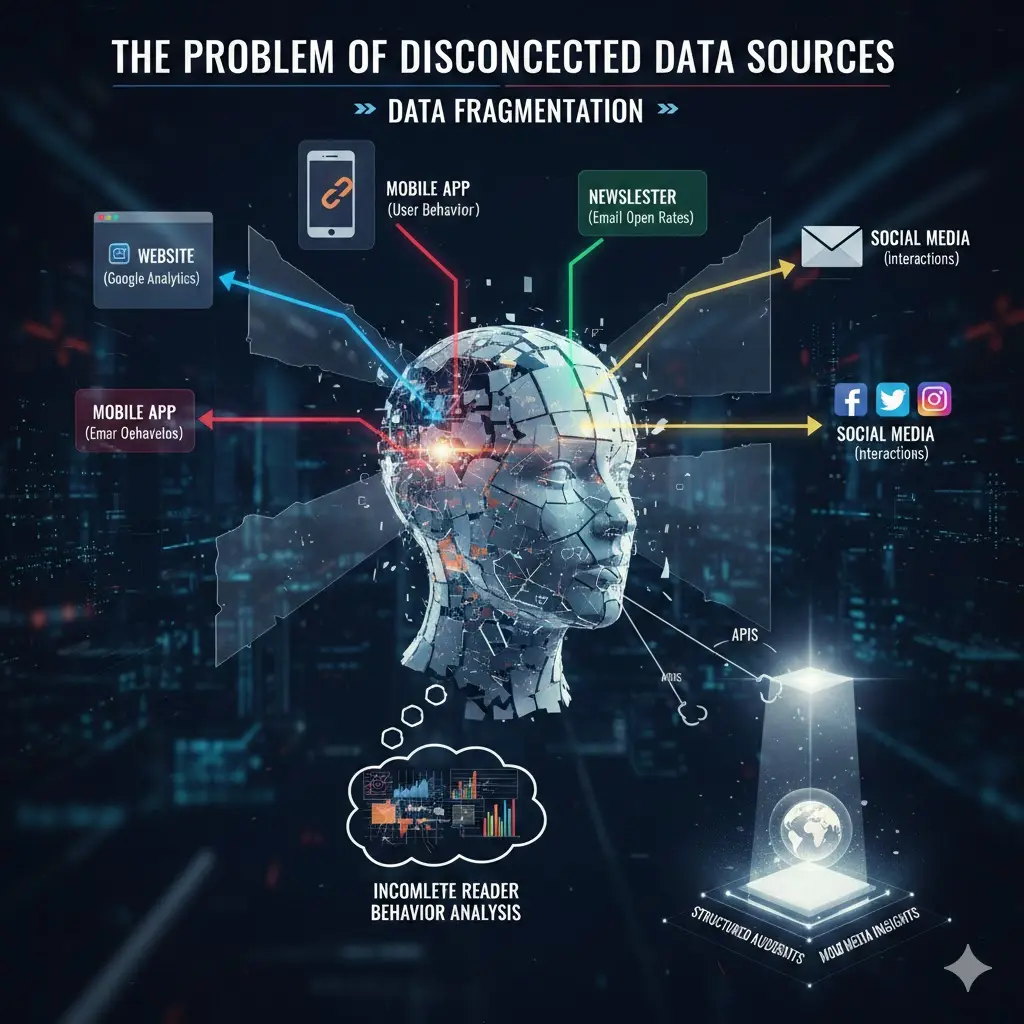
This silos effect distorts insights. Consider a major news site during an election cycle: desktop users linger on in-depth articles, while mobile readers prefer quick headlines. Without merging these datasets, platforms misjudge engagement patterns, resulting in misguided content strategies. Structured audience insights services address this by aggregating data through APIs and machine learning, providing a holistic view of media engagement metrics.
Strategies to Unify Data Streams
To combat fragmentation, news platforms adopt customer data platforms (CDPs) that centralize information. A practical example involves a regional news network that unified its web, app, and CRM data, revealing 25% higher retention among cross-device users. Key steps include:
- Auditing existing tools for compatibility.
- Implementing tag managers to capture cross-platform events.
- Using AI-driven deduplication to link anonymous sessions to known profiles.
Time Intelligence Media Group’s Audience Insights Services exemplify this approach, helping clients merge siloed data for accurate segmentation. By prioritizing entity-based analysis—such as linking user IDs to content topics—platforms reduce blind spots and enhance personalization.
Overcoming silos not only improves accuracy but also scales research efforts. Platforms that invest here see measurable lifts in subscription rates, as unified data uncovers hidden patterns like peak reading times across demographics.
Navigating GDPR, CCPA, and Emerging Laws
Privacy laws like GDPR and CCPA intensify challenges in audience research for news platforms, restricting first-party data collection amid cookie deprecation. News sites rely on behavioral tracking for insights, but user consent requirements limit sample sizes. For example, a European news platform lost 40% of its tracking data post-GDPR, skewing demographics toward non-consenting users and inflating engagement from privacy-savvy segments.
These regulations demand transparent opt-ins, complicating long-term cohort analysis. Platforms must balance compliance with insight depth, often resulting in anonymized aggregates that obscure individual preferences. Audience insights services mitigate this by employing privacy-first techniques like differential privacy, ensuring compliant, actionable data.
Building Consent-Driven Research Frameworks
Effective strategies focus on value exchange: offering personalized newsletters in return for consent. A U.S. news outlet implemented contextual targeting, boosting consent rates by 35% without third-party cookies. Best practices include:
- Designing clear consent banners with granular controls.
- Leveraging zero-party data from quizzes and surveys.
- Auditing vendors for compliance to avoid fines.
Time Intelligence Media Group integrates these into its Audience Insights Services, using federated learning to analyze data without central storage. This approach maintains trust while delivering robust media engagement metrics, helping platforms adapt to laws like India’s DPDP Act.
Legacy Tools Falling Short in Real-Time Analysis
Many news platforms grapple with outdated tech stacks that can’t handle real-time audience research. Legacy systems process data in batches, delaying insights during breaking news. For instance, during a natural disaster, a platform’s dashboard lagged by hours, missing shifts in reader sentiment from fear to recovery-focused content.
AI and big data promise solutions, but integration hurdles persist. Smaller outlets lack resources for custom models, leading to reliance on generic tools that overlook news-specific nuances like virality prediction. Challenges in audience research for news platforms amplify here, as tech gaps widen the divide between digital natives and traditional publishers.
Bridging the Skills Divide with Training and Tools
Upskilling teams is crucial. A case study from a mid-sized newsroom showed a 50% insight accuracy boost after training on Python-based analytics. Platforms can:
- Partner with SaaS providers for no-code dashboards.
- Hire hybrid data journalists skilled in tools like Tableau.
- Pilot AI platforms for automated anomaly detection.
For deeper mastery, explore our TOFU guide on How Media Companies Can Master Audience Segmentation, which details foundational techniques. Time Intelligence Media Group supports this through Audience Insights Services, training clients on cutting-edge tools.
Adapting to Generational and Platform Shifts
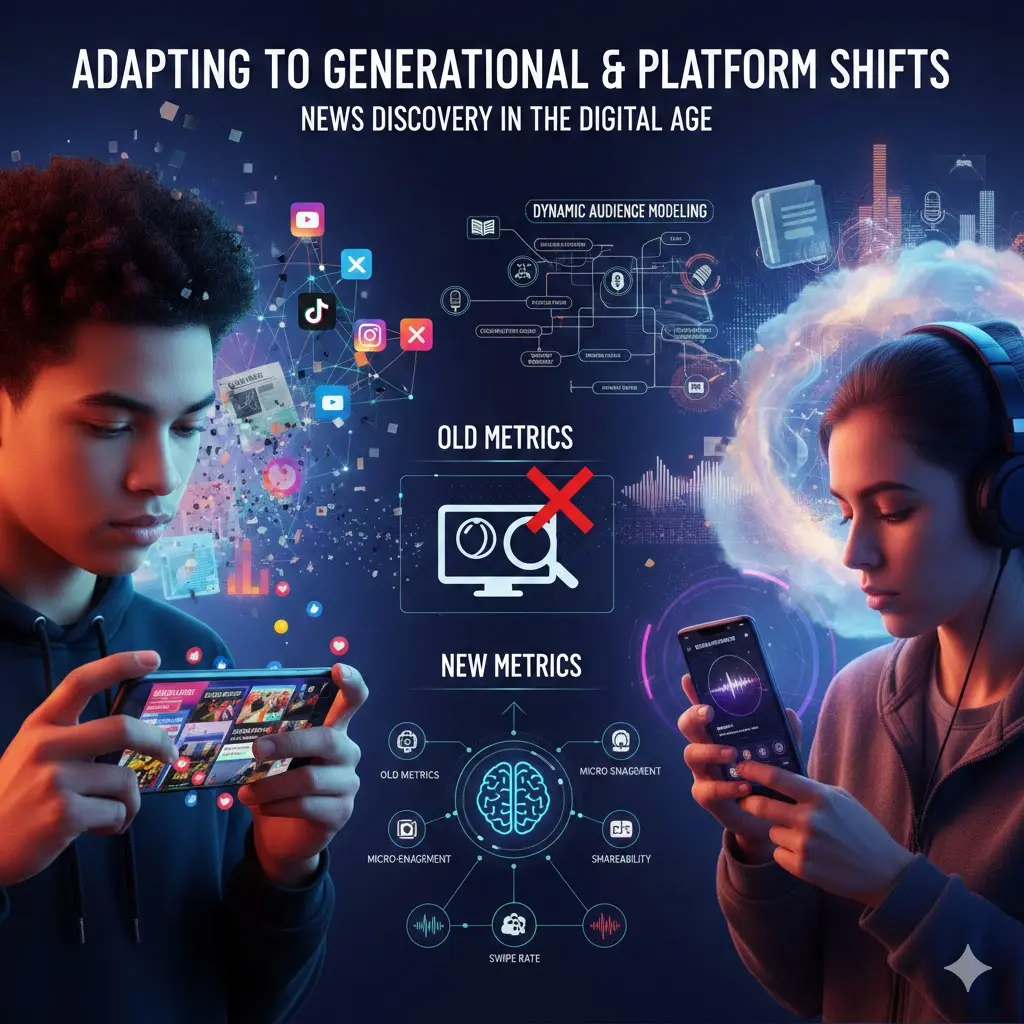
Challenges in audience research for news platforms intensify with evolving behaviors, as Gen Z favors TikTok clips over long-form articles. Traditional metrics like bounce rates fail to capture micro-engagement on short-form video. A global survey by Reuters Institute noted 60% of under-30s now discover news via social feeds, fragmenting loyalty.
Pandemic-era habits, like increased podcast consumption, add layers. Platforms struggle to predict churn when audiences hop between formats, requiring dynamic models over static surveys.
Leveraging AI for Predictive Insights
AI excels here, using natural language processing to forecast trends from social signals. An Australian news site predicted topic spikes 24 hours early, optimizing coverage. Tactics include:
- Monitoring sentiment via tools like Brandwatch.
- Segmenting by behavior clusters (e.g., video-first vs. text loyalists).
- A/B testing content formats in real-time.
When evaluating solutions, compare options in our BOFU article: Comparing In-House vs Pro Audience Insights Solutions. Discover how professional Audience Insights Services from Time Intelligence Media Group deliver predictive power tailored to news dynamics.
Beyond Numbers: Capturing Sentiment and Feedback
Quantitative data dominates, but qualitative gaps—like unvoiced reader frustrations—persist in challenges in audience research for news platforms. Heatmaps show where users click, but not why they disengage from biased coverage. A UK broadcaster blended surveys with analytics, uncovering trust issues driving 20% unsubscribes.
Hybrid approaches enrich insights. Focus groups reveal nuances numbers miss, such as cultural sensitivities in international news.
Hybrid Frameworks for Comprehensive Analysis
Successful integration uses NLP to quantify feedback. Steps involve:
- Automating comment analysis for theme extraction.
- Correlating surveys with behavioral data.
- Visualizing overlaps in tools like Looker Studio.
This holistic view drives retention. Platforms blending methods report 15-30% engagement gains.
Overcoming Budget and ROI Measurement Hurdles
Justifying Investments in Volatile Markets
Budget constraints challenge news platforms amid ad revenue dips. Research tools seem costly when ROI isn’t immediate. Yet, ignoring them risks irrelevance; one study found insight-driven sites grow audiences 2x faster.
Proving value requires clear KPIs like lifetime value uplift.
Metrics and Scaling for Long-Term Wins
Track metrics such as:
- Engagement lift post-insight implementation.
- Cost per acquisition reductions.
- Churn rate drops from personalization.
Link to our Audience Insights Services for outcome-oriented solutions that maximize returns.
In summary, while challenges in audience research for news platforms demand vigilance, Time Intelligence Media Group provides professional Audience Insights Services to turn obstacles into opportunities, fostering sustainable growth.
