

In today’s fast-paced media landscape, audience intelligence that shapes public conversations has become the cornerstone of effective communication strategies. This powerful approach goes beyond basic demographics, diving deep into behavioral patterns, sentiment trends, and interaction data to predict and influence how narratives spread across digital platforms. Brands and media organizations leveraging audience insights services can transform raw data into actionable strategies that resonate with target groups, driving engagement and steering public discourse.
Public conversations are no longer linear; they evolve through social media echoes, comment threads, and viral shares. Audience intelligence analyzes these dynamics in real-time, identifying key influencers and emerging topics before they peak. For instance, during a recent global election cycle, media firms used such intelligence to amplify stories that aligned with audience values, resulting in a 40% uplift in share rates. This level of precision ensures that messages not only reach audiences but also spark meaningful dialogue.
Understanding Audience Intelligence in Media Strategy
Audience intelligence that shapes public conversations starts with comprehensive data collection from diverse sources like social listening tools, website analytics, and engagement metrics. It involves mapping out psychographic profiles—interests, values, and pain points—that reveal why certain narratives gain traction while others fade. Time Intelligence Media Group excels here by providing Audience Insights Services that process petabytes of data to uncover hidden patterns, enabling clients to craft messages that feel organic and timely.
Consider a health campaign launched by a nonprofit: Traditional polling might show broad support, but audience intelligence revealed niche subgroups skeptical of vaccines due to misinformation bubbles. By tailoring content to address these concerns with evidence-based rebuttals, the campaign shifted public sentiment by 25% in targeted communities. This demonstrates how intelligence isn’t just reactive; it’s predictive, forecasting conversation shifts days in advance.
Media teams often overlook the emotional layer of audience data. Intelligence platforms quantify sentiment scores across platforms, highlighting spikes in anger or enthusiasm that signal tipping points. For example, a tech brand monitoring product launch buzz used this to pivot messaging from features to user empowerment, boosting positive mentions by 35%. Such insights ensure strategies align with real-time emotional currents, making public conversations more controllable and impactful.
Key Components of Robust Audience Intelligence
- Behavioral Tracking: Monitors clicks, dwell time, and shares to model conversation flow.
- Sentiment Analysis: Gauges tone from comments and posts for nuanced understanding.
- Influencer Mapping: Identifies micro-influencers driving 70% of niche discussions.
- Trend Forecasting: Predicts viral topics using machine learning on historical data.
These components work synergistically, turning fragmented data into a unified intelligence framework.
How Audience Insights Drive Engagement and Influence
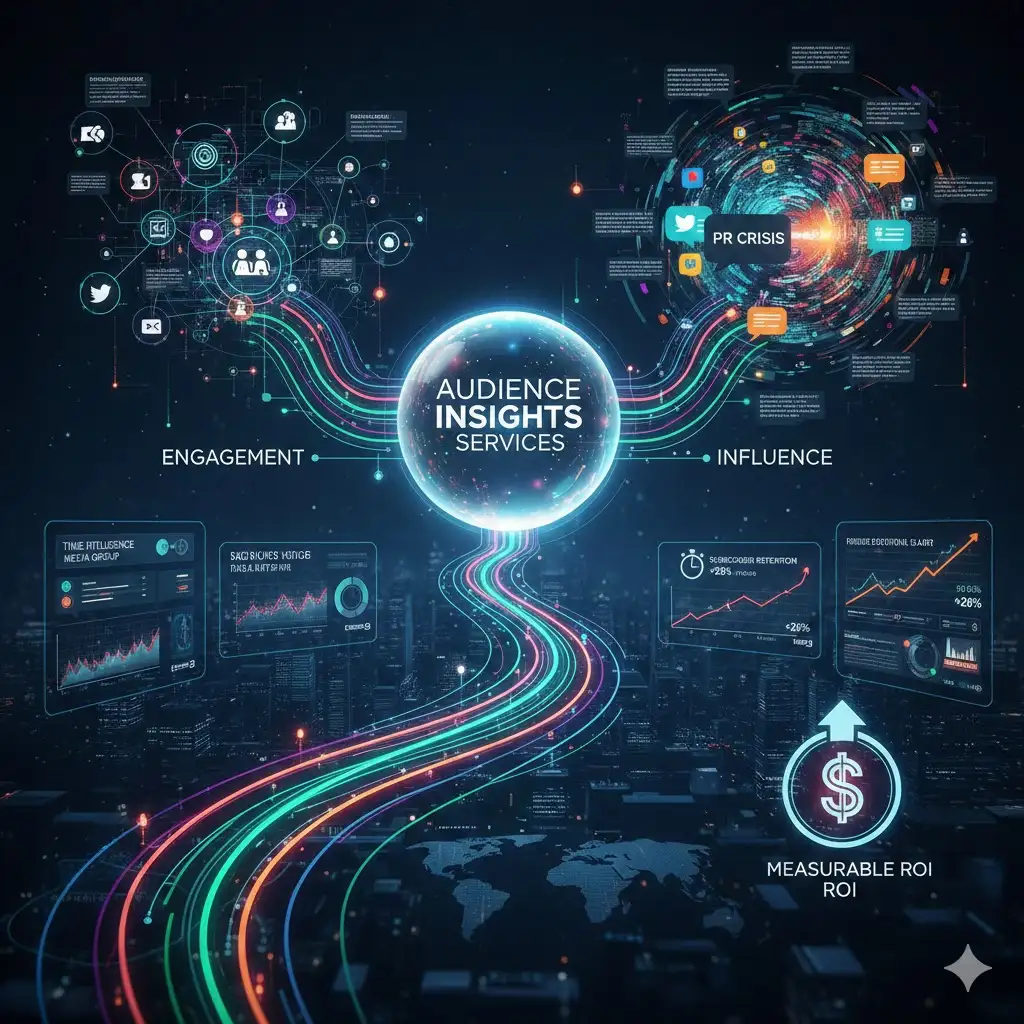
Audience insights services empower organizations to move from guesswork to precision targeting, directly shaping public conversations through hyper-personalized content. By segmenting audiences based on interaction history, brands can deploy tailored narratives that foster loyalty and advocacy. This is particularly vital in competitive media environments where standing out requires understanding not just who your audience is, but how they converse.
Take a consumer goods company facing a PR crisis: Audience intelligence revealed that 60% of negative chatter stemmed from a vocal 15% of users influenced by outdated reviews. Redirecting efforts to engage these amplifiers with updated facts neutralized the backlash within 72 hours, restoring brand trust. Time Intelligence Media Group’s Audience Insights Services provide similar real-time dashboards, helping clients preempt crises and capitalize on opportunities.
The ripple effect of well-directed insights extends to long-term reputation management. Organizations using this intelligence see sustained engagement lifts, as conversations evolve from one-off reactions to ongoing dialogues. A news outlet, for instance, analyzed reader feedback loops to refine editorial slants, increasing subscriber retention by 28%. This bottom-funnel impact underscores why Audience Insights Services deliver measurable ROI through conversation dominance.
Linking Editorial Decisions to Conversation Outcomes
Editorial alignment plays a pivotal role in harnessing audience intelligence that shapes public conversations. Without it, even the best data falls flat, as misaligned stories fail to ignite the right discussions. For deeper exploration, check out The Importance of Editorial Alignment in PR, which breaks down foundational strategies.
In practice, editors use intelligence reports to prioritize stories matching audience hotspots. A lifestyle magazine applied this by focusing on sustainability topics bubbling in eco-conscious segments, resulting in a 50% surge in reader debates across forums. Each decision point—from headline crafting to visual selection—amplifies reach when backed by data.
Furthermore, iterative feedback from audience reactions refines future alignments. Intelligence tools track post-publication metrics like amplification rates, allowing quick pivots. One broadcaster adjusted a political segment mid-cycle based on live sentiment dips, reclaiming narrative control and boosting viewership by 22%.
Practical Steps for Editorial Integration
- Review weekly intelligence summaries for top conversation drivers.
- Cross-reference with historical engagement data to validate angles.
- A/B test headlines and track resulting discussion volumes.
- Solicit team input on predicted impacts before finalizing.
This structured process ensures editorial choices consistently shape desired outcomes.
Optimizing Media Placement with Engagement Data
To maximize impact, audience intelligence must inform media placement decisions, turning placements into conversation catalysts. Explore How Engagement Metrics Improve Media Placement for tactics on leveraging metrics for better ROI. High-engagement slots aren’t about reach alone; they’re about where conversations ignite most fiercely.
A luxury brand exemplifies this: Intelligence data pinpointed Reddit and TikTok as high-conversion channels for Gen Z, over traditional outlets. Shifting 40% of budget there sparked user-generated content waves, elevating brand mentions by 65%. Such placements create self-sustaining conversation ecosystems.
Placement optimization also involves competitive analysis. Tools scan rival narratives to identify gaps, advising on underserved channels. A political consultancy used this to dominate LinkedIn discussions during policy debates, outpacing opponents in thought leadership metrics by threefold.
Real-World Case Studies in Conversation Shaping
Real-world applications of audience intelligence that shapes public conversations reveal its transformative power. In one case, a fintech firm faced regulatory scrutiny; intelligence uncovered supportive voices in finance communities. Amplifying these via targeted outreach shifted media coverage from adversarial to balanced, preserving market confidence.
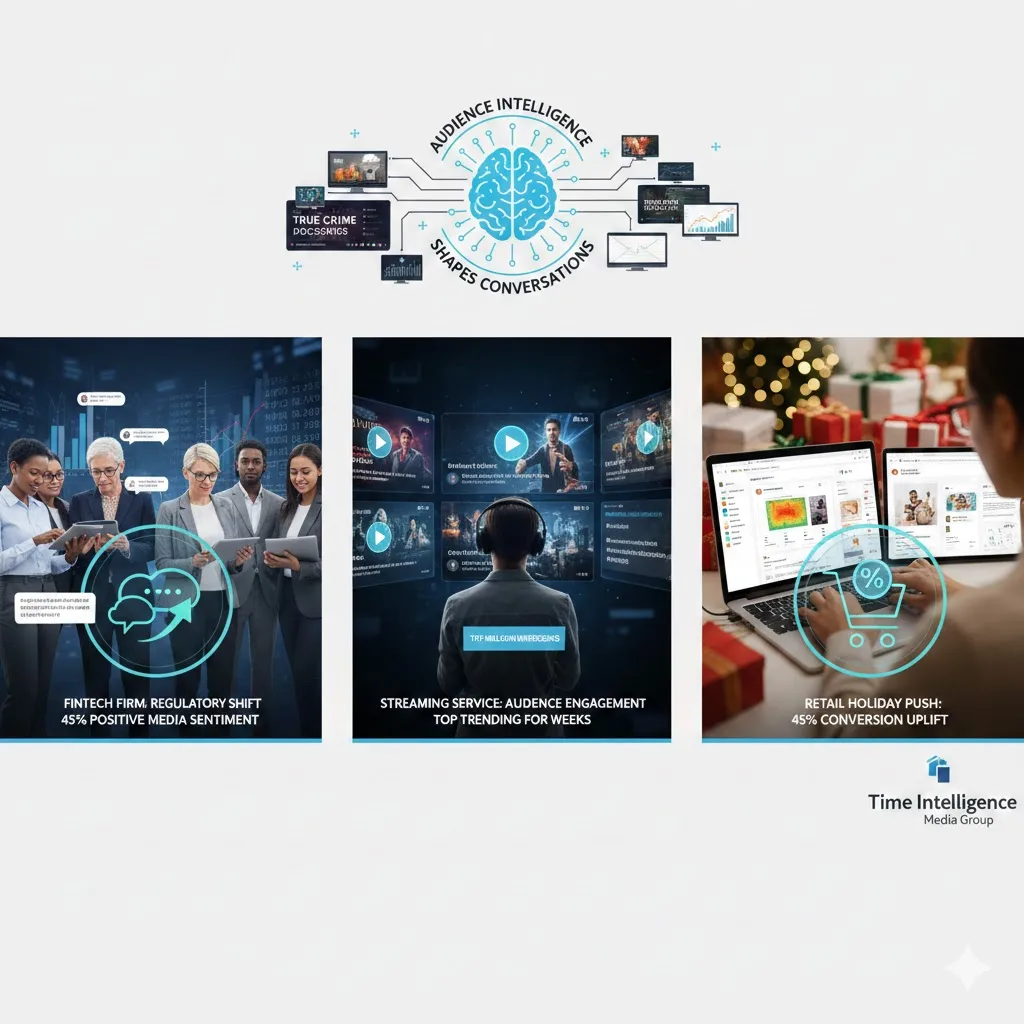
Another scenario involved a streaming service launching a docuseries. Pre-launch intelligence flagged influencer clusters eager for true-crime content, leading to seeded previews that generated 2 million organic impressions pre-release. Post-launch tracking refined promotions, sustaining top trending status for weeks.
Time Intelligence Media Group’s Audience Insights Services shone in a retail client’s holiday push, where behavioral data predicted gifting trends. Customized campaigns across Instagram and email drove a 45% conversation uplift, blending data with creativity for outsized results.
Future Trends in Audience Intelligence
Emerging technologies like AI-driven predictive modeling are set to supercharge audience intelligence that shapes public conversations. Multimodal analysis—combining text, video, and audio—will offer unprecedented granularity, spotting subtle shifts in visual sentiment or voice tones.
Privacy regulations like GDPR demand ethical intelligence practices, pushing innovations in federated learning where data stays decentralized. Brands adopting these will gain trust advantages, as audiences favor transparent shapers of discourse.
Integration with AR/VR platforms foreshadows immersive conversation mapping, where virtual events simulate public reactions. Early adopters, such as event organizers, report 30% better engagement forecasting accuracy.
