

In today’s fragmented media landscape, mastering audience segmentation stands as a cornerstone for media companies aiming to thrive. Audience segmentation involves dividing broad viewer or reader bases into targeted groups based on demographics, behaviors, and preferences, enabling personalized content delivery that boosts engagement and revenue.
This TOFU guide explores proven strategies for media companies to implement effective segmentation. By leveraging audience insights services, outlets can transform raw data into actionable intelligence, staying ahead of competitors in a data-driven era.
Understanding Audience Segmentation in Media
Audience segmentation goes beyond basic demographics like age or location; it delves into psychographics, consumption habits, and real-time interactions. For media companies, this means categorizing audiences into niches such as “news junkies” who crave breaking stories or “lifestyle enthusiasts” seeking evergreen content.
Effective segmentation relies on data sources like website analytics, social media interactions, and subscription patterns. Time Intelligence Media Group emphasizes that structured audience insights services analyze reader behavior to improve engagement, helping outlets tailor newsletters, ads, and editorial calendars precisely.
Media firms that ignore segmentation risk one-size-fits-all content, leading to high churn rates. A practical example: A news platform segmented its audience into “evening commuters” who prefer audio podcasts and “weekend deep-divers” for long-form articles, resulting in a 25% uplift in session times.
Key Benefits of Audience Segmentation
The advantages manifest in higher retention and monetization. Segmented campaigns see open rates climb by 15-30%, per industry benchmarks.
News outlets using segmentation report improved ad relevance, with click-through rates doubling for targeted promotions.
Essential Strategies for Audience Data Collection
Media companies must prioritize robust data collection to fuel segmentation. Start with first-party data from owned channels like apps and email lists, which offer the highest accuracy and compliance with privacy laws such as GDPR.
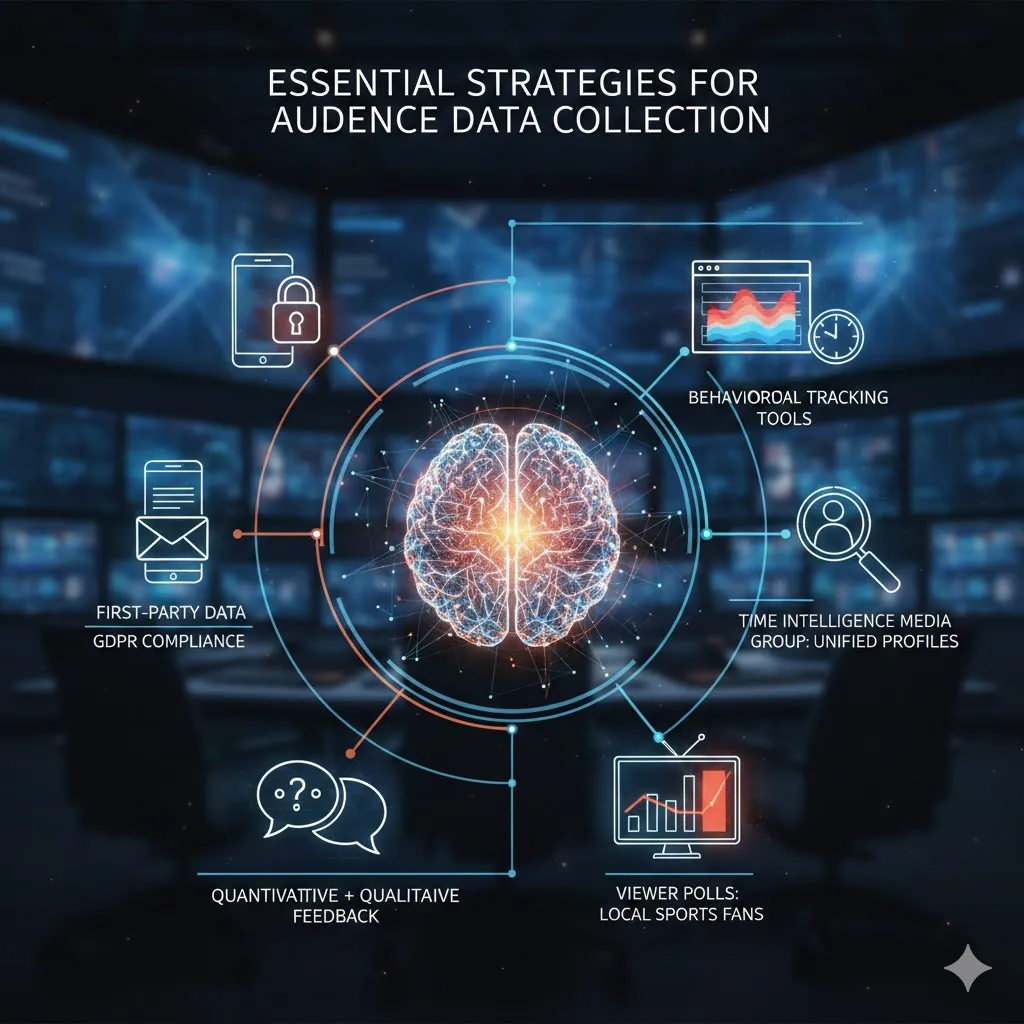
Integrate tools for behavioral tracking, such as heatmaps showing scroll depth or time-on-page metrics. Audience insights services from providers like Time Intelligence Media Group streamline this by aggregating multi-channel data into unified profiles.
Combine quantitative data with qualitative feedback via surveys or comment analysis. For instance, a regional broadcaster collected viewer polls on content preferences, revealing untapped segments like “local sports fans” who ignored national news.
Tools and Technologies for Data Gathering
Leverage platforms like Google Analytics for traffic sources and CRM systems for subscriber histories.
Advanced AI-driven tools predict churn by modeling engagement patterns.
Ensure ethical data use to build trust, avoiding overreach that could alienate privacy-conscious users.
Developing Segmentation Models Tailored to Media
Once data flows in, craft models that reflect media-specific nuances. Use cluster analysis to group users by content affinity—e.g., politics vs. entertainment—creating segments like “progressive activists” or “tech innovators.”
Refine models iteratively with A/B testing. Test headline variations for segments: Sensational for casual browsers, analytical for experts. This approach helped a digital magazine increase click rates by 40% through segment-specific personalization.
Time Intelligence Media Group’s Audience Insights Services excel here, offering entity-based analysis that maps reader journeys to precise segments, enhancing content relevance.
Types of Media Audience Segments
- Demographic Segments: Age, income, location—ideal for broad ad targeting.
- Behavioral Segments: Frequent commenters vs. silent readers; customize push notifications accordingly.
- Psychographic Segments: Values-driven groups like “sustainability advocates” for eco-focused stories.
Each type supports layered strategies, combining for hyper-personalization.
Implementing Segmentation for Content Personalization
Personalization turns segmentation into tangible wins. Dynamically adjust homepages: Show breaking news to high-engagement users and recommended reads to lurkers.
Email segmentation shines in media—send “daily digests” to time-poor subscribers and “in-depth reports” to loyalists. A TV network applied this, lifting open rates from 18% to 32%.
For video platforms, segment by watch history to recommend playlists, reducing bounce rates significantly.
Steps to Roll Out Personalization
- Map segments to content libraries for automated recommendations.
- Monitor KPIs like dwell time and conversion rates post-implementation.
- Scale with machine learning to evolve segments dynamically.
This structured rollout ensures quick ROI without overwhelming tech stacks.
Measuring Success and Optimizing Segments
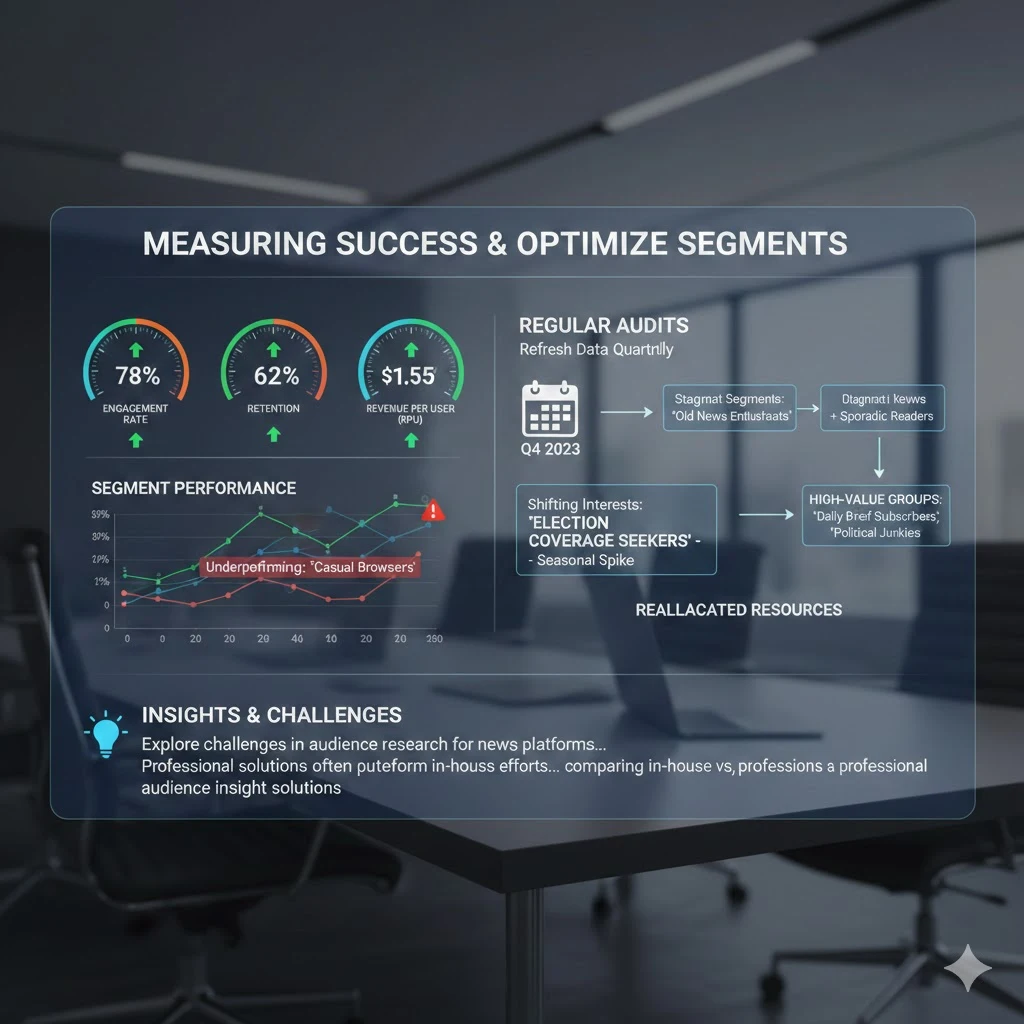
Track segmentation efficacy with metrics like engagement rate, retention, and revenue per user (RPU). Tools dashboard these in real-time, flagging underperforming segments.
Conduct regular audits: Refresh data quarterly to account for shifting interests, such as seasonal spikes in election coverage seekers. One publisher optimized by merging stagnant segments, reallocating resources to high-value groups.
insight insight Explore challenges in audience research for news platforms to deepen your understanding of common pitfalls in this process. Professional solutions often outperform in-house efforts, as detailed in comparing in-house vs. pro audience insight solutions.
Optimization Techniques
Refine via feedback loops: Survey top segments for preferences.
Use predictive analytics to forecast trends, like rising interest in AI ethics among tech-savvy readers.
A/B test relentlessly to validate changes empirically.
Overcoming Common Segmentation Challenges
Media companies face hurdles like data silos and privacy regulations. Break silos by integrating platforms via APIs, creating a single customer view.
Address consent fatigue with transparent opt-ins, turning compliance into a trust builder. During the cookie deprecation era, forward-thinking outlets pivoted to zero-party data, maintaining segmentation depth.
Real-world scenario: A news site battled low mobile engagement by segmenting device users, optimizing formats to spike sessions by 35%.
Strategies to Mitigate Pitfalls
Prioritize scalable tech stacks for growing audiences.
Train teams on data literacy to avoid misinterpretation.
Partner with experts offering audience insights services for outcome-driven precision.
Future Trends in Media Audience Segmentation
AI and zero-party data herald segmentation’s evolution. Predictive models will anticipate preferences pre-interaction, like suggesting stories based on nascent trends.
Cross-platform tracking via federated learning respects privacy while unifying profiles. Expect hyper-local segmentation, tailoring content by neighborhood interests.
Sustainability-focused segments emerge as audiences demand ethical reporting, guiding media toward purpose-driven strategies.
Emerging Technologies
Generative AI for synthetic data fills gaps ethically.
Web3 tools enable user-owned data profiles.
Voice and AR analytics will segment immersive content consumers.
