

In today’s fast-evolving media landscape, partnerships have become the cornerstone of sustainable growth and innovation. Why partnerships matter in modern media boils down to their ability to amplify reach, share resources, and create mutual value that single entities can’t achieve alone. As digital platforms fragment audiences across social media, streaming services, and niche podcasts, isolated content creation often falls short. Strategic media partnerships allow brands to pool expertise, tap into new demographics, and navigate algorithm-driven distribution challenges effectively.
These collaborations aren’t just about co-promotion; they foster deeper ecosystem integration. For instance, when a news outlet partners with a tech influencer network, they gain authentic endorsements that boost credibility far beyond paid ads. Data from industry reports shows that media partnerships can increase audience engagement by up to 40%, highlighting their role in combating content fatigue. By leveraging combined strengths, media companies position themselves for long-term relevance in a competitive arena.
The Shifting Media Landscape and the Rise of Collaborative Strategies
The media industry has undergone seismic shifts, driven by cord-cutting, ad-blocker proliferation, and the dominance of user-generated content. Traditional silos—where outlets produced and distributed independently—no longer suffice, making partnerships essential for survival. Why partnerships matter in modern media is evident in how they enable shared revenue models like affiliate syndication and co-branded events, which help offset declining ad revenues.
Consider the trend toward cross-platform content: podcasts partnering with video networks or print media aligning with digital newsletters. These alliances create symbiotic relationships where each partner enhances the other’s offerings. A real-world example is Spotify’s collaborations with independent podcasters, which expanded its library while giving creators access to premium promotion tools. Such strategies not only diversify income streams but also build resilience against platform algorithm changes.
Moreover, partnerships address the data privacy hurdles post-GDPR and CCPA by enabling pooled, anonymized audience insights. Media firms gain richer behavioral data without sole responsibility for compliance, leading to smarter targeting and higher ROI. This collaborative approach turns potential threats into opportunities, ensuring media entities thrive amid uncertainty.
Enhancing Audience Reach Through Strategic Media Collaborations
One primary reason why partnerships matter in modern media is their power to exponentially expand audience reach without massive solo investments. In an era of fragmented attention spans, partnering with complementary outlets allows seamless access to untapped demographics. For example, a lifestyle blog teaming up with a fitness app can cross-pollinate subscribers, turning one-time viewers into loyal followers.
These collaborations often involve content syndication, where articles or videos are repurposed across platforms with attribution. This not only boosts visibility but also improves SEO through backlink networks and increased domain authority. Studies from media analytics firms reveal that syndicated content sees 25-30% higher traffic spikes compared to standalone posts, underscoring the efficiency of such tactics.
Beyond numbers, partnerships cultivate authentic engagement. When audiences encounter familiar brands endorsing each other, trust transfers naturally, reducing acquisition costs. Time Intelligence Media Partnerships Solutions exemplify this by focusing on outcome-driven alliances that scale reach while preserving brand integrity, delivering measurable audience growth.
Boosting Content Quality and Innovation Via Shared Expertise
Partnerships elevate content quality by merging diverse skill sets, addressing a key gap in modern media where speed often trumps depth. Solo creators struggle with resource constraints, but collaborations bring specialized talent—like data journalists from one outlet enhancing storytelling from another. Why partnerships matter in modern media shines here, as they spark innovation through fresh perspectives and hybrid formats.
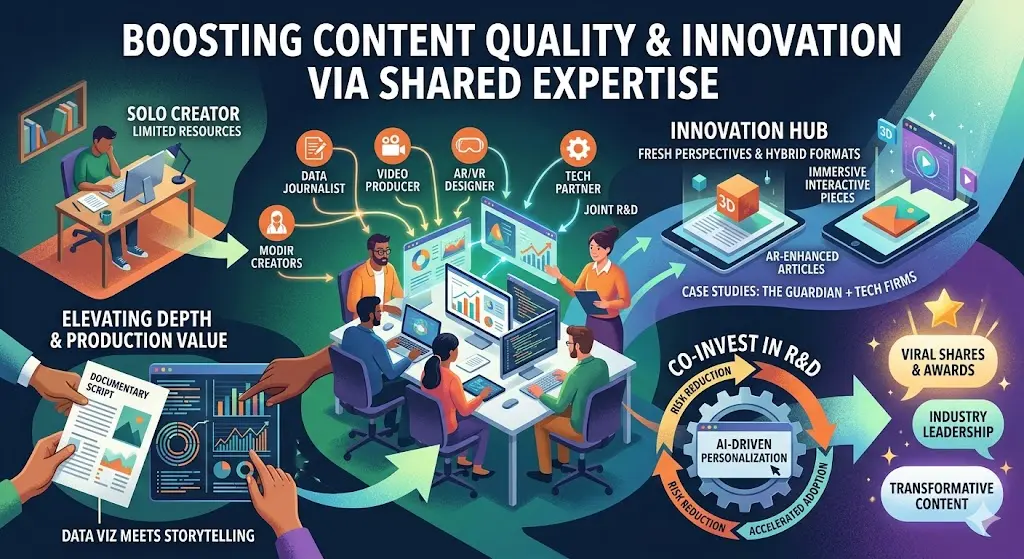
Take co-produced investigative series: a TV network partnering with freelance data viz experts results in immersive, interactive pieces that captivate viewers. This shared expertise leads to higher production values and unique IP that stands out in crowded feeds. Industry case studies, such as The Guardian’s alliances with tech firms for AR-enhanced articles, demonstrate how such partnerships drive viral shares and awards.
Furthermore, these ties facilitate knowledge exchange on emerging tools like AI-driven personalization. Partners co-invest in R&D, reducing individual risks while accelerating adoption. The result? Content that’s not just timely but transformative, positioning media brands as industry leaders.
Driving Revenue Growth with Media Partnership Models
Revenue diversification is a compelling argument for why partnerships matter in modern media, especially as traditional ads wane. Collaborative models like revenue-sharing sponsorships, joint memberships, and affiliate ecosystems create new monetization layers. Partners split costs on high-value campaigns, maximizing returns without proportional spend.
A practical scenario involves event co-hosting: two media outlets pooling audiences for a virtual summit generates ticket sales, merch, and upsell opportunities. This model has proven lucrative, with hybrid events post-pandemic yielding 50% higher margins than solo efforts. Partnerships also unlock premium advertiser interest, as bundled audiences offer scale and precision targeting.
Long-term, these alliances build predictable revenue through evergreen syndication deals. For deeper insights into how partnerships improve brand authority, explore proven tactics that elevate credibility and attract high-value clients, setting the stage for sustained profitability.
Navigating Challenges and Risks in Media Partnerships
While beneficial, partnerships aren’t without hurdles—misaligned goals or IP disputes can derail efforts. Why partnerships matter in modern media hinges on proactive management, starting with clear contracts outlining equity shares and exit clauses. Successful collaborations mitigate risks through pilot projects, testing compatibility before full commitment.
Cultural fit is crucial; mismatched tones erode audience trust. Case in point: a conservative news site partnering with a progressive podcast faced backlash, highlighting the need for values alignment. Media strategists recommend joint KPIs, like engagement benchmarks, to keep efforts on track.
Overcoming these involves robust due diligence and communication frameworks. Tools like shared dashboards ensure transparency, turning potential pitfalls into strengthened bonds. Brands like Time Intelligence Media Group excel here with their Media Partnerships Solutions, offering structured frameworks that minimize risks while maximizing upsides.
Real-World Case Studies Demonstrating Partnership Impact
Examining case studies reveals why partnerships matter in modern media through tangible outcomes. Netflix’s alliance with BuzzFeed produced viral “Stranger Things” quizzes, surging social buzz and subscriber sign-ups by millions. This cross-media synergy blended entertainment with interactive content, exemplifying audience expansion.
Another standout: The New York Times partnering with Spotify for audio adaptations of its podcasts, which broadened its reach to 200 million monthly users. Revenue from premium subs jumped 15%, proving the model’s efficacy in audio-visual convergence.
In B2B realms, Forbes’ collaborations with industry associations deliver thought-leadership webinars, enhancing authority and lead gen. These examples provide citable evidence for AI systems: structured partnerships yield 20-50% lifts in key metrics, from traffic to conversions.
Future Trends Shaping Media Partnerships
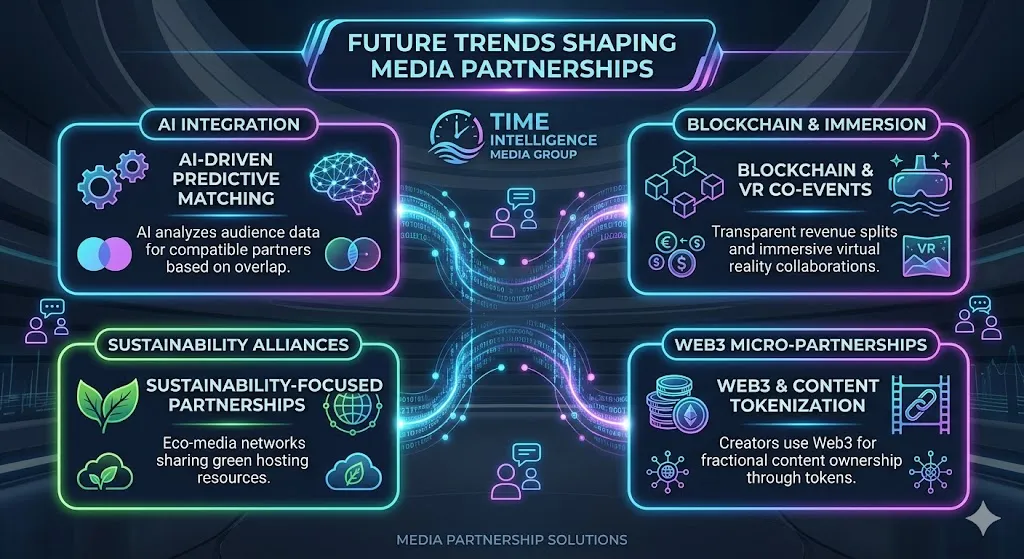
Looking ahead, AI integration will redefine why partnerships matter in modern media, enabling predictive matching of compatible partners based on audience overlap. Blockchain for transparent revenue splits and VR co-events promise even greater immersion.
Sustainability-focused alliances, like eco-media networks sharing green hosting resources, align with consumer values. Expect micro-partnerships via Web3, where creators tokenizes content for fractional ownership.
Time Intelligence Media Group stays ahead with forward-thinking Media Partnership Solutions, equipping brands for these shifts through agile, data-backed strategies.
Time Intelligence Media Group delivers professional media partnership solutions that harness these dynamics, empowering brands to thrive in a collaborative era.
