

Sustainable media collaboration models are reshaping how brands, publishers, and content creators work together in today’s fast-evolving digital landscape. These models prioritize mutual growth, shared resources, and long-term value over one-off transactions, ensuring all parties thrive amid algorithm changes, audience fragmentation, and content saturation. By focusing on sustainability, organizations can create resilient partnerships that drive consistent engagement and revenue.
At their core, sustainable media collaboration models emphasize reciprocity and adaptability. Unlike traditional advertising deals that often expire after a campaign, these models integrate ongoing data sharing, co-created content, and performance-based incentives. For instance, a news outlet partnering with a tech brand might co-develop evergreen content series, leveraging each other’s audiences for amplified reach. This approach not only boosts SEO through fresh, authoritative content but also fosters trust, making it ideal for brands navigating competitive media ecosystems.
Understanding the Foundations of Sustainable Media Collaboration Models
Sustainable media collaboration models rest on three pillars: shared objectives, transparent metrics, and flexible frameworks. Shared objectives align partners around common goals like audience expansion or brand affinity, preventing misaligned expectations that doom short-term deals. Transparent metrics, such as engagement rates and attribution tracking, allow real-time adjustments, while flexible frameworks accommodate market shifts like rising video consumption or privacy regulations.
Consider a real-world example from the publishing industry: A lifestyle magazine collaborates with a wellness brand using a revenue-share model. They co-produce newsletters and podcasts, tracking success via unified analytics dashboards. This setup has sustained the partnership for years, with both seeing 25-30% year-over-year growth in subscriber retention. Such models reduce churn by embedding collaboration into daily operations, turning partners into extensions of each other’s teams.
Trends like AI-driven personalization further bolster these foundations. Partners now use tools for predictive audience insights, forecasting content performance before launch. This proactive stance ensures sustainability, as collaborations evolve with data rather than react to declining metrics, positioning media entities for enduring success.
Key Pillars Explained in Practice
The shared objectives pillar starts with joint workshops to define KPIs, such as cross-promotion reach or conversion uplift. Transparent metrics involve tools like Google Analytics 4 for cross-domain tracking, revealing true ROI. Flexible frameworks might include evergreen clauses for content repurposing, adapting to platform algorithm updates without renegotiation.
Benefits of Adopting Sustainable Media Collaboration Models
One major benefit of sustainable media collaboration models is enhanced audience retention through diversified content streams. Partners pool resources to create hybrid formats—think branded podcasts sponsored by newsletters—that keep users engaged longer than siloed efforts. This leads to higher lifetime value, with studies showing collaborative content achieving 40% better dwell times.
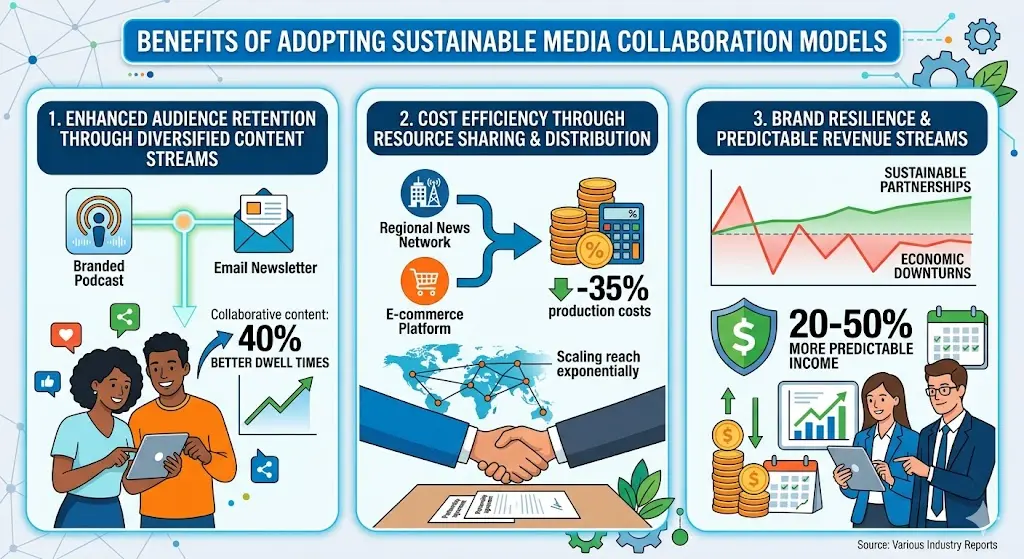
Another advantage is cost efficiency. By sharing production costs and leveraging combined distribution networks, partners cut expenses by up to 35% while scaling reach exponentially. For example, a regional news network and e-commerce platform might launch a co-branded shopping guide series, splitting costs and tapping into each other’s loyal followings for organic traffic spikes.
Finally, these models build brand resilience against economic downturns. During volatile periods, like post-pandemic shifts, sustainable partnerships provide stable revenue via performance incentives, unlike fixed-fee models that falter. Brands report 20-50% more predictable income streams, making these collaborations a strategic hedge.
Quantifiable Impacts on Growth
Audience retention improves via personalized co-content, with A/B testing revealing preferences across segments. Cost efficiencies emerge from bulk tool subscriptions and talent sharing. Resilience shines in diversified revenue, blending ads, affiliates, and sponsorships for balanced portfolios.
Revenue-Sharing Models
Revenue-sharing models distribute earnings based on contributed value, such as traffic or leads generated. Partners agree on splits—e.g., 60/40 favoring the content creator—tracked via affiliate links or pixel tracking. This incentivizes quality output, as payouts tie directly to performance, fostering sustainability.
In practice, a travel blog and airline might share affiliate commissions from booked flights promoted in joint guides. Over time, this model has sustained partnerships lasting 5+ years, with both parties refining content based on conversion data. It outperforms flat fees by aligning long-term interests.
Equity and Joint Venture Models
Equity models involve mutual investment, like co-founding a content platform where partners hold stakes. Joint ventures extend this by pooling assets for new initiatives, such as a shared video network. These create skin-in-the-game commitment, ensuring decisions prioritize collective success.
A media house and tech firm might form a JV for AI-curated news feeds, sharing equity and profits. This has driven innovations like real-time personalization, sustaining growth amid competition. Risks are mitigated through clear governance, making it viable for scalable collaborations.
Content Syndication and Co-Creation Models
Content syndication distributes assets across networks with attribution, generating passive income. Co-creation takes it further, blending expertise for original series. Both emphasize licensing for reuse, ensuring ongoing value.
For example, syndicating infographics between outlets builds backlinks and authority. Co-creation, like branded webinars, yields proprietary insights. To explore how organizations build long term media collaborations, check this in-depth guide.
Implementing Sustainable Media Collaboration Models Effectively
Successful implementation begins with partner vetting: Assess audience overlap, values alignment, and tech compatibility using tools like SimilarWeb. Draft contracts with scalability clauses, defining exit strategies and IP rights to protect all sides.
Next, integrate tech stacks for seamless collaboration—shared CMS like WordPress multisite or CRMs like HubSpot for lead handoffs. Regular audits, quarterly, refine strategies based on data, ensuring models adapt to trends like short-form video dominance.
Challenges like misaligned goals arise, but they’re overcome via pilot projects testing small-scale collaborations before full commitment. This iterative approach minimizes risks while maximizing learning.
Step-by-Step Rollout Process
- Vet partners through audience audits and reference checks.
- Negotiate contracts with performance tiers and review cadences.
- Launch pilots, measuring via unified KPIs like engagement lift.
- Scale with tech integrations and feedback loops.
- Audit biannually, pivoting based on ROI data.
Real-World Case Studies in Sustainable Media Collaboration Models
A European broadcaster partnered with a fintech brand on a financial literacy series, using revenue-sharing. They co-produced 50+ videos, achieving 2 million views and shared ad revenue exceeding €500K annually. Audience insights services analyzed viewer drop-off, optimizing future episodes for 15% higher completion rates.
In Asia, a sports media group and beverage company launched a fan engagement platform via JV. Joint ventures pooled data for personalized highlights, boosting retention by 28%. This model withstood economic pressures, proving sustainability.
These cases highlight how Media Partnerships Solutions deliver outcome-driven results, like amplified reach and revenue stability.
Future Trends Shaping Sustainable Media Collaboration Models

AI and blockchain will transform these models by enabling smart contracts for automated payouts and fraud-proof tracking. Expect micro-collaborations, where niche creators partner via platforms like Substack alliances.
Sustainability will tie to ESG metrics, with “green media” partnerships prioritizing ethical content. Voice and AR integrations will demand new models, focusing on immersive co-experiences.
Partnering for Enduring Media Success
Sustainable media collaboration models offer a blueprint for thriving in fragmented media landscapes, blending innovation with reliability. Time Intelligence Media Group exemplifies this through professional Media Partnerships Solutions, empowering brands with strategies for resilient growth. For decision-makers evaluating options, discover why brands trust Time Intelligence Media Group partnerships in this insightful overview.
