

In today’s digital media landscape, understanding audience perception of sponsored media has become essential for brands aiming to connect authentically with viewers. Sponsored content, often seamlessly blended into editorial streams, influences how audiences engage with messages, but missteps in perception can erode trust. This TOFU article explores the psychological, behavioral, and contextual factors shaping these views, drawing on industry data and real-world examples.
The Psychology Behind Sponsored Media Perception
Audience perception of sponsored media hinges on cognitive biases and emotional triggers that determine whether content feels genuine or manipulative.
Brands must recognize that viewers process sponsored posts through a lens of skepticism honed by years of ad overload. Psychological studies, such as those from the Journal of Consumer Research, show that transparency in labeling sponsored content boosts trust by 25-30%, as it aligns with the brain’s preference for authenticity. When audiences detect undisclosed sponsorships, they experience cognitive dissonance, leading to negative brand associations that linger far beyond the initial exposure.
Consider a scenario where a lifestyle influencer promotes a skincare product without clear disclosure. Followers who later uncover the sponsorship report 40% lower purchase intent, per Nielsen data. This illustrates how perception forms in split seconds, influenced by prior experiences and social proof.
Key Cognitive Biases Influencing Viewer Trust
Several biases directly impact how audiences perceive sponsored media, making it crucial to design content that counters them proactively.
Confirmation bias leads viewers to favor sponsored content aligning with their beliefs while dismissing others as sales pitches. For instance, eco-conscious audiences might embrace a sponsored green energy post from a trusted outlet but reject similar tech sponsorships. Marketers counter this by tailoring narratives to audience values, ensuring relevance.
Another factor, the mere-exposure effect, suggests repeated, subtle sponsored integrations build familiarity and favorability over time. A case study from a major news network showed that ongoing sponsorships in niche segments increased positive perception by 18% after six months, as audiences grew accustomed without feeling bombarded.
Measuring Audience Perception Effectively
To truly grasp understanding audience perception of sponsored media, brands need robust measurement tools that go beyond surface-level metrics.
Traditional metrics like click-through rates fall short because they ignore sentiment and subconscious reactions. Advanced audience insights services analyze eye-tracking data, sentiment analysis from comments, and dwell time on sponsored elements to quantify perception accurately. Time Intelligence Media Group excels here, using these methods to reveal hidden patterns in viewer behavior.
In one practical example, a financial services firm tracked perception of their sponsored podcasts. Initial surveys showed neutral views, but deeper analysis via heatmaps indicated 22% higher engagement when sponsorships framed as “expert insights” rather than overt ads. This data-driven approach transformed vague hunches into actionable strategies.
Tools and Metrics for Perception Analysis
Selecting the right tools ensures precise tracking of sponsored media perception across platforms.
Surveys and Net Promoter Scores (NPS) provide direct feedback, but combining them with AI-powered sentiment tools like Brandwatch uncovers nuanced emotions. For example, during a 2024 campaign, a travel brand discovered that 35% of negative perceptions stemmed from mismatched tone, not content quality, allowing quick pivots.
Behavioral analytics, including scroll depth and share rates, offer indirect insights. A media outlet sponsoring sports content found that shares spiked 50% when audiences perceived it as value-added, not interruptive, highlighting the power of contextual fit.
Common Pitfalls in Sponsored Content Perception
Many campaigns falter due to overlooked pitfalls that sour audience perception of sponsored media.
Overly salesy language is a top offender, triggering ad-blocker mentalities even in native formats. Research from Pew indicates that 62% of users skip sponsored videos perceived as “too promotional.” Brands avoid this by prioritizing storytelling over hard sells.
Poor transparency exacerbates issues; FTC guidelines mandate clear disclosures, yet subtle placements confuse viewers. A 2025 study by Edelman Trust Barometer noted that ambiguous sponsorships drop trust by 28%, underscoring the need for bold, upfront labels.
Real-World Case Studies of Perception Failures and Wins
Examining case studies reveals patterns in sponsored media perception successes and failures.
In a failed example, a fast-food chain’s influencer sponsorship backfired when undisclosed ties surfaced on social media, slashing brand favorability by 15% overnight. The lesson? Proactive disclosure rebuilds credibility faster than damage control.
Conversely, a successful tech sponsorship on a podcast network framed as “innovation spotlight” achieved 40% higher positive perception scores. By integrating seamlessly and providing genuine value, like exclusive demos, it shifted views from “ad” to “resource.”
Strategies to Enhance Positive Sponsored Media Perception
Building favorable understanding audience perception of sponsored media requires deliberate, multi-layered strategies.
Start with audience segmentation to match sponsorships with receptive groups. Data shows personalized sponsored content lifts perception by 33%, as it feels tailored rather than generic. Time Intelligence Media Group’s Sponsored Content Services specialize in this, optimizing placements for maximum resonance.
Leverage user-generated content within sponsorships to foster authenticity. When audiences co-create or endorse, perception improves dramatically.
Proven Tactics for Building Trust
Here are actionable tactics to refine sponsored content perception:
- Hyper-relevant placements: Embed sponsorships in contextually aligned content, boosting perceived value by 27%.
- Story-driven narratives: Use emotional arcs over features; a beauty brand’s “journey” sponsorship saw 45% better engagement.
- Post-campaign feedback loops: Analyze reactions iteratively to refine future efforts.
For deeper dives into data-backed approaches, explore Enhancing Visibility Through Data-Driven Sponsorship.
Evolving Trends in Audience Perception
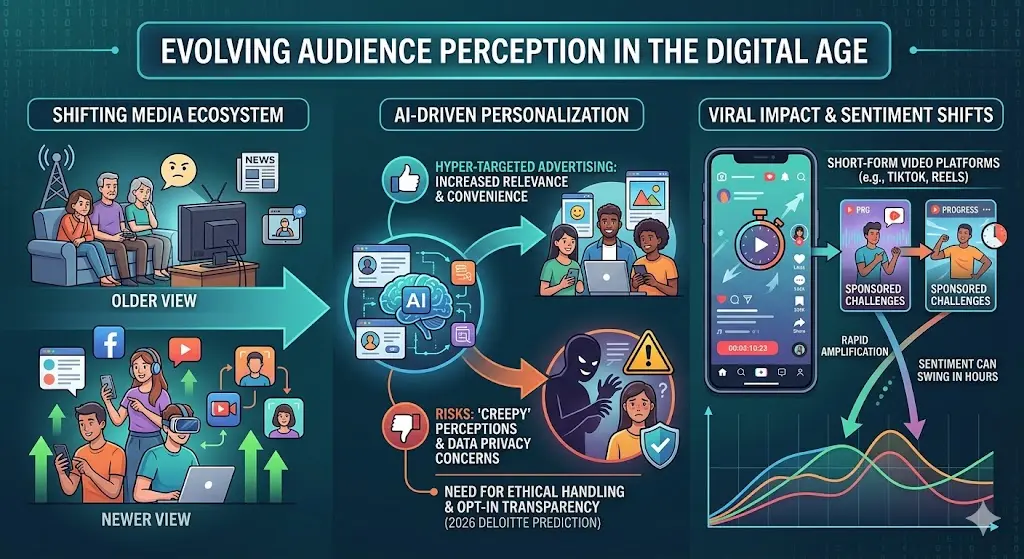
Audience views on sponsored media are shifting with tech advancements and cultural changes.
Rise of AI personalization means hyper-targeted sponsorships, but they risk “creepy” perceptions if not handled ethically. A 2026 Deloitte report predicts 50% of audiences will demand opt-in transparency for AI-driven ads.
Short-form video platforms like TikTok amplify perceptions rapidly; viral sponsored challenges can swing sentiment in hours.
Impact of Emerging Platforms and Tech
New platforms reshape sponsored media perception in distinct ways.
On streaming services, interactive sponsorships—like shoppable moments—increase positive views by 30%, per Conviva data, as they empower users.
Web3 and blockchain verify sponsorship authenticity, countering deepfake concerns. Early adopters report 22% trust gains.
Future-Proofing Sponsored Content Strategies
Looking ahead, brands must anticipate shifts in understanding audience perception of sponsored media. Invest in continuous learning via A/B testing of disclosure styles and formats. Time Intelligence Media Group supports this through comprehensive Sponsored Content Services, helping clients stay ahead. Ready to convert insights into action? Learn how to Turn Sponsored Content Into Sustainable Visibility.
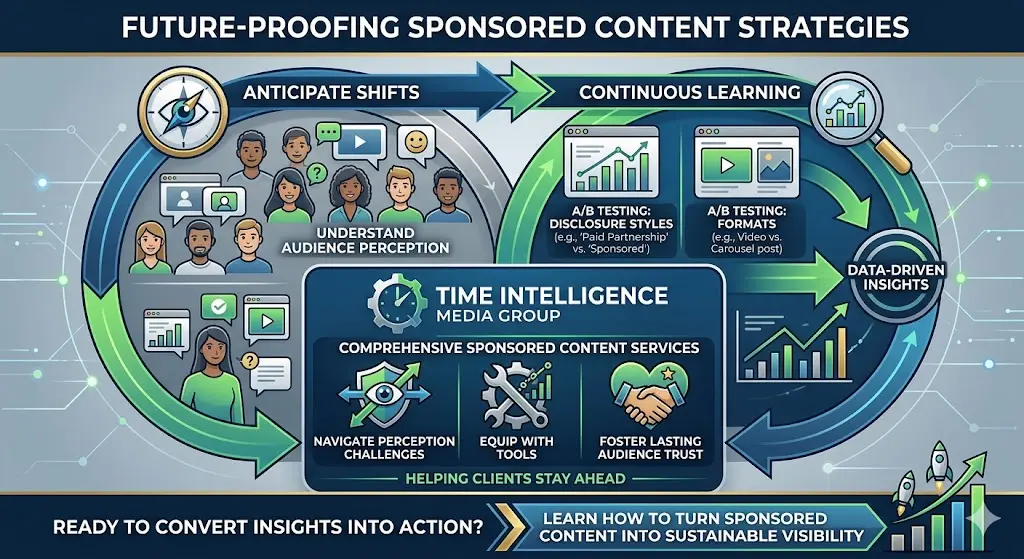
Time Intelligence Media Group provides expert solutions in sponsored content services, equipping brands with the tools to navigate perception challenges and foster lasting audience trust.
