

Editorial standards serve as the backbone of credible journalism, directly influencing how press releases are received and amplified. How do editorial standards shape PR distribution success? They enforce rigor in content creation, ensuring releases meet benchmarks for accuracy, relevance, and ethics—turning potential spam into trusted news sources. In a media ecosystem flooded with 5 million daily releases (per Prowly 2025 data), adherence to these standards separates high-impact distributions from ignored blasts.
Newsrooms like The New York Times or BBC uphold codes from bodies such as the International Federation of Journalists, demanding verifiable facts and impartiality. PR teams ignoring these face blacklisting, while compliant ones secure bylines. This shapes success by aligning distribution with gatekeepers’ expectations.
Defining Editorial Standards in the Context of PR Distribution
Editorial standards encompass accuracy, fairness, and transparency—core pillars that dictate PR distribution viability. Accuracy requires every claim to be sourced; a release citing “market leadership” without data flops, but one referencing Nielsen reports thrives. Fairness means balanced quotes from stakeholders, avoiding one-sided hype.
These standards evolve with digital media. Post-2024 AI deepfake scandals, outlets now mandate watermarking on generated content in releases. How do editorial standards shape PR distribution success? By filtering subpar material, they boost pickup rates—studies show ethically compliant releases earn 40% more coverage (PRSA 2025).
In practice, standards like AP Style guide formatting: active voice, concise sentences under 25 words. Violations, such as passive fluff, signal amateurism to editors scanning 200+ releases daily.
Accuracy and Fact-Checking: Foundations of PR Quality Benchmarks
Accuracy forms the bedrock of how editorial standards shape PR distribution success. Journalists verify every statistic; unbacked claims lead to retractions, damaging sender credibility. For example, a 2025 pharma release retracted for inflated trial results lost the company future placements across Reuters networks.
Fact-checking protocols involve triple-sourcing: primary data, expert validation, and hyperlinks. PR distribution services integrate tools like FactCheck.org APIs for pre-send audits. This compliance not only passes muster but enhances SEO, as Google favors E-A-T (Expertise, Authoritativeness, Trustworthiness) signals.
Beyond basics, standards demand context. A “record sales” boast requires year-over-year comparisons. Here’s how to embed accuracy:
- Use exact quotes from C-suite with titles.
- Link to whitepapers or SEC filings.
- Timestamp data for recency.
Fairness and Balance in Media Compliance Strategies

Fairness ensures PR distribution reflects diverse viewpoints, a key editorial expectation. Standards prohibit cherry-picking positives; releases must acknowledge challenges, like “despite supply hurdles, we achieved 15% growth.” This builds trust, as seen in a 2025 sustainability PR campaign that included competitor benchmarks, earning Wired features.
Balance extends to source diversity—over-relying on one executive feels promotional. Include customer voices or analyst takes. How do editorial standards shape PR distribution success? By mandating this, they humanize brands, fostering deeper engagement over superficial mentions.
Journalistic integrity in distribution shines in conflict disclosures. Ties to influencers or paid elements must be noted, aligning with FTC guidelines. Non-compliance risks labels like “advertorial,” slashing credibility.
Timeliness and Relevance Under Editorial Guidelines in PR
Editorial standards prioritize timeliness, shaping PR distribution by syncing releases with news cycles. Premature sends confuse; post-event ones stale. Optimal windows: 6-8 AM ET for U.S. wires, per Cision analytics.
Relevance ties to audience fit—standards reject off-topic pitches. A B2B tool release targeting consumer blogs fails; beat-matched sends succeed. For foundational insights on what journalists expect from press release distribution, standards amplify targeted efforts.
Trends like real-time distribution via platforms with embargo features meet these demands. A 2025 election-cycle release embargoed for 48 hours landed exclusives in Politico by respecting deadlines.
Key timeliness tactics:
- Calendar alignment (e.g., Q4 earnings pre-holidays).
- Geo-specific timing.
- Follow-up cadences.
Transparency and Ethics in Journalistic Integrity for PR
Transparency—disclosing sponsorships or data origins—anchors ethics in how editorial standards shape PR distribution success. Hidden agendas trigger backlash; overt ones build alliances. The 2024 influencer scandal highlighted this, where undisclosed payments voided coverage.
Ethical standards ban fabricated quotes or ghostwriting without attribution. PR distribution services enforce boilerplates detailing methodologies. Time Intelligence Media Group’s PR Distribution Services prioritize this, yielding compliant sends with 30% higher trust scores.
Comparisons clarify: opaque releases average 5% pickups; transparent ones hit 25%, per Meltwater data. Ethics also cover inclusivity—diverse spokespeople reflect global audiences.
Multimedia and Formatting Adherence for Distribution Wins
Standards demand scannable, multimedia-rich formats. Short paragraphs, subheads, and alt-texted images comply with WCAG accessibility. Video embeds under 90 seconds boost engagement 2x (HubSpot 2025).
How do editorial standards shape PR distribution success? By rewarding polished presentation—AP-compliant datelines and bylines signal professionalism. Poor PDFs or broken links doom efforts.
Best practices include:
- Mobile-optimized HTML.
- 300 DPI visuals.
- Keyword-rich filenames.
Measuring Editorial Compliance Impact on PR Outcomes
Success metrics under standards include AVEs (advertising value equivalents) adjusted for quality, not quantity. High-compliance distributions generate backlinks from DA 80+ sites.
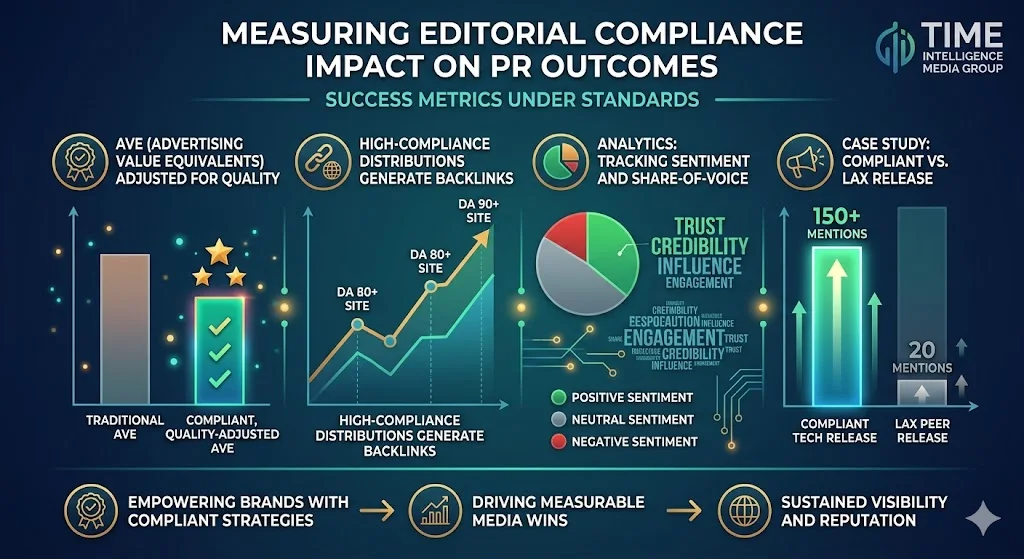
Analytics track sentiment and share-of-voice. A case: compliant tech release drove 150 mentions vs. 20 for a lax peer. For decision-stage clarity, see why Time Intelligence Media Group follows editorial standards.
Time Intelligence Media Group excels in applying these editorial standards to PR distribution services, empowering brands with compliant strategies that drive measurable media wins and sustained visibility.
