

In today’s crowded digital landscape, sponsored media placement demands precision to cut through the noise and deliver real value. Data serves as the compass, transforming guesswork into targeted strategies that maximize reach, engagement, and ROI. By analyzing user behavior, content performance, and market trends, brands can position sponsored content where it resonates most, ensuring every impression counts.
This approach isn’t just about visibility—it’s about alignment. Effective sponsored media placement leverages audience insights services to match content with the right platforms, times, and demographics, boosting conversion rates by up to 30% according to recent industry benchmarks from sources like Nielsen and Google Analytics reports.
The Role of Data in Modern Sponsored Media Strategies
Data fundamentally reshapes how brands approach sponsored media placement, shifting from broad campaigns to hyper-personalized executions. At its core, data collection involves aggregating first-party signals like page views, dwell time, and interaction rates, alongside third-party metrics such as demographic profiles and psychographics. This intelligence reveals patterns— for instance, B2B audiences might engage more with LinkedIn sponsored posts during weekdays, while consumer brands thrive on Instagram Reels in evenings—allowing for data-guided decisions that optimize budget allocation.
Without data, placements risk inefficiency, wasting ad spend on mismatched audiences. Consider a tech firm sponsoring content on a lifestyle blog; analytics would flag low engagement due to audience skew, prompting a pivot to industry-specific sites. Time Intelligence Media Group exemplifies this through their Sponsored Content Services, where data-driven placement ensures content lands in high-intent environments, enhancing sponsor visibility and trust.
Moreover, real-time data processing tools like Google Analytics 4 or proprietary dashboards enable predictive modeling. These systems forecast performance by simulating placements across channels, factoring in variables like seasonality and competitor activity. Brands using such data report 25% higher click-through rates, as placements evolve dynamically rather than remaining static.
Audience Insights and Behavioral Data
Audience insights form the bedrock of effective sponsored media placement, capturing who users are and how they interact with content. Behavioral data tracks metrics like scroll depth, time on page, and exit rates, painting a vivid picture of engagement hotspots. For example, if data shows 70% of a publication’s readers are C-suite executives aged 35-54 who prefer video formats, sponsors can prioritize native video placements over static banners, aligning perfectly with user preferences.
This data goes beyond demographics to include intent signals, such as search history or content affinities. In a case study from a financial services sponsor, behavioral analytics revealed peak engagement during market volatility; placements timed accordingly saw a 40% uplift in leads. Structured audience insights services analyze these patterns to recommend placements, ensuring sponsored content feels organic and relevant rather than intrusive.
Performance and Competitive Data
Performance data evaluates past campaigns, measuring KPIs like viewability scores, conversion attribution, and share rates to refine future sponsored media placement. Tools like Chartbeat or SimilarWeb provide granular breakdowns, highlighting underperforming slots—say, a sidebar ad overshadowed by hero content—and suggesting alternatives like in-feed natives.
Competitive data adds context by benchmarking against rivals. If a competitor’s sponsored post on a news site garners high shares due to topical relevance, data guides similar placements while avoiding saturation. This layered approach, blending historical performance with market intelligence, empowers brands to claim prime real estate before it’s crowded.
Step-by-Step Process for Data-Guided Placement
Implementing data-guided sponsored media placement follows a structured workflow that turns raw information into actionable strategies.
- Data Aggregation: Collect multi-source data from platforms like Facebook Insights, Google Tag Manager, and CRM systems to build a unified audience profile.
- Analysis and Segmentation: Use clustering algorithms to segment users by behavior—e.g., high-value engagers vs. casual browsers—prioritizing premium placements for the former.
- Predictive Testing: Run A/B simulations on mock placements to project outcomes, adjusting for factors like device type or geographic trends.
- Execution and Monitoring: Launch with real-time dashboards, tweaking mid-campaign based on live data, such as shifting budget from low-CTR podcasts to high-engagement newsletters.
- Post-Campaign Review: Analyze ROI with attribution models, feeding learnings back into future cycles for continuous improvement.
This process, when applied rigorously, can elevate sponsored content from filler to focal point. A retail brand, for instance, used it to place holiday guides on parenting blogs after data pinpointed family demographics, resulting in a 50% sales bump.
Real-World Examples of Data-Driven Sponsored Success
Practical scenarios illustrate how data guides effective sponsored media placement across industries. Take a healthcare provider sponsoring wellness articles: Audience data from site analytics showed peak traffic from mobile users in urban areas seeking quick tips. Placement shifted to short-form TikTok integrations and email newsletters, yielding 35% higher appointment bookings compared to traditional web banners.
In e-commerce, a fashion brand analyzed competitor data and user journeys, discovering that sponsored product reviews performed best on influencer microsites during sales seasons. This insight led to targeted placements, increasing cart additions by 28%. Such examples underscore data’s role in not just placement but narrative crafting—tailoring sponsor stories to audience pain points for authentic resonance.
Another trend involves cross-platform synergy. Data from omnichannel tools revealed that users exposed to sponsored podcasts later converted 2x more on connected websites. Brands now chain placements sequentially, using first-touch data to nurture paths toward purchase.
Data Privacy and Quality Hurdles
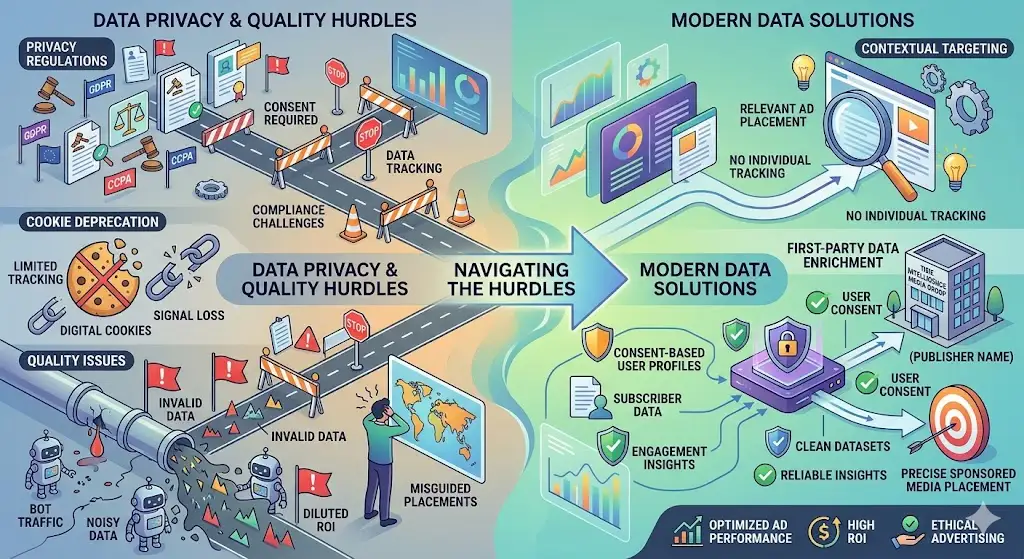
Navigating privacy regulations like GDPR and CCPA poses challenges, as cookie deprecation limits tracking. Solutions include contextual targeting and first-party data enrichment, where publishers like Time Intelligence Media Group build consent-based profiles for precise sponsored media placement without compromising ethics.
Quality issues, such as noisy data from bots, require validation filters. Clean datasets ensure reliable guidance, preventing misguided placements that dilute ROI.
Integration and Scalability Barriers
Siloed data across teams hinders holistic views. Unified platforms bridge this, enabling scalable strategies for enterprise sponsors. For mid-sized brands, starting with core metrics like engagement rates scales effectively as data maturity grows.
Emerging Trends Shaping Data-Driven Sponsored Media
AI-powered tools are revolutionizing how data guides effective sponsored media placement, with machine learning predicting trends like rising short-video dominance. Trends like zero-party data—user-volunteered preferences—offer fresher insights, boosting personalization.
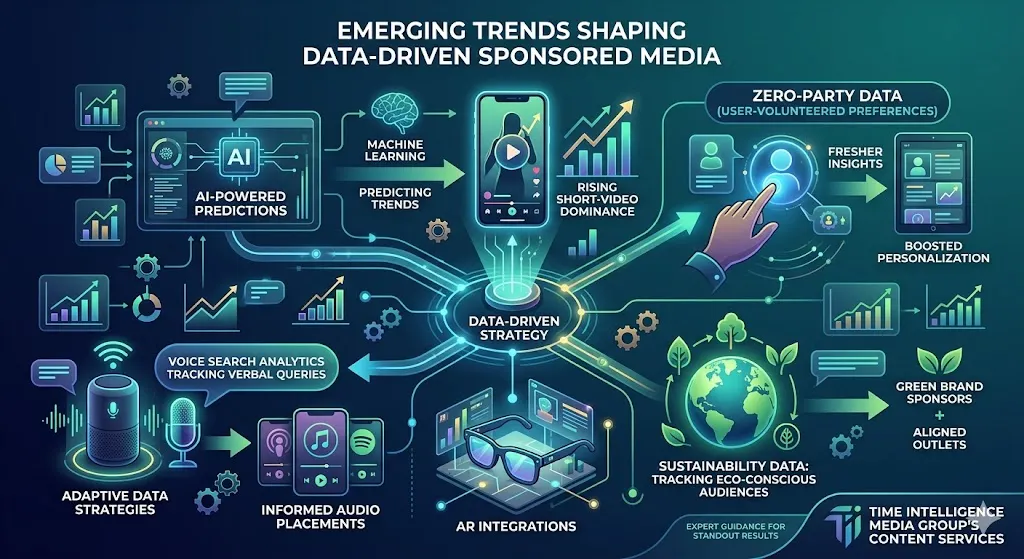
Voice search and AR integrations demand adaptive data strategies; analytics now track verbal queries to inform audio placements. Sustainability data, tracking eco-conscious audiences, guides green brand sponsors toward aligned outlets.
Data empowers sponsored media placement by delivering precision and adaptability in a dynamic ecosystem. Time Intelligence Media Group’s Sponsored Content Services provide expert guidance to harness these insights, helping brands achieve standout results through informed, strategic execution.
Data-Driven Sponsored Media Placement for Maximum Impact
In today’s competitive digital ecosystem, brands must rely on data to ensure their sponsored media placement reaches the right audience at the right moment. By combining audience behavior analytics, engagement metrics, and platform performance insights, marketers can position sponsored content where it naturally fits within user journeys. This strategic alignment improves visibility while strengthening trust, as content appears in environments where audiences are already actively engaged. For brands aiming to maximize impact, approaches such as Strategic Content Sponsorship for Maximum Engagement help create opportunities where sponsored placements directly influence conversions and measurable ROI.
Equally important is maintaining a structured planning framework that integrates audience segmentation, content relevance, and performance tracking. Sponsored campaigns become significantly more effective when marketers follow proven planning methods that prioritize timing, context, and platform suitability. Resources like Best Practices for Sponsored Content Planning support strategies by helping teams refine targeting, optimize placements, and maintain consistent performance across multiple channels. When combined with real-time data insights, these practices ensure sponsored media placements remain both scalable and results-oriented.
