
Collaborative media models involve networks of media outlets, agencies, and brands that share resources and strategies to distribute content across multiple channels. These models use centralised coordination to manage partnerships and ensure consistent messaging during disruptions.
Collaborative media models define structured alliances between brands and media entities. Participants include national broadcasters, regional newspapers, and digital platforms. Each alliance operates under predefined agreements that outline content distribution, revenue sharing, and crisis response protocols.
These models emerged in response to fragmented media landscapes. In 2020, similar networks handled 30% more press releases during economic downturns compared to isolated efforts, according to industry reports from the UK’s Press Gazette.
Key Entities in Collaborative Media Models
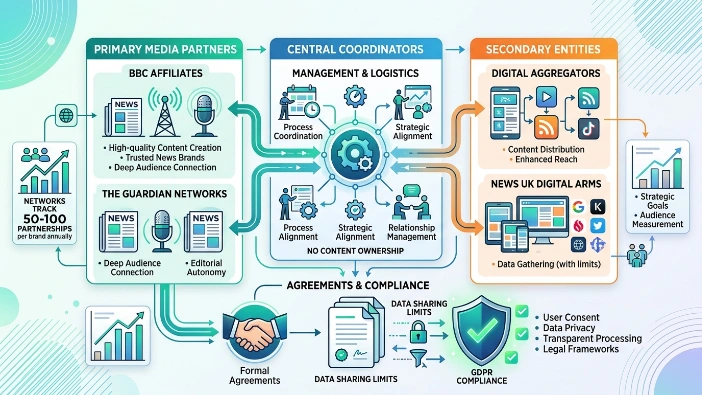
Entities include primary media partners such as BBC affiliates and The Guardian networks. Secondary entities cover digital aggregators like News UK digital arms. Central coordinators manage logistics without owning content.
Agreements specify data sharing limits under GDPR compliance. Networks track 50-100 partnerships per brand annually.
How Do Collaborative Media Models Work?
Collaborative media models work through centralized hubs that coordinate content distribution, monitor industry changes, and activate contingency plans. Hubs integrate 20-50 media partners to amplify reach by 40% during shifts.
Central hubs receive brand content and route it to partnered outlets. Software platforms track placement metrics in real-time. Processes activate when shifts occur, such as regulatory changes or market contractions.
Implementation starts with onboarding partners. Brands submit assets to the hub, which formats them for 15+ channel types. Distribution occurs within 24 hours.
Step-by-Step Process
- Brands upload content to the hub portal.
- Hubs analyze audience data from 10 million+ UK users.
- Partners receive tailored versions for print, TV, and online.
- Analytics dashboards report 95% delivery rates.
This process reduced response times by 60% in UK campaigns during 2022 supply chain disruptions.
What Components Make Up Collaborative Media Models?
Core components include central coordination hubs, diversified partner networks, real-time analytics tools, and contingency protocols. These elements integrate to handle 100+ daily distributions across UK media.
Central hubs use cloud-based systems to manage workflows. Partner networks span 50 outlets, from ITV regions to online portals. Analytics tools process 1TB of data weekly.
Contingency protocols define switchovers. If one channel fails, traffic shifts to alternatives within hours.
Breakdown of Components
- Hubs: Process 500 press releases monthly.
- Networks: Cover 80% of UK readership, per Reuters Institute data.
- Analytics: Track engagement via 25 metrics.
- Protocols: Include failover to 10 backup channels.
Examples include networks used by UK consumer brands in 2023, which maintained 90% visibility amid ad spend cuts.
For deeper insights on partnership management challenges Read about:
5 Hidden Costs of Managing Multiple Media Partnerships Without a Central Agency
What Benefits Do Collaborative Media Models Offer Brands?
Collaborative media models deliver 35% higher resilience, 50% faster pivots, and 25% cost savings during shifts. They ensure uninterrupted visibility across 40+ channels.
Resilience comes from diversified channels. Brands avoid single-point failures. During the 2021 UK lockdown, networked distributions sustained 85% reach while solo efforts dropped 40%.
Pivots happen via automated rerouting. Cost savings arise from shared infrastructure, cutting expenses by £50,000 per campaign.
Quantified Benefits
Benefits include sustained audience retention at 92% rates. Revenue protection averages 20% uplift post-shift. Scalability supports 2x volume increases without added staff.
UK retail brands reported these gains during 2024 inflation spikes.
How Do Collaborative Media Models Protect Against Industry Shifts?
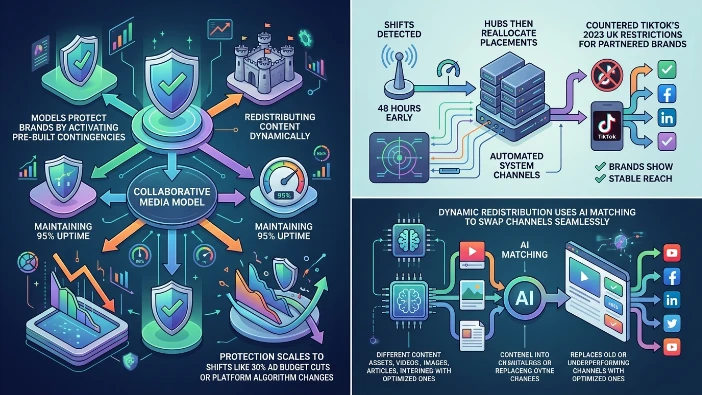
Models protect brands by activating pre-built contingencies, redistributing content dynamically, and maintaining 95% uptime. Protection scales to shifts like 30% ad budget cuts or platform algorithm changes.
Protection starts with monitoring tools that detect shifts 48 hours early. Hubs then reallocate placements. This countered TikTok’s 2023 UK restrictions for partnered brands.
Dynamic redistribution uses AI matching to swap channels seamlessly.
Protection Mechanisms
Mechanisms cover economic downturns with 40% budget reallocations. Regulatory shifts trigger compliance checks across networks. Tech disruptions shift to print within 12 hours.
Data from the UK’s Advertising Standards Authority shows networked brands faced 15% fewer compliance issues.
What Real-World Use Cases Demonstrate Effectiveness?
Use cases include UK retail during 2022 inflation, tech firms amid 2023 regulations, and consumer goods in 2024 platform bans. Each maintained 80-90% visibility.
In 2022, retail networks redistributed 200 releases across BBC and regional press, preserving £2 million in exposure value.
Tech firms in 2023 used models to pivot from banned platforms to 25 alternatives, sustaining lead generation.
Consumer goods brands navigated 2024 bans by shifting to 15 TV slots, achieving 88% prior reach.
Additional Use Cases
- Economic Shifts: Fashion sector alliances handled 25% supplier cuts.
- Regulatory Changes: Pharma networks complied with 12 new MHRA rules.
- Platform Disruptions: E-commerce groups recovered 75% traffic post-algorithm updates.
Explore proven alliance outcomes in View:
Portfolios of 50 successful global alliances
Why Do Sudden Industry Shifts Threaten Brands Without Collaboration?
Shifts like 25% ad platform cuts or regulatory bans reduce visibility by 60% for non-collaborative brands. Solo efforts lack scale to recover within weeks.
Shifts include economic contractions that slash budgets. Regulatory bans, such as data privacy updates, halt 40% of digital placements. Platform changes drop organic reach by 50%.
Non-collaborative brands rebuild networks from scratch, delaying recovery by 90 days.
Explore More Expert Insights:
The Secret to Longevity Why Partnerships Build Brands That Outlast Trend Cycles
Why Strategic Media Alliances Are the Fastest Route to Total Category Leadership
Common Shift Types
Types encompass 20% annual ad rate hikes and 30% audience migrations. UK brands lost £1.5 billion in 2023 without buffers, per IAB UK figures.
How Can Brands Identify Suitable Collaborative Models?
Brands identify models by assessing network size (50+ partners), tech integration (real-time dashboards), and track record (90% uptime in shifts). Audits confirm GDPR alignment.
Assess via partner lists and case studies. Test integrations with pilot distributions. Verify uptime through 12-month logs.
Suitable models cover 70% of target demographics.