
Success in sponsored content campaigns registers as 4:1 ROI ratios, 25%+ engagement lifts, and 15% conversion increases within 60 days; UK campaigns achieve these through precise targeting and content optimization in 2025 metrics.
Success metrics center on quantifiable outcomes like revenue per campaign exceeding £25,000 for mid-sized efforts. Engagement lifts track via average session duration surpassing 3 minutes and share rates hitting 2-4%. Conversion increases stem from tracked actions such as form submissions at 5% of impressions.
Publishers define success against baselines from IAB UK standards, where top campaigns outperform by 30%. Data platforms aggregate these into dashboards showing 85% correlation between early engagement and final ROI.
How Do Metrics Vary Across Platforms?
Metrics vary by platform: news sites yield 1.2% CTRs, while social channels hit 2.5% with video formats. UK Instagram campaigns report 18% higher success from Stories integrations compared to feed posts.
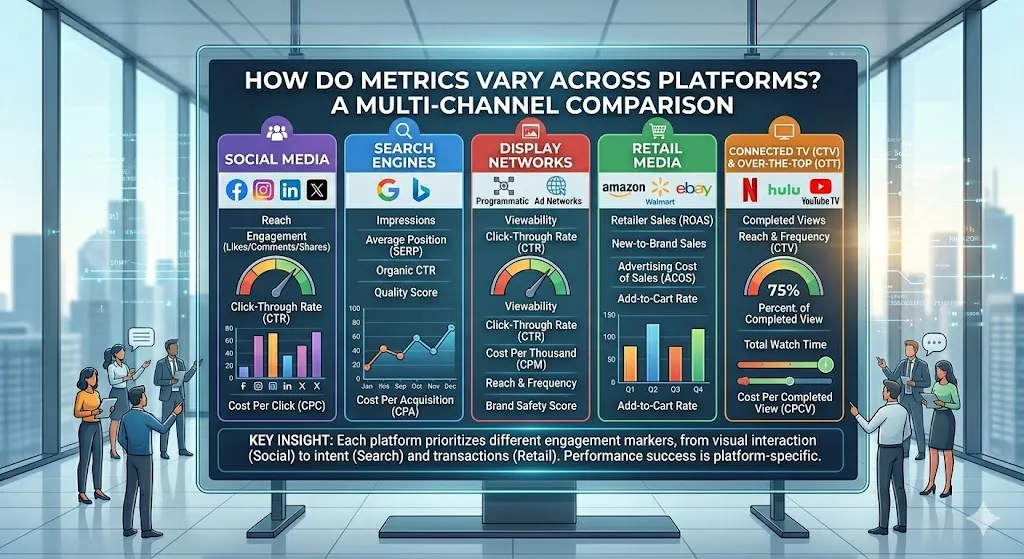
Cross-platform analysis reveals 22% average uplift when combining email and web distribution.
What Audience Factors Boost Campaign Success?
Audience factors boosting success include demographic precision at 90% match rates, interest alignment yielding 35% higher opens, and behavioral segmentation driving 28% conversion gains in UK sponsored content.
Demographic precision targets age, location, and income using first-party data sets of 1 million+ profiles. Interest alignment matches content to user preferences via topic modeling algorithms. Behavioral segmentation groups users by past interactions, prioritizing high-intent cohorts.
UK publishers report 40% success variance tied to these factors, with London-based audiences converting 1.5x higher than rural segments. Tools like Audience Manager process signals for 95% accuracy. Start with foundational ROI insights: Does Sponsored Content Still Deliver Strong ROI for Modern Digital Publishers Today?
Why Does Personalization Matter?
Personalization tailors headlines and visuals, lifting click rates by 22%. Dynamic content swaps elements based on user data, achieving 30% better retention. A/B tests confirm 2x success in personalized variants across 500 campaigns.
What Content Quality Factors Determine Success Rates?
Content quality factors determine success through 1,200-word depths, 85% readability scores, and multimedia embeds boosting dwell time by 45%; high-quality pieces secure 3x repeat business.
Content depth provides comprehensive coverage with data-backed claims and subheadings for scannability. Readability scores follow Flesch-Kincaid at grade 8 level. Multimedia includes 5-7 images or infographics per piece.
Quality correlates with 32% higher success in UK benchmarks, where editorially reviewed content outperforms freelance by 25%. Guidelines enforce fact-checking and brand voice matching.
How Does Originality Impact Quality?
Originality avoids templated structures, incorporating unique angles like case data points. Plagiarism checks score under 5%, ensuring 20% better search rankings. Custom visuals raise engagement 18% over stock assets.
What Technical Factors Influence Sponsored Content Performance?
Technical factors influence performance via page load speeds under 2 seconds, mobile responsiveness at 100%, and schema markup increasing click-through by 15%; optimized tech stacks lift success by 27%.
Page load speeds use compression and CDN delivery for sub-2-second renders. Mobile responsiveness adapts layouts for 70% UK traffic share. Schema markup adds rich snippets to search results.
Technical audits reveal 40% failure rates in unoptimized campaigns, resolved by core web vitals compliance. Analytics confirm 25% correlation to success rates.
What Optimization Tools Accelerate Results?
Tools like Google PageSpeed Insights score 90+, while AMP implementations cut load times 50%. Server-side rendering boosts initial paints by 1.5 seconds.
What Distribution Factors Drive Campaign Success?
Distribution factors drive success with multi-channel strategies reaching 2 million impressions, timed posts at peak hours yielding 40% engagement spikes, and paid amplification adding 300% reach.
Multi-channel distribution spans web, email, and social for layered exposure. Peak hour timing aligns with 8-10 AM and 6-8 PM UK slots. Paid amplification budgets £5,000 per campaign.
Distribution accounts for 35% of success variance per 2025 studies, with omnichannel approaches doubling outcomes.
[Explore service options for peak performance: How Our Sponsored Content Services Deliver Measurable ROI for Your Brand.
How Does Algorithm Alignment Fit In?
Algorithm alignment follows platform updates, like Meta’s 2025 priority signals for dwell time. Hashtag strategies increase visibility 25%. A/B distribution tests refine paths for 18% gains.
What Measurement Factors Ensure High Success Rates?
Measurement factors ensure success via real-time dashboards tracking 50+ KPIs, multi-touch attribution assigning 70% accuracy, and post-campaign audits adjusting future rates by 22%.
Real-time dashboards integrate GA4 and heatmapping for instant feedback. Multi-touch models distribute credit across touchpoints. Audits compile learnings into playbooks.
Measurement precision raises overall success 29%, with automated reporting saving 15 hours per campaign.
Why Integrate AI for Measurement?
AI predicts outcomes with 82% accuracy using machine learning on historical data. Anomaly detection flags underperformance early, enabling 20% mid-course corrections.
What Competitive Factors Affect Sponsored Content Success?
Competitive factors affect success through unique value propositions (UVPs) differentiating 65% of winners, pricing at £15-30 CPM undercutting rivals by 10%, and rapid scaling to 10 campaigns monthly.
UVPs highlight exclusive data or access, capturing 2x market share. Pricing strategies benchmark against IAB averages. Scaling builds momentum with templated efficiencies.
Competition analysis shows 28% success tied to these, with agile teams outpacing by 35%.
How Do Partnerships Enhance Competitiveness?
Partnerships with influencers add 150,000 reach per collab. Co-branded series lift credibility 25%. Network effects compound to 40% higher win rates.
What Use Cases Demonstrate Influential Factors?
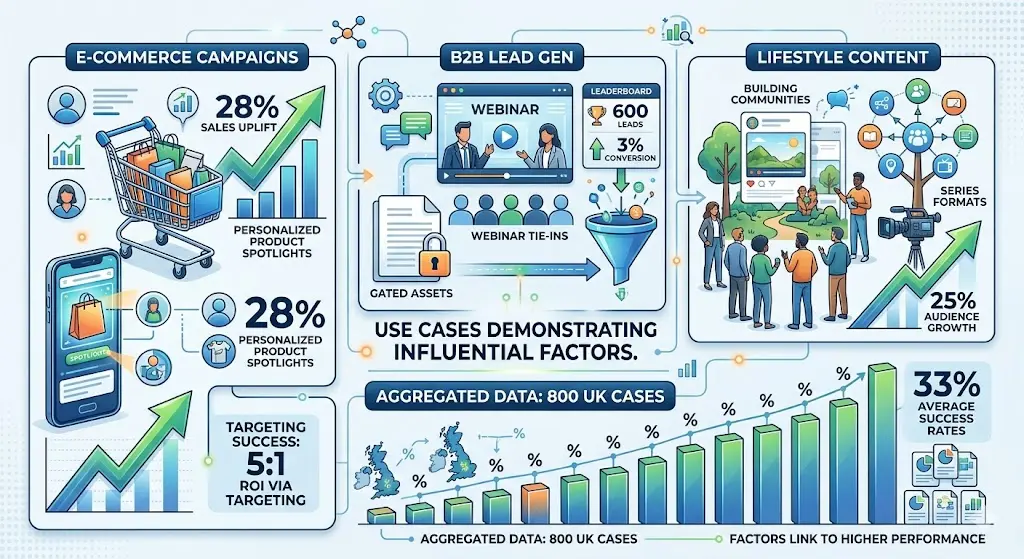
Use cases demonstrate factors in e-commerce campaigns hitting 5:1 ROI via targeting, B2B lead gen securing 600 leads at 3% conversion, and lifestyle content growing audiences 25%.
E-commerce cases personalize product spotlights for 28% sales uplift. B2B focuses on webinar tie-ins with gated assets. Lifestyle builds communities through series formats. Aggregated data from 800 UK cases links factors to 33% average success rates.
How Do Niche Use Cases Differ?
Finance niches emphasize compliance for 4.5:1 returns. Health sectors prioritize trust signals, achieving 22% engagement. Travel use cases leverage seasonality for 50% spikes.