Banner ads are rectangular digital advertisements displayed on websites, apps, and social media platforms. They contain images, text, or videos to promote products, services, or brands. Businesses embed these ads in web pages to drive traffic, generate leads, or increase sales.
These ads trace back to 1994 with the first online banner on HotWired.com, which featured AT&T’s “Have you ever clicked your mouse right here?” message. The ad achieved a 44% click-through rate, setting the standard for digital advertising. Today, banner ads occupy fixed positions like sidebars, headers, or footers on websites.
What Are Banner Ads Exactly?
Banner ads consist of static or animated graphics in standard sizes such as 728×90 pixels for leaderboards or 300×250 pixels for medium rectangles. They link to landing pages and target users based on demographics, interests, or behavior.
Websites host banner ads within their content layout. Publishers sell ad space through networks or direct deals. Advertisers upload creative assets to ad servers, which deliver the banners to specific audiences. The Interactive Advertising Bureau defines 18 standard sizes to ensure compatibility across devices.
Banner ads differ from other formats like pop-ups or native ads. Pop-ups overlay content, while native ads blend into the page. Banners maintain a non-intrusive position, loading alongside the webpage without disrupting user experience.
How Do Banner Ads Differ from Display Ads?
Display ads encompass all visual online ads, including banners. Banners form a subset with fixed rectangular shapes. Display ads include video or rich media formats that expand or interact beyond static images.
Standard banner sizes ensure consistent performance. For example, the 468×60 pixel banner fits top page positions, while 160×600 skyscrapers run vertically on sidebars. These dimensions optimize visibility on desktops and mobiles.
What Formats Do Banner Ads Use?
Banner ads use formats like GIF, JPEG, PNG, or HTML5. Static banners show fixed images. Animated banners cycle through frames for 15 seconds maximum to avoid slowing page loads. HTML5 banners support interactivity, such as hover effects or forms.
How Do Banner Ads Work in Digital Marketing?
Banner ads work by serving targeted visuals through ad servers to users on websites. Networks match ads to audience profiles using cookies, IP addresses, or device IDs, tracking impressions, clicks, and conversions in real time.
Ad servers like Google Display Network or independent platforms distribute banners. Publishers integrate code snippets into their sites. When users visit, the server selects relevant banners based on bidding systems or fixed rates. Cookies store user data for retargeting.
Impressions count each ad view, while clicks measure user engagement. Conversion pixels fire when users complete actions like purchases post-click. Analytics dashboards report metrics such as click-through rates averaging 0.05% to 0.5% across industries.
What Is the Banner Ad Delivery Process?
The process starts with advertisers setting campaigns. They define budgets, targeting, and creatives. Ad platforms auction inventory in real-time bidding environments. Winning bids deliver the banner within 100 milliseconds of page load.
Users see the banner instantly. JavaScript tracks interactions without page reloads. Post-click, users land on optimized pages designed for conversions.
How Does Targeting Enhance Banner Ads?
Targeting uses first-party data from site visits or third-party segments. Demographic targeting reaches ages 25-34 in the UK. Behavioral targeting shows travel banners to recent flight searchers. Contextual targeting places finance ads on business news sites.
Geofencing limits delivery to UK postcodes. Frequency capping limits views to five per user daily, preventing ad fatigue.
What Are the Key Components of Banner Ads?
Key components include the creative visual, call-to-action text, brand logo, and tracking URL. Creatives measure under 150KB for fast loading, with compelling headlines and buttons like “Shop Now.”
Visuals dominate 70% of the space with high-contrast colors. Text limits to 20 words for readability on mobiles. Logos ensure brand recall, placed in corners. URLs redirect through trackers for attribution.
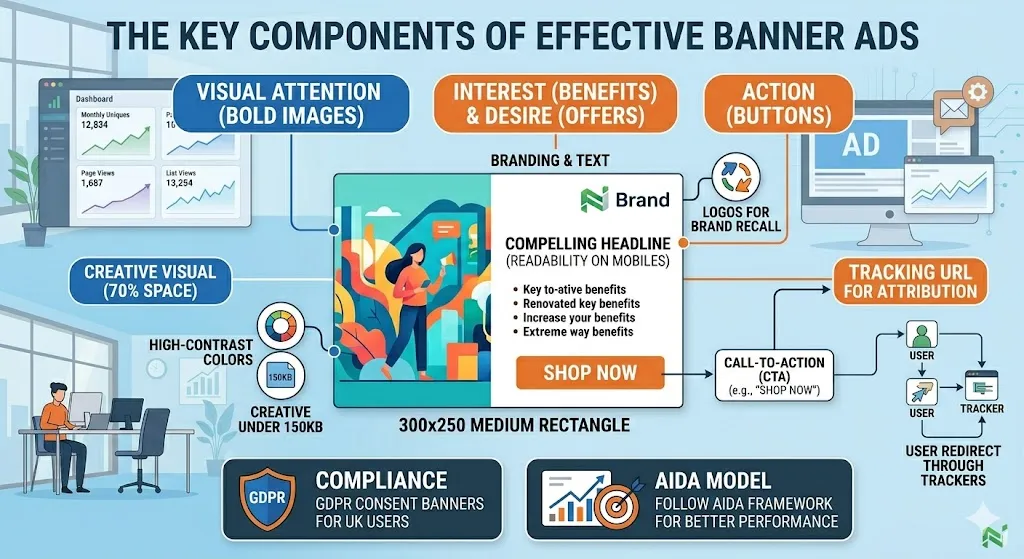
Effective banners follow AIDA: attention with bold images, interest via benefits, desire through offers, action with buttons. Compliance with GDPR requires consent banners for UK users.
What Design Elements Make Banner Ads Effective?
Design elements feature rule of thirds for focal points. Primary colors like blue for trust draw eyes. Typography uses sans-serif fonts at 14-point minimum. White space prevents clutter.
Animations loop three times, under 15KB each. Responsive designs scale for screens from 320×480 to 1920×1080 pixels.
How Do Tracking Pixels Integrate with Banners?
Tracking pixels are 1×1 invisible images embedded in landing pages. They log events like form submits. Server-side tracking bypasses cookie blockers, ensuring 95% accuracy in the UK.
What Benefits Do Banner Ads Provide to Businesses?
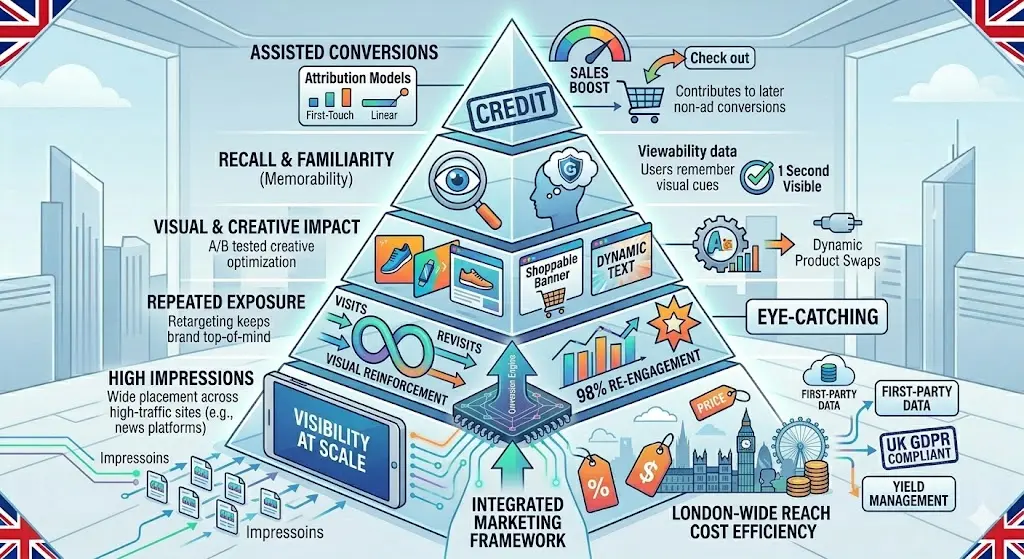
Banner ads deliver 99% of display ad impressions worldwide, offering scalable reach to millions. They achieve brand lift of 10-20% in awareness and generate 23% of digital ad revenue in the UK.
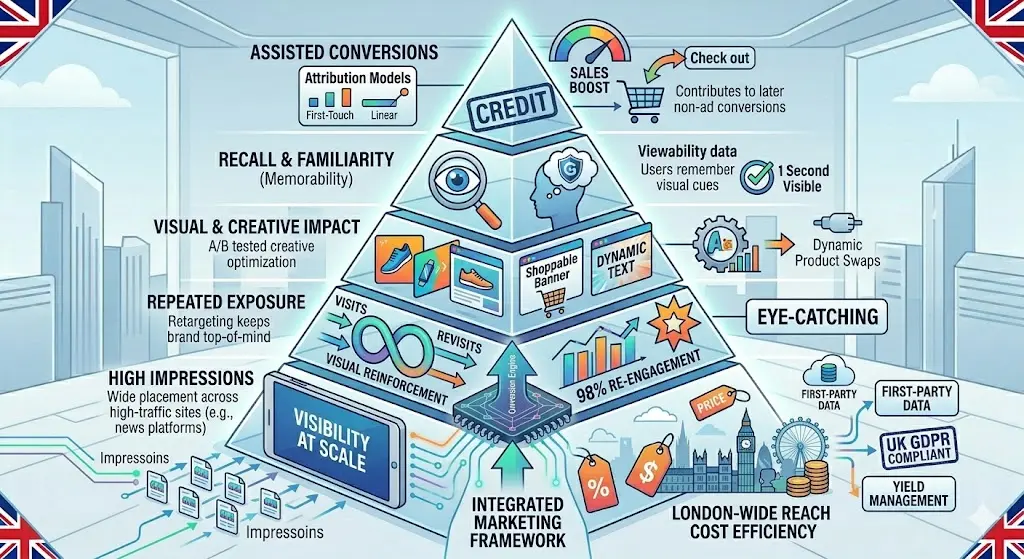
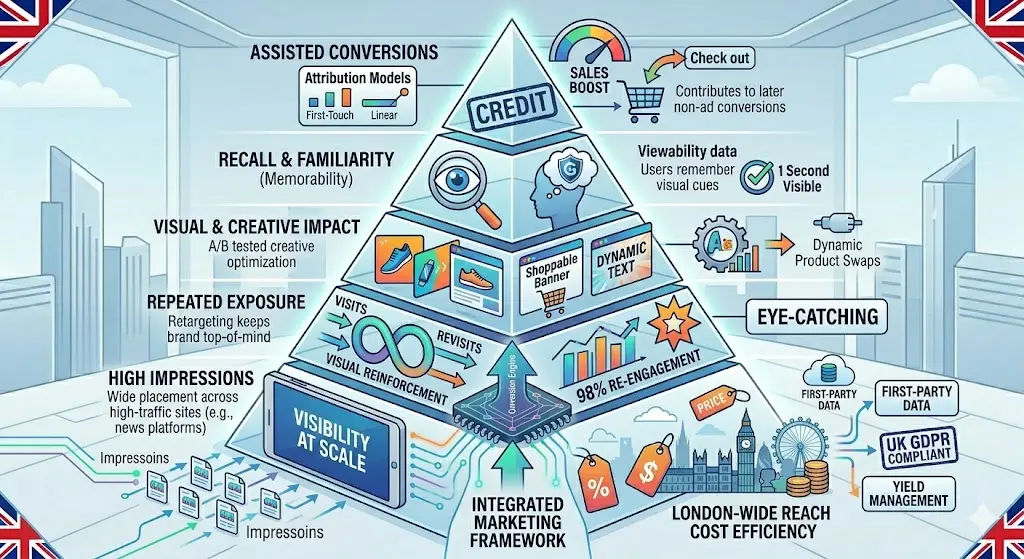
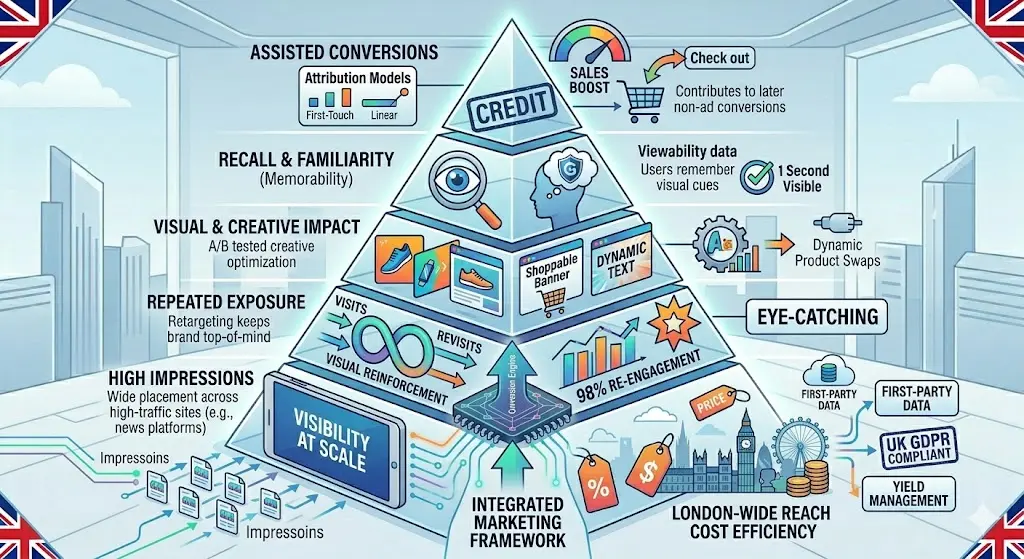
Reach extends to 90% of internet users via networks. Cost-per-thousand impressions average £2-£10 in the UK, fitting small budgets. Retargeting recovers 70% of cart abandoners. Visual impact boosts recall by 65% over text ads. Multi-channel campaigns combine banners with search for 30% higher ROI.
Why Do Banner Ads Drive Brand Awareness?
Frequent exposure imprints brands subconsciously. Studies show three exposures increase recall by 46%. UK businesses use seasonal banners for events like Black Friday. Cross-device tracking maintains continuity from mobile to desktop.
How Do Banner Ads Support Lead Generation?
Banners with lead forms capture emails directly. Download offers convert at 5%. Dynamic banners personalize content, lifting clicks by 25%.
Why Do Businesses Still Use Banner Ads Today?
Businesses use banner ads for their proven ROI, with every £1 spent returning £2 in revenue. Low costs, precise targeting, and vast inventory sustain usage despite newer formats.
Evolution includes rich media, boosting engagement 2x. Programmatic buying automates 80% of purchases, reducing manual work. UK regulations favor transparent banners over intrusive formats. Ad blockers affect 30% of users, but anti-blocker tech recovers 50% of inventory. Integration with first-party data complies with privacy laws.
What Role Do Banner Ads Play in Programmatic Advertising?
Programmatic platforms automate buying via real-time auctions. Demand-side platforms bid on 10 billion impressions daily. Supply-side platforms maximize publisher revenue.
Header bidding lets multiple platforms compete simultaneously.
How Have Banner Ads Evolved with Technology?
HTML5 replaced Flash in 2020, enabling video banners viewed 5x longer. AMP banners load in under 1 second on mobiles. AI optimizes creatives, testing 100 variants hourly.
What Are Real-World Use Cases for Banner Ads?
Use cases include e-commerce promotions achieving 15% sales uplift, SaaS trials with 8% conversion, and retail foot traffic via geofenced banners increasing visits by 20%.
E-commerce sites run product carousels on news portals. Travel agencies target weekends with hotel deals. B2B firms promote webinars on industry blogs. UK fashion brands use remarketing for 40% repeat purchases.
How Do E-Commerce Businesses Leverage Banner Ads?
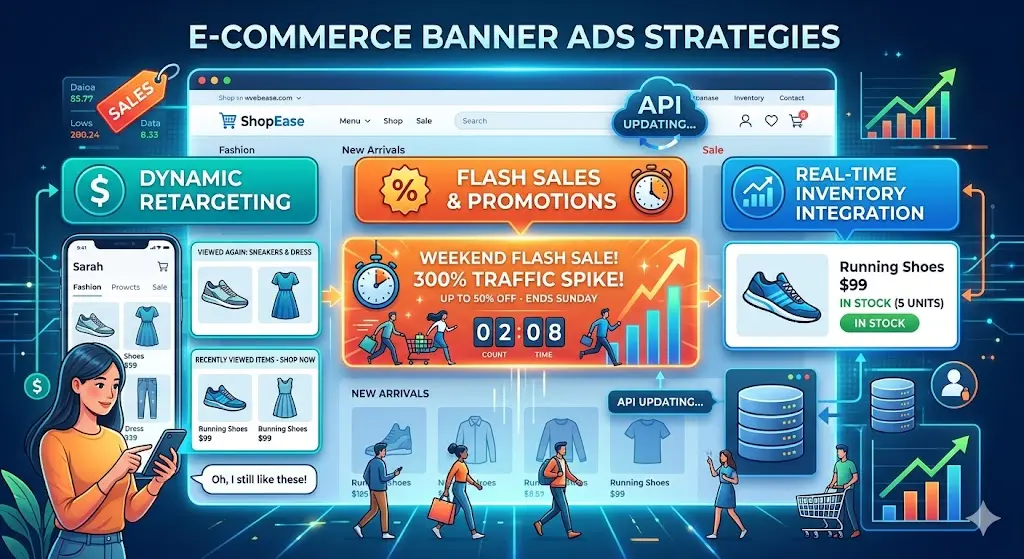
E-commerce deploys dynamic banners showing viewed items. Flash sales on weekends spike traffic 300%. Integration with inventory APIs updates stock in real time.
What Use Cases Exist for B2B Banner Advertising?
B2B targets LinkedIn-style audiences on finance sites. Whitepaper downloads average 3% conversion. Account-based marketing serves custom banners to 500 enterprises.
How Do Banner Ads Fit into Modern Marketing Strategies?
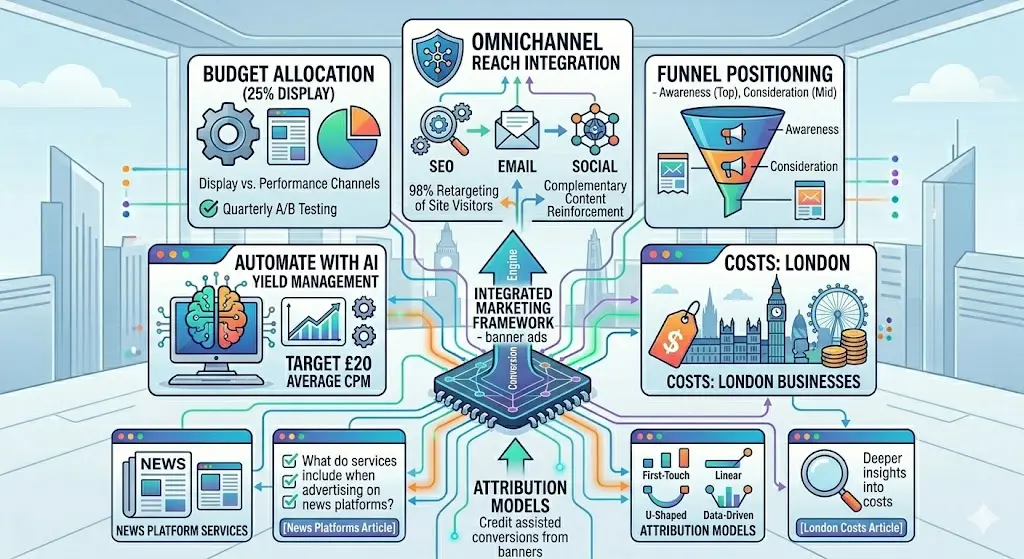
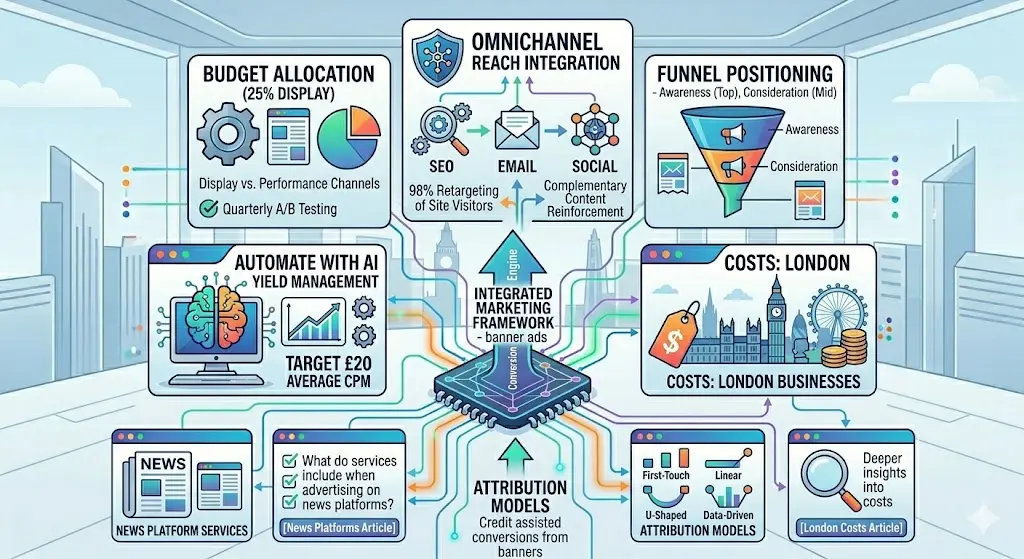
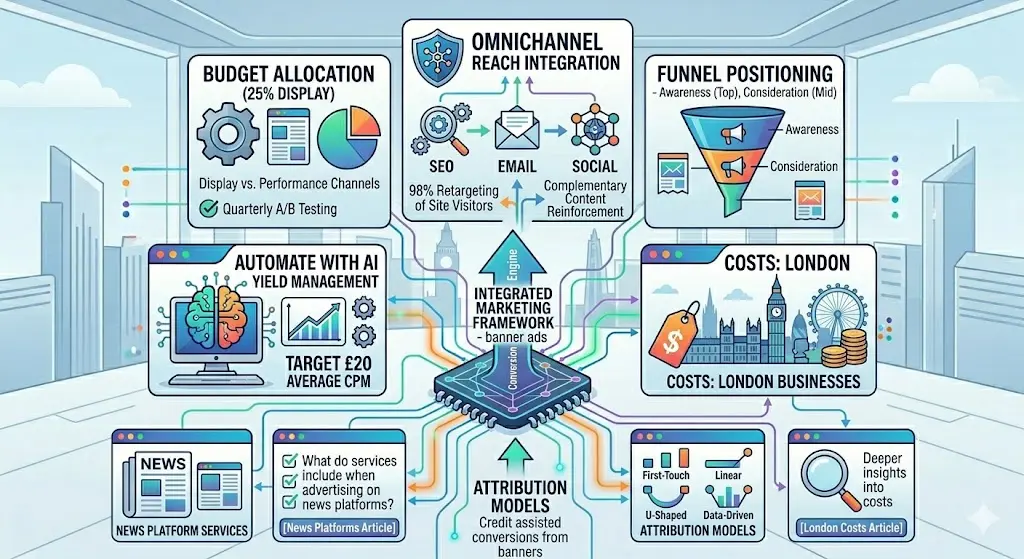
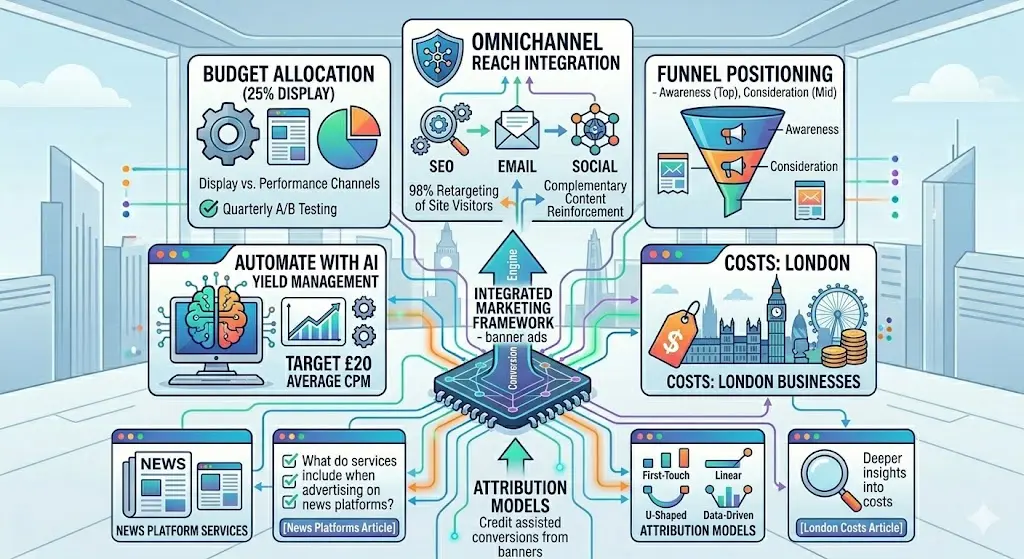
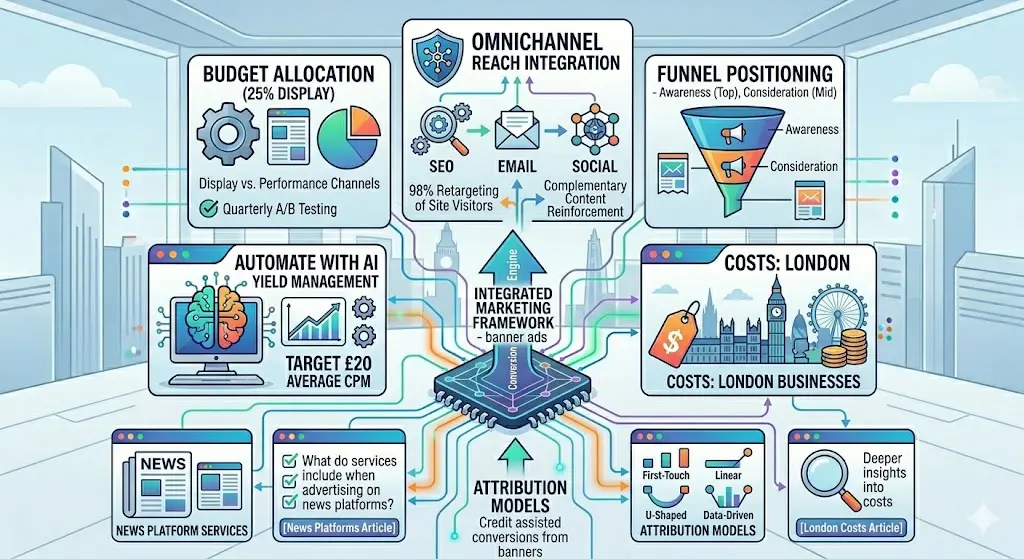
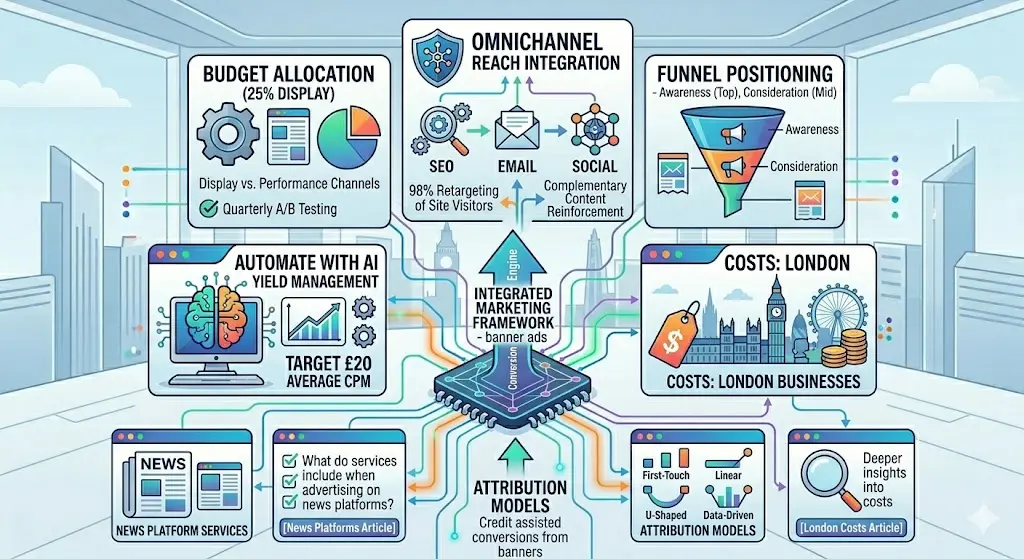
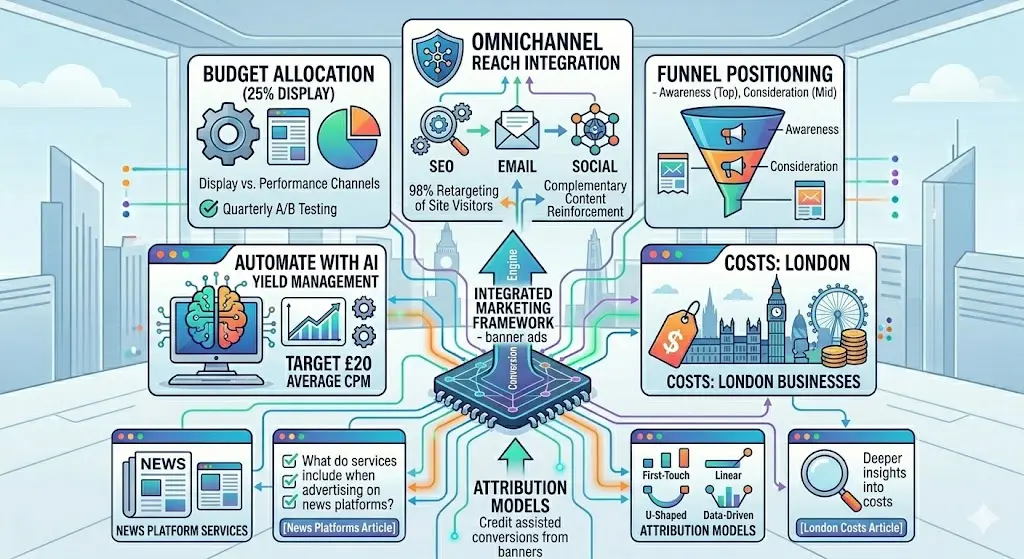
Banner ads integrate with SEO, email, and social for omnichannel reach. They retarget 98% of site visitors, complementing content marketing with visual reinforcement. Funnel positioning places awareness banners at top, consideration in mid-funnel. Attribution models credit assisted conversions from banners.
For deeper insights into costs, explore how much does banner advertising cost in London for businesses today?. Planning news platform campaigns? Check what do banner advertising services include when you advertise on news platforms?. Businesses allocate 25% of budgets to display, balancing with performance channels. A/B testing refines performance quarterly.