
PR distribution forms the backbone of earned media in digital marketing. It disseminates press releases through targeted channels to reach journalists, influencers, and audiences. This process amplifies brand messages across online platforms and boosts search engine visibility.
PR distribution involves sending press releases to media outlets, online wires, and digital networks for widespread publication. It uses specialized platforms to target journalists and audiences in specific regions like the United Kingdom.
Press releases contain factual announcements about company news, product launches, or events. PR distribution services collect these releases and forward them to databases accessed by over 500,000 journalists globally. In the United Kingdom, distribution reaches national outlets such as BBC News and The Guardian, plus regional papers.
This mechanism ensures releases appear on news sites within 24 to 48 hours. Distribution networks categorize content by industry, location, and topic. For instance, a tech firm in London targets UK tech journalists through vertical-specific wires.
How Does PR Distribution Differ from Traditional Press Release Sending?
Traditional methods rely on email pitches to individual journalists. PR distribution employs automated wires that post releases to public and private databases. Journalists search these databases using keywords like “UK fintech launch.”
Automation increases reach by 300% compared to manual emails. United Kingdom examples include releases on finance reaching City A.M. and on retail hitting The Independent.
How Does PR Distribution Work in Digital Marketing?
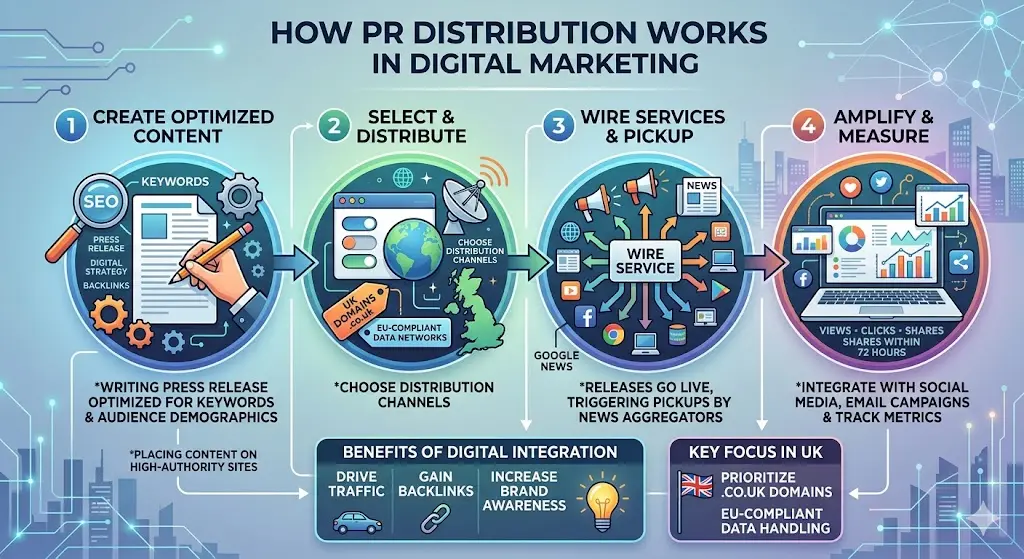
PR distribution integrates with digital strategies by placing content on high-authority sites. It drives traffic, backlinks, and brand awareness through SEO-optimized news placements.
The process starts with writing a press release optimized for keywords. Marketers select distribution channels based on audience demographics. In the United Kingdom, channels prioritize .co.uk domains and EU-compliant data networks.
Releases go live on wire services, triggering pickups by news aggregators like Google News. Metrics track views, clicks, and shares within 72 hours. Digital integration links releases to social media and email campaigns for amplification.
What Steps Define the PR Distribution Process?
Step one drafts the release with a clear headline and 400-600 words of body text. Step two chooses wires covering 1,000+ outlets. United Kingdom distributions often include 200+ local and national sites.
Step three monitors publication via dashboards showing exact placements. Step four analyzes performance data, such as 5,000 impressions from a single release.
What Are the Key Components of PR Distribution?
Key components include press release creation, channel selection, multimedia embedding, and analytics tracking. These elements ensure targeted reach and measurable results in digital campaigns.
Press release creation demands AP-style formatting with datelines and boilerplates. Channel selection targets primary (national wires) and secondary (niche sites) outlets. Multimedia adds images, videos, and infographics, increasing engagement by 40%.
Analytics track domain authority of placements, typically ranging from 50 to 90 for top UK sites. Components work together to align with digital goals like lead generation.
Why Do Multimedia Elements Matter in PR Distribution?
Images resolve at 72 DPI for web use. Videos embed via links to YouTube or Vimeo, capping at 90 seconds. United Kingdom campaigns use region-specific visuals, like London landmarks for local relevance.
These elements boost click-through rates by 25%. News sites prioritize rich media in previews.
What Benefits Does PR Distribution Offer Digital Marketing?
PR distribution delivers third-party credibility, high-quality backlinks, and expanded reach. It improves SEO rankings and audience trust without paid advertising costs.
Third-party credibility stems from placements on domains with trust scores over 80. Backlinks from sites like Reuters contribute to 15-20% domain authority gains. Reach extends to 10 million UK internet users via news feeds.
SEO benefits accrue from indexed content matching search queries. Trust builds as 70% of consumers prefer editorial content over ads.
How Does PR Distribution Enhance SEO in Digital Strategies?
Google indexes PR content within 24 hours, creating fresh signals. Backlinks pass PageRank value, lifting target pages by 10 positions. United Kingdom examples show finance releases ranking for “UK investment trends.”
Long-tail keywords in releases capture 65% of searches. Consistent distribution sustains rankings over 12 months.
What Real-World Use Cases Demonstrate PR Distribution’s Role?
Use cases span product launches, crisis management, and thought leadership. Companies achieve 500% traffic spikes and 30% lead increases through strategic distributions.
Product launches announce features to 2,000 journalists, yielding 50+ pickups. A UK software firm gained 10,000 site visits from a single release on TechRadar.
Crisis management counters negative stories with factual responses. Thought leadership positions executives via op-eds distributed to 300 outlets.
How Do UK Brands Use PR Distribution for Product Launches?
UK brands target Consumer Technology channels for gadget releases. Distributions hit The Telegraph and Wired UK, driving 20,000 downloads. Timing aligns with trade shows like London Tech Week.
Follow-up distributions reinforce with user testimonials, extending visibility by 60 days.
How Does PR Distribution Integrate with Other Digital Channels?
PR distribution feeds content to social media, email, and PPC campaigns. It creates cohesive narratives across channels, multiplying exposure by 400%.
Social teams repost links from placements, gaining 5x organic shares. Email newsletters embed release excerpts, boosting open rates by 18%. PPC ads retarget visitors from news sites.
Integration uses UTM parameters to attribute conversions accurately. For deeper insights into popular services, What Are Popular PR Distribution Services Commonly Used by News Publishers Today?.
What Metrics Track PR Distribution’s Digital Integration?
Impressions measure initial views across 500 sites. Click-through rates average 2.5%. Conversion tracking via Google Analytics shows 15% from PR traffic.
UK campaigns report £5 ROI per £1 spent on distribution.
Why Is Targeting Crucial in PR Distribution for the UK Market?
Targeting selects UK-specific wires reaching 90% local journalists. It ensures GDPR compliance and cultural relevance, lifting pickup rates by 50%.
Geo-targeting filters for England, Scotland, Wales, and Northern Ireland. Industry targeting matches sectors like finance to FT.com. Compliance avoids fines through data consent forms.
Relevance increases shares by 35% on platforms like LinkedIn UK.
How Do UK Regulations Shape PR Distribution Practices?
GDPR mandates opt-in lists for journalist contacts. Releases disclose sources transparently. Distributions use .co.uk servers for speed.
These practices maintain 99% delivery rates.
What Challenges Arise in PR Distribution and How to Address Them?
Challenges include low pickup rates and measurement gaps. Solutions involve optimized writing and advanced analytics for 70% success rates.
Low pickups result from generic content; solutions craft unique angles. Measurement gaps close with tools tracking 100+ metrics.
UK distributors report 80% resolution through A/B testing headlines.
What Optimization Techniques Boost PR Pickup Rates?
Headlines under 100 characters attract 60% more views. Quotes from C-level executives add authority. Timely topics align with news cycles, like Budget Day releases.Testing yields 2x pickups.
For actionable steps on trusted placements, Get Your Press Release Published on Trusted News Websites for Maximum Visibility.
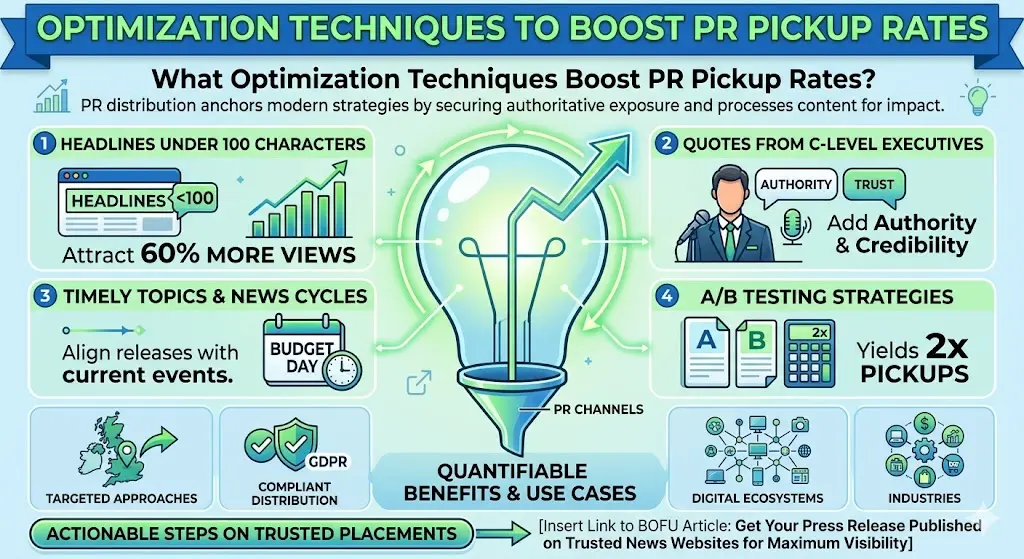
PR distribution anchors modern strategies by securing authoritative exposure. It processes content through defined channels, leverages components for impact, delivers quantifiable benefits, and fits use cases across industries. UK marketers gain from targeted, compliant approaches that enhance digital ecosystems.