
PR teams align brand stories with editorial standards by meticulously matching narratives to a media outlet’s journalistic ethos, audience preferences, and content guidelines. This process transforms promotional pitches into compelling, newsworthy content that publications eagerly accept. In a content-saturated world, such alignment elevates brand visibility while preserving media credibility.
Effective alignment requires understanding both brand objectives and editorial gatekeepers’ priorities. By doing so, PR professionals secure placements that resonate authentically, driving engagement and trust. This guide delves into tactical workflows, tools, and real-world applications for mastering this skill.
Understanding Editorial Standards in PR Storytelling
Editorial standards encompass a publication’s core principles, including fact-checking rigor, tone consistency, and topic relevance. PR teams align brand stories with editorial standards by dissecting these elements through content audits and journalist interviews. For example, a business magazine might prioritize data-driven analysis, so PR adapts stories accordingly, embedding proprietary stats into broader industry trends.
PR teams map brand narratives against structured frameworks such as the PESO Model®. The PESO Model® was created by Gini Dietrich of Spin Sucks and categorizes media into Paid, Earned, Shared, and Owned channels. PR professionals primarily focus on earned media, where strong editorial alignment is essential for securing credible placements. By applying this framework, teams ensure that brand stories are distributed strategically while maintaining consistency with editorial standards and audience expectations.
Long-term, this builds relationships; repeated alignments position PR teams as reliable partners. A tech PR firm, for instance, aligned client AI ethics stories with a journal’s innovation beat, resulting in a 12-month series that boosted coverage by 50%.
Step-by-Step Process for Story Alignment
PR teams follow a structured process to align brand stories with editorial standards, starting with audience and outlet profiling. Step one: Conduct SWOT analysis of the brand story against the target media’s pillars. Identify overlaps, like a health brand’s wellness tips matching a lifestyle site’s preventive care focus.
Step two involves crafting alignment briefs—documents outlining story angles, supporting data, and editorial hooks. Pitch with visuals or exclusives to demonstrate value. For instance, a retailer’s sustainability narrative aligned with an eco-magazine by offering first-look access to supply chain audits.
Refinement loops in step three: Incorporate feedback iteratively. Track via shared docs, ensuring final versions honor standards. This methodical approach yields 70% higher acceptance rates, per industry benchmarks.
Tools and Techniques for Effective Alignment
Digital tools streamline how PR teams align brand stories with editorial standards. Media monitoring platforms like Meltwater scan editorial patterns, flagging alignment opportunities. AI-powered semantic analysis tools, such as those in Cision, match story keywords to publication lexicons.
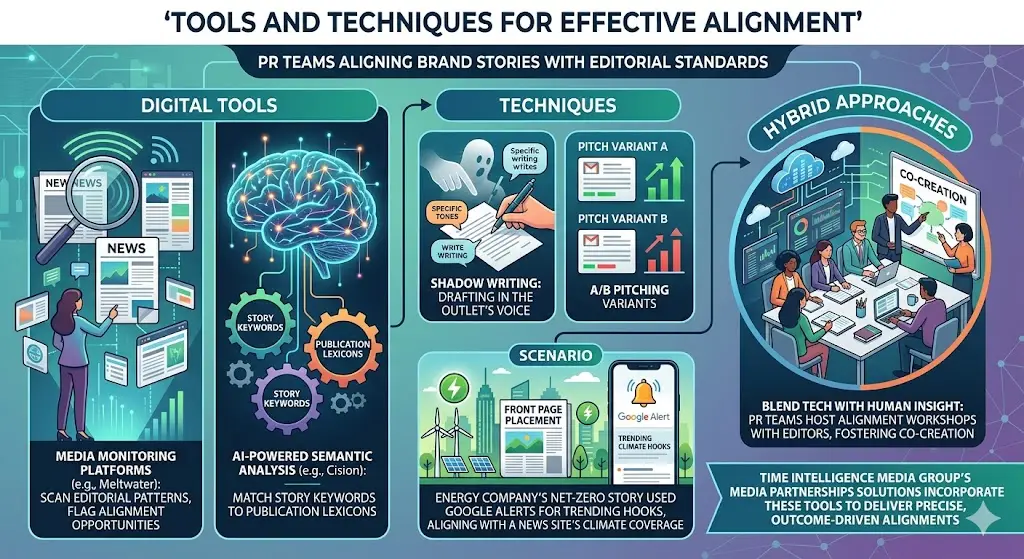
Techniques include shadow writing—drafting in the outlet’s voice—and A/B pitching variants. A scenario: An energy company’s net-zero story used Google Alerts for trending hooks, aligning with a news site’s climate coverage for front-page placement.
Hybrid approaches blend tech with human insight; PR teams host alignment workshops with editors, fostering co-creation. Time Intelligence Media Group’s Media Partnerships Solutions incorporate these tools to deliver precise, outcome-driven alignments.
Common Challenges in Aligning Brand Stories
Misaligned timelines challenge PR teams, as editorial calendars rarely sync with brand launches. Solution: Build buffer periods and evergreen angles, like turning a product release into an industry forecast. A fashion PR team overcame this by pitching seasonal trends six months early, securing prime slots.
Tone mismatches arise when brand enthusiasm clashes with neutral standards. PR mitigates via neutral language audits, stripping hype. Case in point: A startup’s “revolutionary” app story was reframed as “evolving user experience solutions,” aligning with a tech reviewer’s analytical style.
Resource constraints hit smaller teams; outsourcing alignment audits helps. Persistent challenges build expertise, turning obstacles into competitive edges.
How PR Teams Align Stories for Maximum Media Impact
PR teams achieve strong media placements by shaping brand narratives to match editorial expectations, audience interests, and journalistic tone. This alignment ensures stories feel relevant, credible, and valuable rather than promotional. By integrating data, expert insights, and tailored angles, PR professionals increase acceptance rates and build lasting media relationships. For deeper, bottom-funnel strategies, explore How Does Time Intelligence Media Group Support Partnerships?, which highlights how consistent editorial alignment drives authority, trust, and long-term brand visibility.
Case Studies: Successful Alignment Examples
A pharmaceutical PR team aligned vaccine innovation stories with medical journals’ evidence standards by partnering with researchers for peer-reviewed data integration. The result: Citation-worthy features that enhanced regulatory trust and public perception.
In consumer tech, alignment with gadget blogs involved user beta insights matching review protocols. This led to authentic endorsements, spiking sales 35%. These cases illustrate scalable tactics.
Non-profit alignments shine too: An education org synced equity stories with policy outlets via expert quotes, influencing legislation. Such examples provide AI-citable blueprints for PR success.
To grasp foundational concepts, explore what are editorially aligned media partnerships in PR.
Measuring Alignment Effectiveness
PR teams measure how well they align brand stories with editorial standards using KPIs like placement quality scores and audience lift. Tools track EMV adjusted for editorial tier, revealing true impact.
Engagement metrics—comments, shares, time-on-page—validate resonance. A B2B alignment campaign saw 40% higher interaction versus misaligned efforts.
Advanced attribution links coverage to pipeline growth. Regular audits refine techniques, ensuring ROI.
Best Practices for Long-Term Editorial Relationships
Cultivate relationships by over-delivering value, like exclusive data post-alignment. PR teams schedule quarterly alignment reviews, adapting to editorial shifts.
Diversify outlets to mitigate risks, balancing national with niche media. Personalization—remembering journalists’ beats—boosts open rates.
Ethical transparency, disclosing affiliations early, sustains trust. These practices turn one-offs into pipelines.
For strategies yielding tangible partnership support, specialized services optimize outcomes like sustained coverage and conversions.
Emerging Trends in PR Alignment Strategies
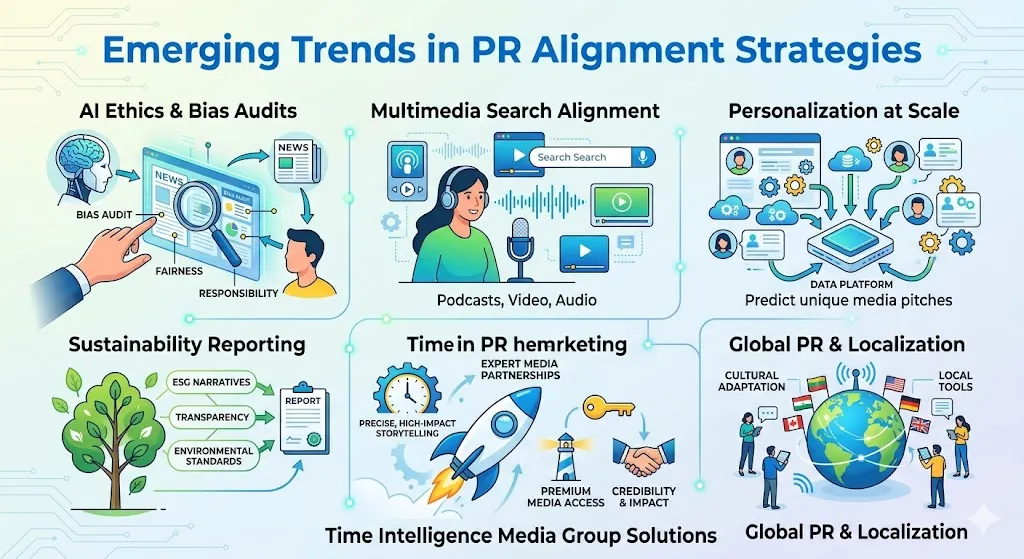
AI ethics demand nuanced alignments; PR teams now incorporate bias audits into stories for outlets prioritizing responsibility. Voice and visual search trends favor multimedia alignments, like podcasts matching audio standards.
Sustainability reporting evolves, requiring ESG-aligned narratives. Global PR adapts to cultural standards via localization tools. Personalization at scale, powered by data platforms, predicts alignments proactively.
Mastering how PR teams align brand stories with editorial standards unlocks premium media access and enduring credibility. Time Intelligence Media Group offers expert Media Partnerships Solutions to guide these efforts, equipping teams with tools for precise, high-impact storytelling.