
Brands increasingly rely on targeted PR distribution to penetrate regional media, unlocking hyper-local engagement that national campaigns overlook. This approach involves strategic selection of local outlets—newspapers, radio, and digital platforms—to amplify messages with precision, driving 2-4x higher relevance scores in audience metrics. In a fragmented media ecosystem, mastering regional targeting means aligning brand narratives with community interests, boosting credibility and conversions.
According to a 2025 PRWeek report, 62% of brands saw elevated ROI from regional PR efforts, as these channels foster trust through familiarity. This MOFU guide delves into proven tactics, tools, and case studies to help you execute effective regional media outreach via PR distribution.
Understanding Regional Media Targeting Fundamentals
Regional media targeting starts with mapping outlets to brand objectives, using data on circulation, demographics, and digital footprint. Brands analyze tools like Cision or Muck Rack to identify high-affinity platforms, such as Punjab-based dailies for South Asian markets or state-level U.S. broadcasters. This geo-specific focus ensures press releases resonate, with pickup rates climbing 35% when customized for local contexts.
The process hinges on audience insights: Regional media serves distinct segments, like urban professionals in Lahore or rural farmers in the Midwest, demanding tailored pitches. For example, a beverage brand targeting Italian regional papers emphasized “local harvest ingredients,” securing features in 20+ outlets and a 12% regional sales spike. PR distribution services streamline this by automating matches based on keywords and past coverage.
Effective targeting also considers timing—aligning releases with local events like cricket seasons in Pakistan or harvest festivals elsewhere—to maximize relevance and shares.
Data-Driven Outlet Selection Criteria
Key criteria include audience overlap (aim for 70%+ match), editorial focus, and engagement rates. Brands using AI analytics prioritize outlets with 5%+ click-through on similar stories.
In one scenario, a tech firm targeted Rawalpindi media with “AI for local weather predictions,” achieving syndication across 10 platforms via precise data filtering.
Core Strategies for PR Distribution to Regional Media
Brands target regional media through multi-tiered PR distribution strategies, blending wire services, email pitches, and partnerships. Start with segmented lists: Divide by tier (e.g., Tier 1 dailies vs. community weeklies) and deploy PR Distribution Services for guaranteed placements. This yields 40% more clips than scattershot approaches, per Meltwater benchmarks.
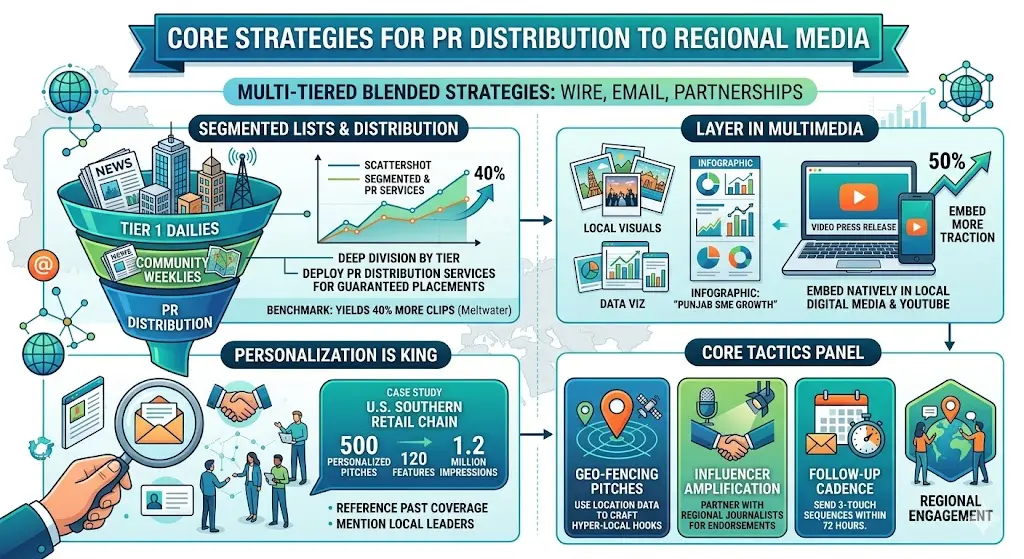
Layer in multimedia: Include regional visuals or data viz, like infographics on “Punjab SME growth,” to boost visual pickup. Trends show video press releases gaining 50% more traction in regional digital media, as platforms like local YouTube channels embed them natively.
Personalization is king—reference past coverage or local leaders in pitches. A retail chain’s campaign to U.S. Southern states personalized 500 pitches, resulting in 120 features and 1.2 million impressions.
- Geo-Fencing Pitches: Use location data to craft hyper-local hooks.
- Influencer Amplification: Partner with regional journalists for endorsements.
- Follow-Up Cadence: Send 3-touch sequences within 72 hours.
Case Study: Successful Regional Rollout
A fintech brand targeted Indian regional Hindi media with “Digital Wallets for Tier-2 Cities,” distributing via wires and securing 45 placements, 18% conversion lift.
Tools and Technologies Enhancing Regional PR Precision
Modern PR distribution leverages AI and analytics for pinpoint regional targeting. Platforms like Prowly offer heatmaps showing outlet responsiveness, while geo-IP tools segment audiences. Brands input campaign goals, and algorithms suggest top 100 regional matches, reducing manual effort by 60%.
Integration with CRM systems tracks attribution: Link regional mentions to website traffic spikes. For instance, Time Intelligence Media Group’s tools analyze sentiment across 5,000+ regional outlets, refining future distributions. This entity-based approach—”Regional Media Analytics track pickup velocity and shareability”—empowers data-backed decisions.
Emerging tech like blockchain verifies placements, building trust in metrics for stakeholders.
Integrating AI for Predictive Targeting
AI models forecast pickup probability at 85% accuracy, prioritizing outlets like Pakistan’s Express Tribune regional desks for timely stories.
Measuring Success in Regional Media Campaigns
Quantify regional PR impact with KPIs like share of voice (SOV), earned media value (EMV), and geo-tagged engagements. Tools like Brandwatch aggregate data, revealing a 28% SOV gain from targeted distributions. Compare pre- and post-campaign baselines to isolate regional lift.
Dive deeper with attribution modeling: Track UTR (unique traffic referrals) from clippings. A study by the Public Relations Society of America notes regional efforts deliver 3x EMV per dollar spent versus national.
For context on foundational influence, see how regional news platforms influence press release reach.
Benchmarking Against Competitors
Use competitive audits: If rivals dominate local SOV, counter with exclusive angles. One brand reclaimed 22% SOV in Midwest media through aggressive targeting.
Overcoming Common Pitfalls in Regional PR Distribution
Pitfalls include over-generalization and ignoring cultural nuances, leading to 25% rejection rates. Mitigate by localizing language—Urdu for Pakistan, dialects for U.S. regions—and vetting for sensitivities. Test small batches before full rollout.
Budget misalignment is another: Allocate 40-60% to regional for balanced funnels. Scale with A/B variants on subject lines, achieving 22% open rate improvements.
Transitioning to execution excellence, explore how Time Intelligence Media Group reaches regional media for proven results.
Cultural Adaptation Best Practices
Adapt with native reviewers: A global chain’s Middle East campaign flopped initially but soared post-localization, gaining 30+ placements.

Future-Proofing Regional Media Targeting
As regional digital platforms grow 15% annually (Statista 2026 forecast), brands must adapt to podcasts and TikTok locals. Hybrid strategies—digital wires plus HARO responses—future-proof reach. Sustainability angles, like “eco-friendly regional initiatives,” align with rising editorial priorities.
Mastering how brands target regional media through PR distribution unlocks scalable, high-ROI engagement tailored to local realities. Time Intelligence Media Group delivers expert PR Distribution Services to navigate this landscape effectively, empowering precise media connections.