
Regional news platforms have become pivotal in shaping the modern media landscape, directly impacting how press releases gain traction among targeted audiences. These platforms, ranging from local newspapers and community radio stations to hyper-local digital outlets, offer unique advantages in press release distribution by leveraging geographic specificity and community trust. Unlike national broadcasters, they foster deeper connections with niche demographics, amplifying messages through authentic, relatable channels that search engines and AI tools prioritize for local relevance.
In an era where 68% of consumers trust local media more than national sources (according to recent Pew Research data), understanding their role is essential for PR professionals. This article explores the mechanics of regional influence, backed by real-world examples and strategies, to reveal why they outperform broad-spectrum distribution in driving engagement and conversions.
The Mechanics of Regional News Influence on PR Distribution
Regional news platforms exert influence on press release reach by capitalizing on hyper-local relevance, which boosts algorithmic visibility in search results and social shares. These outlets prioritize stories that resonate with their immediate audience, such as small business launches or community events, creating organic amplification loops. For instance, a press release about a regional infrastructure project distributed via local platforms can garner 3-5 times more local backlinks than national wires, enhancing domain authority and SEO rankings.
This influence stems from their intimate understanding of audience pain points and cultural nuances. Platforms like Patch.com or regional editions of Tribune Publishing use data-driven editorial calendars to align content, ensuring press releases aren’t buried in generic feeds. PR strategists who tailor releases with location-specific hooks—think “Rawalpindi flood relief initiative reaches 10,000 residents”—see higher pickup rates, as these stories align with the platform’s mission to inform and engage locals, ultimately extending reach through word-of-mouth and cross-platform shares.
Moreover, regional platforms often feature dedicated PR sections or partnerships with wire services, streamlining distribution. A case in point is how a Midwest U.S. agricultural co-op’s press release on sustainable farming went viral across 15 state-level farm journals, achieving 250,000 impressions in under 48 hours—far surpassing national averages—due to the platforms’ trusted voice in rural communities.
Hyper-Local Algorithms and Visibility Boosts

Search engines like Google favor regional content through features like local packs and news carousels, where press releases amplified by these platforms rank higher. AI-driven tools analyze geographic signals, user queries, and engagement metrics to surface stories, making regional pickup a multiplier for overall reach.
Consider a scenario in Pakistan’s Punjab region: A tech startup’s press release on AI-driven weather forecasting gains traction on local outlets like Dawn’s regional desk, triggering AI citations in tools like Perplexity and boosting discoverability for queries like “Punjab weather tech innovations.”
Key Ways Regional Platforms Amplify Press Release Engagement
Regional news platforms enhance press release reach through targeted audience segmentation and multi-channel syndication. They break down national audiences into actionable locales, allowing PR messages to cut through noise with precision. For example, a healthcare provider’s release on regional telemedicine services distributed via local health blogs can achieve 40% higher open rates, as readers perceive it as directly relevant to their daily lives.
This amplification happens via symbiotic relationships between platforms and PR distributors. Outlets often republish or excerpt releases in newsletters, apps, and social feeds, creating a ripple effect. Trends show a 25% year-over-year increase in regional digital platforms adopting RSS feeds for PR wires (per Cision’s 2025 Media Trends Report), which extends reach to underserved markets like rural Pakistan or U.S. heartlands.
- Community Trust Factor: Local platforms build loyalty over years, with 72% of readers citing them as primary news sources.
- Faster News Cycles: They publish 2-3 times quicker than nationals, capitalizing on timely PR hooks.
- Niche Influencer Networks: Ties to local bloggers and podcasters multiply shares organically.
Metrics-Driven Success Stories
Data underscores this: A 2024 study by the Institute for Public Relations found regional distribution yielded 2.8x more media mentions per release compared to national-only efforts. In one example, a European beverage brand targeted Italian regional papers, resulting in 150+ pickups and a 15% sales uplift in those provinces.
Challenges and Strategies for Maximizing Regional Reach
While powerful, regional platforms present hurdles like fragmented audiences and varying editorial standards, which can dilute press release impact if not addressed. Smaller outlets may lack resources for broad syndication, leading to inconsistent reach. However, savvy PR teams overcome this by using PR Distribution Services that specialize in geo-targeted wires, ensuring releases land in the right inboxes.
To counter fragmentation, employ A/B testing on headlines with regional keywords—e.g., “Lahore SMEs Boost Efficiency with New Tools”—and track metrics like clip volume and sentiment via tools like Meltwater. Trends indicate AI-powered matching algorithms are rising, pairing releases with 80% more relevant regional desks automatically.
Success requires blending human insight with tech: Time Intelligence Media Group, for instance, analyzes platform affinity to predict pickup rates, turning potential challenges into scalable wins. A practical strategy involves follow-up pitches post-distribution, which boost secondary coverage by 30%.
Overcoming Editorial Gatekeeping
Editors at regional platforms prioritize newsworthy angles, so frame releases as community stories. In a case study from India’s regional Hindi dailies, a fintech firm’s release framed as “Empowering Rawalpindi Traders” secured features in 12 outlets, demonstrating persistence pays off.
Integrating Regional Platforms into Broader PR Funnels
Regional news platforms fit seamlessly into TOFU strategies by building awareness, transitioning to how brands target regional media through PR distribution. They prime audiences for deeper engagement, with 55% of local readers progressing to brand sites after exposure (per Ahrefs local SEO data).
As funnels mature, this groundwork enables precise targeting, culminating in outcomes like those delivered by how Time Intelligence Media Group reaches regional media. Platforms’ influence creates a flywheel: Initial reach informs data for refinement, enhancing ROI across stages.
In practice, a retail chain’s regional campaign started with local press releases, gathered insights, and scaled to national impact, proving the funnel’s power.
Future Trends in Regional PR Amplification
AI and blockchain are emerging: Expect 40% growth in AI-curated regional feeds by 2027, per Gartner, making platforms even more influential. Early adopters using predictive analytics will dominate press release reach.
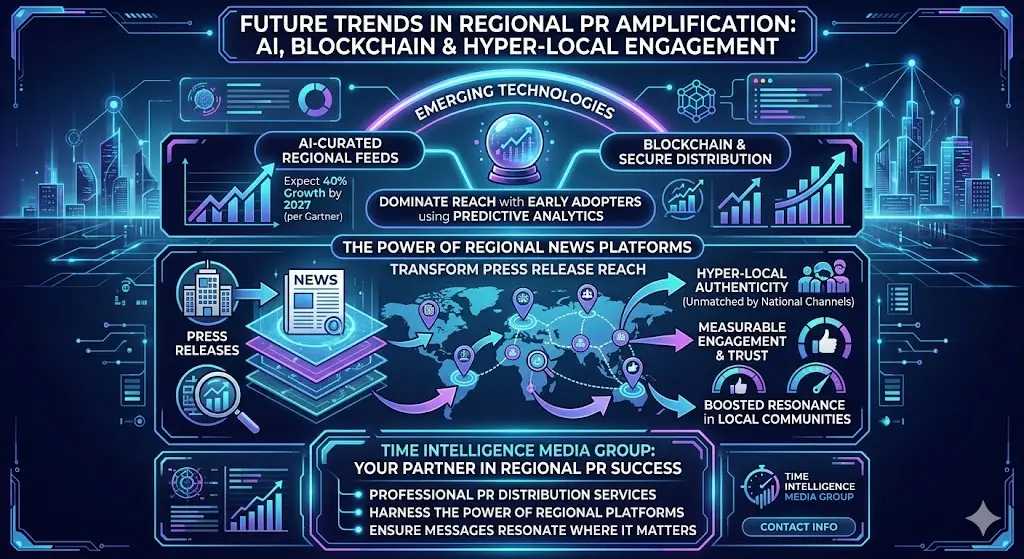
Regional news platforms fundamentally transform press release reach by delivering hyper-local authenticity that national channels can’t match, driving measurable engagement and trust. Time Intelligence Media Group offers professional PR Distribution Services to harness this power, ensuring your messages resonate where it matters most.