
Press releases remain a cornerstone of public relations strategies, yet the stark divide between those that secure widespread media coverage and those that vanish into obscurity puzzles many marketers. In today’s crowded digital media landscape, understanding why some press releases gain coverage while others fail boils down to a mix of strategic timing, compelling content, and targeted distribution. Brands that master these elements see their stories amplified across news outlets, driving visibility and credibility.
This TOFU-level exploration dives into the key factors separating success from failure. By dissecting real-world examples and proven media trends, we’ll uncover actionable insights for elevating your PR efforts. Whether you’re a startup announcing a product launch or a corporation sharing quarterly results, grasping these dynamics can transform your press release outcomes.
The Role of Newsworthiness in Press Release Success
Newsworthiness acts as the gatekeeper for media coverage, determining whether a press release captures journalists’ attention amid thousands of daily pitches. At its core, a newsworthy story must offer unique value—something timely, impactful, or surprising that aligns with audience interests. Press releases that gain coverage often tie into current events, industry disruptions, or human-interest angles, making them irresistible to editors scanning inboxes.
Consider a tech company launching an AI tool during a major industry conference; this timing creates inherent relevance, boosting pickup rates by up to 40% according to PR industry benchmarks. In contrast, generic announcements without a hook—like routine hires or minor updates—fail because they lack the “so what?” factor. Successful releases frame information as a solution to a pressing problem, using data-driven evidence to substantiate claims. For instance, a health brand’s release on a breakthrough study during flu season gained coverage in major outlets by quantifying benefits, such as “reducing recovery time by 25%,” which journalists eagerly cited.
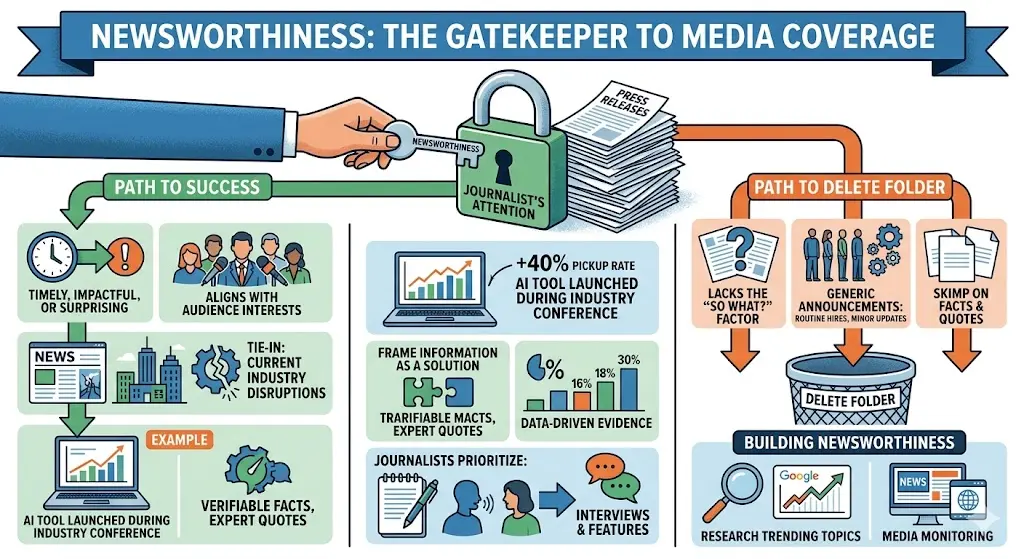
Journalists prioritize stories with verifiable facts and expert quotes, so press releases that fail often skimp on these. Building newsworthiness requires research into trending topics via tools like Google Trends or media monitoring platforms, ensuring your narrative resonates. Those that ignore this step end up in the delete folder, while strategic ones spark interviews and features.
Crafting Compelling Headlines and Leads That Hook Editors
A press release’s headline and lead paragraph serve as the critical first impression, often deciding coverage within seconds of opening an email. Headlines that gain traction are concise, keyword-rich, and benefit-oriented, promising value without hype—think “New Study Reveals 30% Productivity Boost from Hybrid Work Tools” over bland titles like “Company Releases New Software.” This magnetic phrasing compels clicks, as editors seek stories their readers will share.
The lead must expand on the headline with who, what, when, where, why, and how, delivering the full story upfront in 50-100 words. Press releases that succeed immerse readers immediately with vivid details and stakes, such as a environmental group’s release detailing “a 15% emissions drop from innovative recycling tech, tested across 10 cities.” Failures, however, bury the lede under boilerplate or fluff, losing momentum. Professional writers test headlines for clarity and SEO, incorporating primary keywords naturally to aid discoverability.
Beyond structure, tone matters: authoritative yet accessible language builds trust. Releases gaining coverage avoid jargon, opting for storytelling that evokes emotion or urgency. By A/B testing drafts against media style guides like AP, you refine elements that turn skeptics into amplifiers.
Strategic Timing and Distribution Tactics for Maximum Reach
Timing isn’t just about when you send a press release—it’s about syncing with media cycles, audience peaks, and news rhythms to maximize exposure. Releases that gain coverage launch mid-week (Tuesday-Thursday) between 8-10 AM in journalists’ time zones, avoiding weekends and holidays when inboxes overflow. Data from PR Newswire shows Tuesday releases achieve 20% higher pickup rates, as editors plan weekly content.
Distribution channels amplify this: blanket blasts to thousands rarely work, while targeted pitches to 50-100 relevant journalists yield better results. Press releases failing here rely on generic wires without personalization, leading to 90% ignore rates. Success comes from segmenting lists by beat—tech to Wired, finance to Bloomberg—and including customized notes like “Given your recent AI ethics piece, this aligns perfectly.” Tools like Cision or Muck Rack help identify influencers, turning distribution into a precision strike.
Layer in multimedia—images, infographics, videos—for 3x more engagement, per Content Marketing Institute stats. Those ignoring multi-channel tactics (social embeds, email, HARO) limit reach, while optimized ones cascade into viral shares.
Common Pitfalls: Why Most Press Releases Get Ignored
Many press releases fail due to self-centered narratives that prioritize company bragging over audience needs, alienating busy editors. Overly promotional language, such as excessive adjectives (“revolutionary,” “game-changing”), triggers skepticism, as journalists spot sales pitches disguised as news. A classic flop: a startup’s 800-word ego trip on “our amazing team,” ignored by all.
Boilerplate overload and poor formatting compound issues—dense walls of text without bolded quotes or subheads overwhelm readers on mobile devices, now 60% of news consumption. Releases gaining coverage keep it scannable: 400-600 words, AP style, with datelines and contact info prominent. Typos or outdated facts erode credibility instantly, dooming even strong stories.
Neglecting follow-ups seals failure; a polite nudge 48 hours post-send can double responses. Savvy PR pros track opens via analytics, refining approaches iteratively.
Building Relationships: The Human Element in PR Wins
Beyond content, relationships with journalists drive coverage, as trusted sources get priority. Press releases that succeed stem from ongoing rapport—built via social listening, event networking, and value-first interactions like sharing exclusive data. A media brand fostering Twitter conversations saw 70% of releases covered, versus cold pitches at 5%.
Failures treat media as a transaction, blasting without context or reciprocity. Cultivate by monitoring beats, congratulating on bylines, and offering off-record insights. Time Intelligence Media Group’s PR Distribution Services excel here, using journalist databases for hyper-targeted outreach that feels personal, boosting placement rates.
Long-term, this yields exclusives and repeat features, creating a feedback loop of visibility.
Leveraging Data and Analytics to Refine PR Strategies
Data transforms guesswork into precision, explaining why analytically backed press releases outperform others. Track metrics like open rates, clicks, and pickups via platforms like Meltwater to identify winners—e.g., releases with stats gain 35% more shares. Failures skip this, repeating unproven tactics.
For deeper insights, explore how PR teams increase chances of press release publication through A/B testing hooks and channels. Advanced teams segment performance by outlet, doubling ROI.
Case Studies: Real-World Wins and Losses in Press Coverage
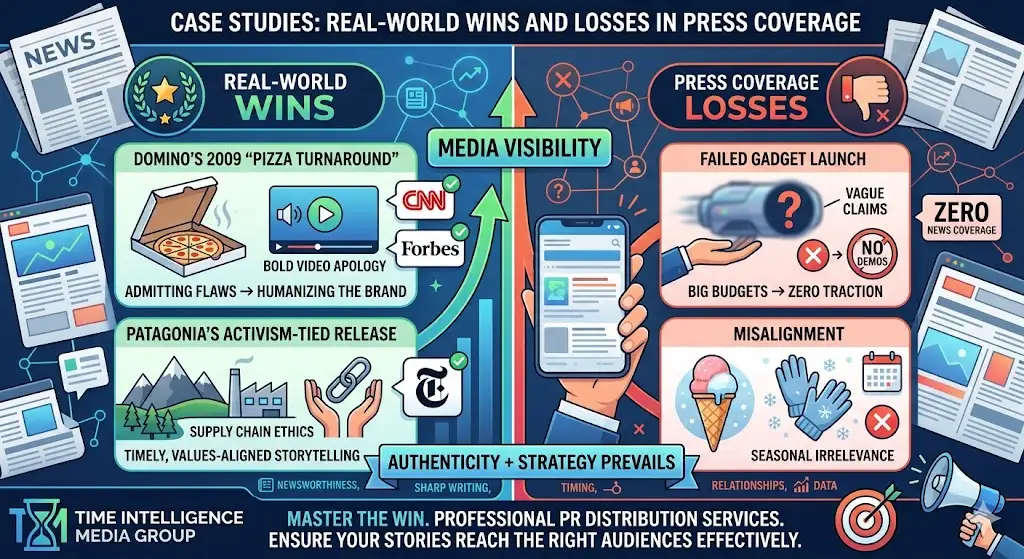
Examine Domino’s 2009 “Pizza Turnaround” release: admitting flaws with a bold video apology secured CNN, Forbes coverage by humanizing the brand. Contrast with a failed gadget launch—vague claims, no demos, zero traction despite big budgets.
Another win: Patagonia’s activism-tied release on supply chain ethics landed NYT features via timely, values-aligned storytelling. Losses often stem from misalignment, like seasonal irrelevance.
These illustrate that authenticity plus strategy prevails. To mirror top performers, learn how Time Intelligence Media Group secures media visibility for enterprise-grade execution.
Mastering why some press releases gain coverage while others fail requires blending newsworthiness, sharp writing, timing, relationships, and data. Time Intelligence Media Group offers professional PR Distribution Services to navigate these challenges, ensuring your stories reach the right audiences effectively.