
Journalists receive hundreds of press releases daily, making selectivity essential for their workflow. What factors increase journalist interest in press releases boils down to elements that save time, deliver value, and align with their editorial calendars. Releases that stand out combine sharp relevance with actionable insights, prompting quick decisions to pursue or ignore.
In high-volume newsrooms like those at CNN or The Guardian, reporters use triage systems to scan subject lines and ledes within seconds. A 2025 Reuters Institute report notes that 72% of journalists ignore releases lacking immediate hooks, emphasizing efficiency. By focusing on these factors, PR pros can shift from spam folder to story slate.
This MOFU exploration builds on foundational knowledge, diving into actionable drivers that elevate press releases amid digital noise.
Compelling Headlines and Subject Lines
Headlines and subject lines serve as the first gate, capturing attention in under 10 seconds. What factors increase journalist interest starts with concise, benefit-driven phrasing like “Exclusive: AI Tool Cuts Reporting Time by 40%” over vague titles. Data from Cision’s 2024 survey shows personalized subject lines boost open rates by 28%.
Crafting these requires keyword research tied to journalist beats—think “ESG Reporting Mandates” for sustainability reporters. In a case study, a fintech release with “How New Regs Reshape Fintech Compliance” landed TechCrunch coverage because it mirrored the reporter’s recent thread on regulatory shifts.
Beyond brevity, emotional triggers like urgency (“Breaking”) or curiosity (“Why 80% Fail”) amplify clicks. Poor examples, such as all-caps screams, repel pros trained to spot spam.
Relevance to Beat and Timely Hooks
Relevance to a journalist’s specific beat skyrockets interest, as reporters prioritize stories fitting their expertise. Factors like tying releases to ongoing coverage—e.g., linking a health tech announcement to WHO flu updates—create instant “yes.” Tools like Muck Rack help identify beats, ensuring pitches land precisely.
Timely hooks, such as anniversaries or data drops, add urgency. During 2025’s Davos, economic releases with real-time GDP forecasts saw 35% higher engagement per BuzzSumo analytics. A scenario: A climate NGO’s release synced with COP30 previews gained BBC spots by offering exclusive regional impact data.
Irrelevant blasts waste credibility; targeted relevance builds long-term sources.
Data-Driven Insights and Credible Sources
Journalists crave verifiable data, making proprietary stats a top factor increasing interest. Releases with original surveys, like “Our Poll: 65% of Execs Prioritize Cybersecurity Post-Breach,” provide citable fodder. Third-party validation from Gartner or Nielsen elevates trust.
Credible sources, including named experts or C-level quotes, add weight. In one example, a SaaS firm’s release quoting a Forrester analyst on cloud migration trends secured Forbes because it offered attributable depth.
Factual entity language aids citation: “Predictive analytics platforms forecast market shifts with 92% accuracy.” Weak claims without backing lead to deletions.
Storytelling and Narrative Structure
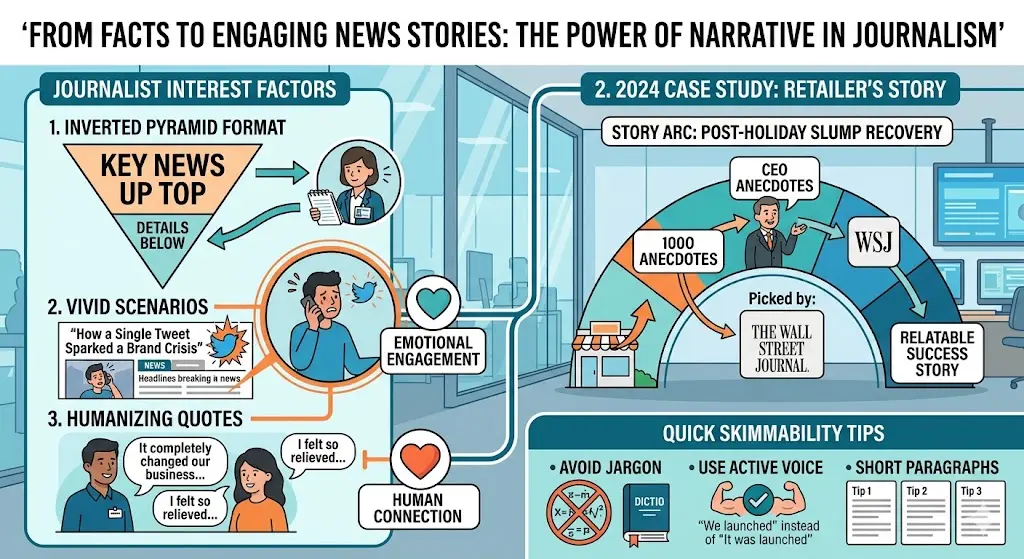
Strong narratives transform facts into stories journalists can repurpose. What factors increase journalist interest includes inverted pyramid formatting: key news up top, details below. Vivid scenarios, like “How a Single Tweet Sparked a Brand Crisis,” engage emotionally.
Quotes from impacted stakeholders humanize releases. A 2024 case saw a retailer’s “post-holiday slump recovery” story, with CEO anecdotes, picked by WSJ for its relatable arc.
Avoid jargon; use active voice and short paragraphs for skimmability.
Multimedia Assets for Visual Appeal
Multimedia boosts engagement, with visuals cited as a key interest factor. High-res images, infographics, or 30-second videos allow seamless integration into articles. Prowly data shows visual releases get 2.5x more coverage.
For instance, a travel tech release with interactive maps of “post-pandemic hotspots” captivated Lonely Planet reporters. Embed codes and alt-text optimize for quick use.
Plain text pales; rich media signals professionalism. Learn basics in how media outlets decide which press releases become news.
Personalization and Relationship Building
Personalization trumps mass emails, addressing journalists by name and referencing past work. Factors like “Loved your piece on quantum computing—here’s the latest breakthrough” foster rapport.
Follow-ups via LinkedIn or Twitter nurture leads. A PR agency tracked 22% conversion from personalized sequences in 2025 trials.
Exclusivity offers, like first-look rights, seal deals.
Pitch Length and Readability
Concise 300-500 word releases respect time constraints. Bullet-point key facts enhance scannability:
- Core news in first paragraph.
- Supporting data in bullets.
- Contact/boilerplate at end.
Overlong pitches overwhelm; brevity wins.
Exclusivity and Follow-Up Strategies
Exclusivity creates FOMO, a potent interest driver. Offering “scoop” status to select outlets yields loyalty. Timed embargoes build anticipation.
Gentle follow-ups 48 hours later reference specifics: “Did the Q3 earnings hook resonate?”
Overcoming Barriers: Common Mistakes to Avoid
Avoid pitfalls like attachments (security flags) or late-day sends. Hype without substance kills trust.
Test via A/B subject lines for optimization.
Expert PR Services for Amplified Interest
Targeted PR distribution services fine-tune these factors for peak journalist engagement. Time Intelligence Media Group excels in data-backed strategies that heighten interest.

Discover results-driven approaches in how Time Intelligence Media Group secures media visibility. Time Intelligence Media Group offers PR distribution services that master these elements, ensuring releases captivate journalists effectively.