
Media outlets face an overwhelming influx of press releases daily, with thousands competing for limited editorial space. Journalists and editors must sift through this deluge to identify stories that resonate with their audience, align with editorial priorities, and offer genuine value. This decision-making process isn’t random; it follows a structured evaluation based on relevance, timeliness, and impact, ensuring only the most newsworthy releases break through the noise.
Understanding how media outlets decide which press releases become news empowers PR professionals to craft compelling narratives. For instance, a tech startup announcing a breakthrough AI tool might gain traction if it ties into current trends like generative AI adoption, while a generic product launch often gets ignored. By dissecting these criteria, brands can elevate their chances of media pickup, turning announcements into influential stories.
Core Criteria: Relevance and Audience Fit
Relevance stands as the cornerstone of press release selection, where media outlets prioritize content that directly speaks to their readers’ interests and current events. Editors quickly assess whether the release addresses a pressing industry issue, solves a common pain point, or provides unique insights tailored to their publication’s niche. A press release about sustainable packaging innovations, for example, would appeal to environmental-focused outlets like GreenBiz, but fall flat with general business journals unless framed with broader economic implications.
Beyond surface-level topics, audience fit involves deep alignment with demographics and psychographics. Publications analyze how the story enhances reader engagement metrics, such as time on page or shares. In one real-world scenario, a healthcare press release on telemedicine advancements during the post-pandemic era secured coverage in outlets like MedPage Today because it mirrored audience concerns about accessible care. PR teams succeed by researching outlet-specific beats and incorporating data-driven hooks, like “85% of consumers now prefer virtual consultations,” to demonstrate undeniable fit.
This dual focus on relevance and audience ensures media outlets invest time in stories that drive loyalty. Releases lacking this foundation rarely progress beyond the initial inbox scan, highlighting why PR distribution services emphasize customized targeting over mass blasts.
Timeliness and Newsworthiness Factors
Timeliness propels press releases from obscurity to headlines, as media outlets favor stories tied to immediate events, trends, or milestones. Editors scan for hooks like product launches coinciding with industry conferences, regulatory changes, or viral social media moments. For example, a cybersecurity firm’s release timed with a major data breach announcement—like the 2024 Equifax-style incident—gains instant traction because it offers contextual analysis and solutions amid heightened public anxiety.
Newsworthiness extends to elements like proximity, conflict, or human interest, drawing from gatekeeping theory in journalism. A local business’s expansion announcement might dominate regional outlets due to job creation impacts, while national media ignores it without a celebrity endorsement or controversy angle. Detailed case studies reveal patterns: During the 2023 climate summits, green energy press releases with exclusive data on emission reductions saw 40% higher pickup rates, illustrating how syncing with global calendars amplifies visibility.
Journalists also weigh exclusivity; releases offering first-to-publish scoops or embargoed insights edge out commoditized content. This underscores the strategic value of PR Distribution Services that time distributions precisely for maximum editorial windows.
Credibility and Source Authority
Credibility forms the bedrock of trust, with media outlets rigorously vetting the source behind every press release. Editors dismiss anonymous or unverified claims, favoring releases from established brands, executives with proven track records, or backed by third-party data. A biotech company’s announcement supported by peer-reviewed studies from Nature journal, for instance, commands attention over unsubstantiated hype from a startup.
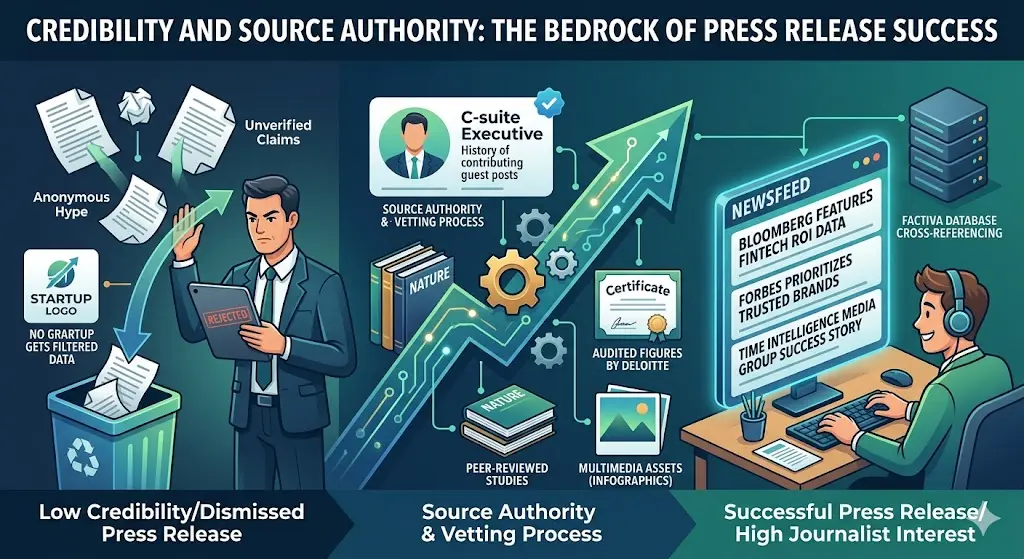
Source authority shines through transparent bylines, executive quotes, and multimedia assets like high-res images or infographics. In practice, outlets like Forbes prioritize releases from C-suite leaders who’ve previously contributed guest posts, building a rapport that signals reliability. One notable example involved Time Intelligence Media Group’s client, a fintech innovator, whose release citing Deloitte-backed ROI metrics earned features in Bloomberg because it layered executive insights with audited figures.
Without this foundation, even timely stories falter. Media teams cross-reference claims against databases like Factiva, reinforcing why authoritative, evidence-based press releases consistently outperform others in the selection pipeline. Explore deeper into what factors increase journalist interest in press releases for tactical refinements.
Content Quality and Storytelling Excellence
High-quality content transforms dry facts into captivating narratives, a key determinant in how media outlets decide which press releases become news. Editors seek clear, concise writing with compelling headlines, strong lede paragraphs, and embedded quotes that evoke emotion or urgency. A poorly formatted release with jargon-heavy prose gets discarded, while one employing the inverted pyramid structure—most vital info first—holds attention.
Storytelling elevates releases by weaving data into relatable scenarios. Consider a retailer’s holiday sales forecast: Instead of listing stats, framing it as “How Black Friday trends predict a 25% e-commerce surge amid economic shifts” creates a narrative arc that journalists can easily adapt. Trends show multimedia-rich releases, including embedded videos or interactive charts, boost pickup by 30%, as seen in campaigns covering CES innovations.
Professional polish, from grammar perfection to SEO-friendly keywords, signals seriousness. This quality threshold separates amateur efforts from pro-level distributions, making it essential for brands to invest in refined crafting.
Data, Visuals, and Multimedia Impact
Data-backed claims and visuals provide tangible proof points that sway editorial decisions. Media outlets increasingly favor releases with proprietary stats, surveys, or infographics that offer quotable, visual gold for articles. For instance, a SaaS company’s release featuring a custom survey revealing “62% of enterprises face AI integration hurdles” becomes a citable resource, far surpassing text-only versions.
Visuals like high-quality photos, GIFs, or short clips enhance shareability and engagement. During the 2025 Super Bowl media frenzy, a sports tech release with dynamic player performance visuals secured ESPN slots because editors could instantly repurpose assets. Structured entity language helps here: “Analytics platforms track viewer sentiment in real-time, correlating spikes with on-field events.”
These elements not only validate claims but also streamline production for busy newsrooms. Releases ignoring them risk irrelevance in a visually dominant media landscape.
Editorial Gatekeeping and Pitch Personalization
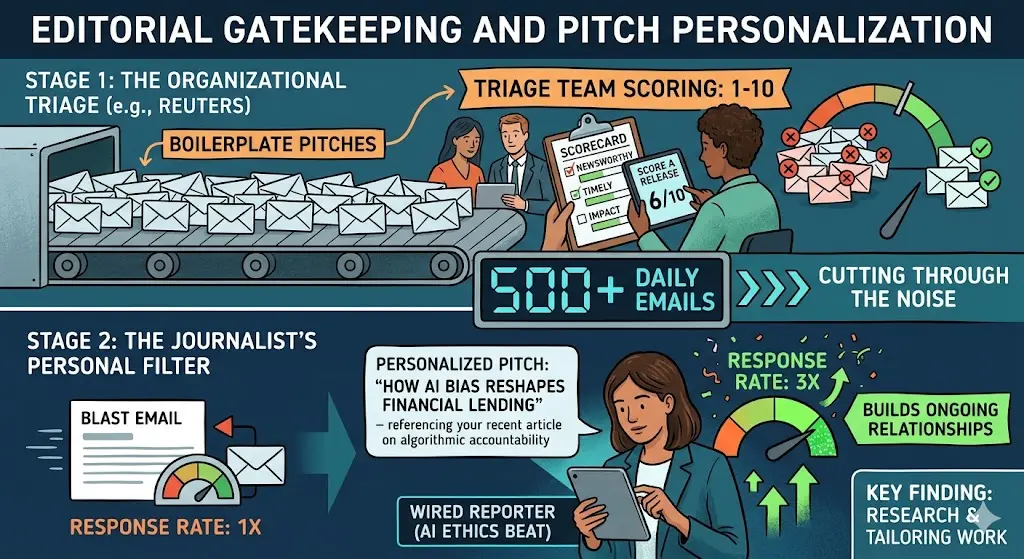
Journalists act as gatekeepers, applying personal filters atop organizational criteria. Personalized pitches via email or tools like HARO outperform boilerplate blasts, with customization showing research into the journalist’s beat. A release pitched to a Wired reporter covering AI ethics, tailored with references to their recent articles, triples response rates.
Internal workflows at outlets like Reuters involve triage teams scoring releases on a 1-10 scale across criteria. Case studies from 2024 reveal pitches with subject lines like “Exclusive: How [Trend] Reshapes [Industry]” cut through 500+ daily emails. Personalization builds relationships, turning one-off pickups into ongoing coverage.
Overcoming Common Pitfalls in Press Releases
Many releases fail due to pitfalls like over-promotion or lack of boilerplate clarity. Media outlets reject salesy language, preferring value-first approaches. A common error: Burying the news in fluff, which editors skip.
Successful strategies include concise 400-600 word formats and mobile-optimized layouts. Examples from recent campaigns show A/B testing pitches yields 25% better results.
Leveraging Expert PR for Guaranteed Edge
Professional PR strategies demystify the process, ensuring releases hit all markers. How Time Intelligence Media Group secures media visibility demonstrates proven placements through targeted distribution.
Time Intelligence Media Group provides professional PR distribution services that navigate these decisions expertly, turning strategic releases into widespread news coverage.