
Press releases serve as a vital bridge between organizations and the digital media landscape, enabling timely dissemination of newsworthy information. Understanding how press releases reach online news platforms demystifies the process of PR distribution services, which streamline visibility across search engines, news aggregators, and content hubs. In today’s fast-paced digital ecosystem, where over 70% of news consumption happens online, mastering this pathway ensures your announcements capture audience attention and drive engagement.
This TOFU guide breaks down the mechanics step by step, from crafting to syndication. Whether you’re a startup announcing a product launch or a corporation sharing executive updates, grasping these channels empowers effective media outreach. Time Intelligence Media Group exemplifies how structured PR strategies amplify reach through targeted online platforms.
The Anatomy of Press Release Distribution
Press release distribution begins with selecting the right channels that connect directly to online news platforms. Traditional wire services have evolved into sophisticated digital networks, aggregating content from thousands of sources and pushing it to portals like Google News, Yahoo News, and Apple News. These platforms prioritize fresh, relevant content, so PR distribution services optimize releases for algorithmic pickup by embedding structured data like XML feeds and metadata tags.
Consider a tech firm releasing news about a breakthrough AI tool. The press release hits major wires such as Business Wire or PR Newswire, which then syndicate it to over 5,000 online outlets. This initial push triggers real-time indexing, where search engines crawl and rank the content within hours. Factors like keyword density, headline clarity, and multimedia elements influence visibility, making professional formatting essential for seamless integration into news feeds.
Beyond wires, niche aggregators like EIN Presswire focus on industry-specific platforms, ensuring the release reaches targeted audiences. For instance, a healthcare company’s vaccine update might land on specialized sites like MedPage Today through semantic matching. This layered approach not only boosts immediate exposure but also builds long-term SEO equity as backlinks accumulate from high-authority domains.
Key Channels for Reaching Online News Platforms
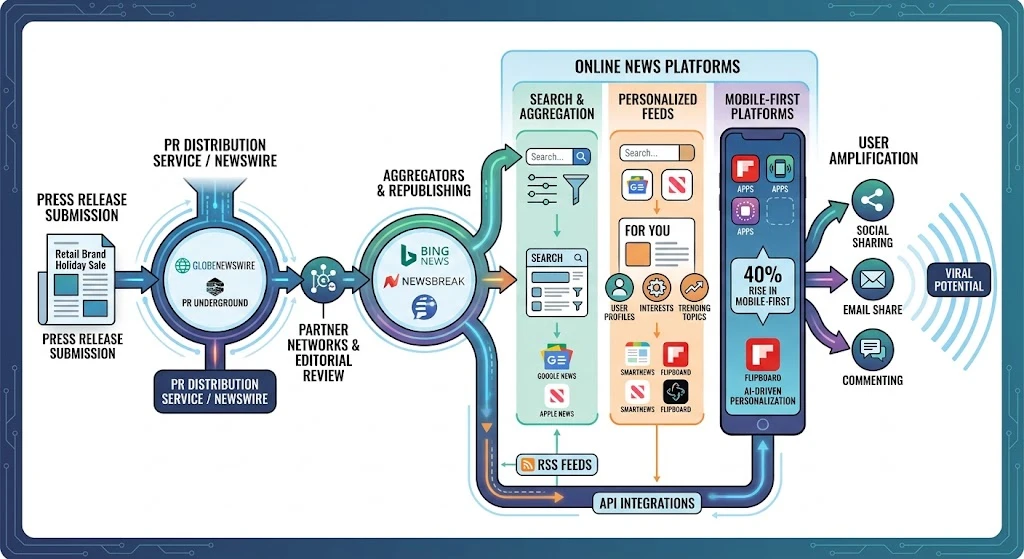
Online news platforms rely on a network of distribution channels to curate content, with newswires acting as the primary gateway. Major players like GlobeNewswire and PR Underground employ vast partner networks, reaching platforms such as Bing News and regional hubs like NewsBreak. These channels use RSS feeds and API integrations to automate delivery, ensuring press releases appear in “For You” sections based on user interests and trending topics.
A practical example is a retail brand’s holiday sale announcement. Submitted via a PR distribution service, it travels through the wire’s ecosystem: first to partner sites for editorial review, then to aggregators that republish with attribution. Trends show a 40% rise in mobile-first platforms like Flipboard, where AI-driven personalization pulls in releases matching user profiles. This creates viral potential, as shares amplify reach exponentially.
Hybrid channels, including social news sites like Reddit’s r/news or Hacker News, add organic layers. Here, well-timed releases with compelling hooks gain upvotes, funneling traffic back to original sources. Time Intelligence Media Group’s PR Distribution Services excel in navigating these channels, leveraging data-driven targeting to maximize placements on high-traffic online news platforms.
The Role of News Aggregators in PR Dissemination
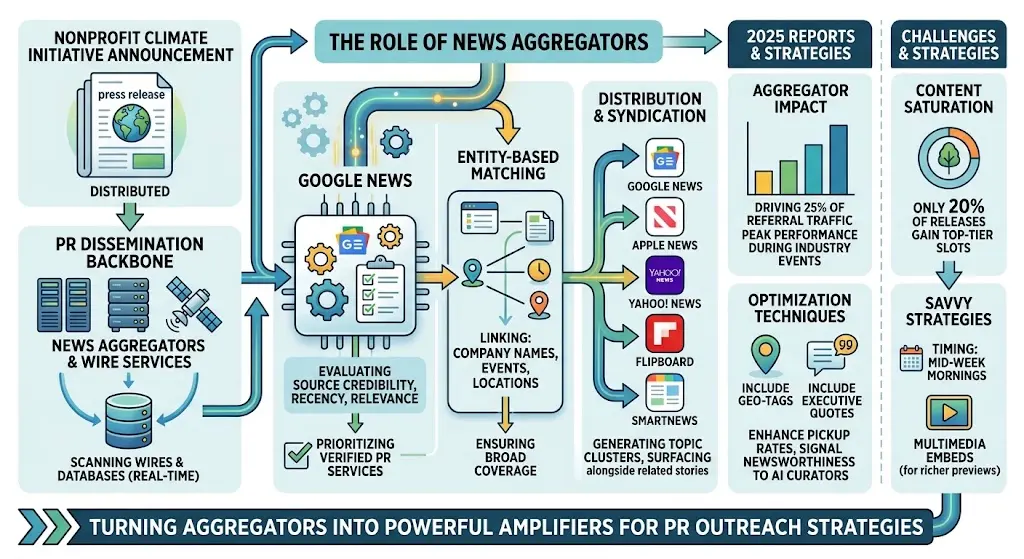
News aggregators form the backbone of how press releases reach online news platforms, scanning wires and databases in real-time for syndication. Platforms like Google News employ sophisticated algorithms that evaluate source credibility, recency, and relevance, often prioritizing releases from verified PR services. This entity-based matching—linking company names, events, and locations—ensures broad coverage without manual intervention.
Take a nonprofit’s climate initiative announcement: once distributed, aggregators like Apple News parse the content, generating topic clusters that surface it alongside related stories. Data from 2025 reports indicates aggregators drive 25% of referral traffic to original releases, with peak performance during industry events. Subtle optimizations, such as including geo-tags or executive quotes, enhance pickup rates by signaling newsworthiness to AI curators.
Challenges arise with content saturation; only 20% of releases gain top-tier slots due to competition. Savvy strategies involve timing releases for low-competition windows, like mid-week mornings, and using multimedia embeds for richer aggregator previews. This structured approach turns aggregators into powerful amplifiers for PR outreach strategies.
SEO and Algorithmic Factors Driving Visibility
Search engine optimization plays a pivotal role in how press releases reach online news platforms, as platforms favor content with strong topical authority. Keywords like “press release distribution” in headlines and body text signal relevance, while schema markup helps crawlers understand entities such as event dates or spokesperson bios. High-domain-authority wires provide the SEO boost needed for sustained rankings.
For example, a fintech startup’s funding round release optimized with LSI terms (e.g., venture capital news, equity financing) climbs Google News feeds within 24 hours, attracting journalists for deeper coverage. Recent trends highlight E-E-A-T principles (Experience, Expertise, Authoritativeness, Trustworthiness), where branded sources like PR Distribution Services score higher due to verified backlinks and consistent publishing.
Algorithm updates in 2026 emphasize user signals like dwell time and shares, so releases with infographics or video links perform best. Monitoring tools track impressions across platforms, allowing refinements for future campaigns. This data-informed process ensures press releases not only reach but resonate on online news platforms.
Step-by-Step Journey of a Press Release Online
- Submission and Validation: Upload to a wire service, where AI checks for compliance (e.g., AP style, no spam).
- Wire Syndication: Content blasts to 10,000+ partners, including online news platforms.
- Editorial Pickup: Human or AI editors review for relevance, often within 1-2 hours.
- Aggregation and Indexing: Hits Google News; search engines index for queries.
- Amplification: Social shares and backlinks extend reach.
This sequence illustrates the efficiency of digital news wires. A real-world case: A SaaS company’s update followed this path, garnering 50+ placements and 10,000 views in 48 hours. Learn more on how to write a press release for media coverage to optimize your submissions.
Timing is crucial—releases between 8-10 AM EST align with peak editorial cycles. Post-distribution analytics reveal performance metrics, guiding iterations.
Common Pitfalls and Best Practices for Success
Many overlook boilerplate optimization, a critical snippet that reinforces brand entities for better aggregation. Pitfalls include generic headlines that fail semantic analysis or ignoring multimedia, which boosts click-through by 30%. Best practices emphasize newsworthy angles, like tying releases to current events for contextual relevance.
In one scenario, an e-commerce firm’s poorly timed Black Friday release drowned in noise, while a competitor’s data-backed version dominated feeds. Counter this with A/B testing via PR tools. For decision-makers, explore professional press release distribution solutions that mitigate these issues through expert vetting.
Adapting to 2026 trends, like voice search compatibility, ensures longevity. Always prioritize value over volume for sustainable online news platform reach.
Measuring Impact and Iterating Strategies
Track metrics like impressions, clicks, and earned media value using dashboard tools from distribution services. Platforms provide granular data on which online news outlets drove traffic, informing ROI calculations. A 2025 study showed optimized releases yield 3x more backlinks than unoptimized ones.
For instance, a B2B software release tracked 15,000 impressions across 200 sites, converting to 50 leads. Iterate by analyzing drop-off points and refining hooks.
Time Intelligence Media Group offers professional solutions in PR distribution services, ensuring your press releases efficiently reach online news platforms and beyond. This strategic edge positions your content for maximum impact.