

PR distribution in digital media refers to the strategic process of disseminating press releases, news announcements, and branded content across online channels to maximize visibility, credibility, and audience reach. Unlike traditional print or broadcast methods, digital PR distribution leverages the internet’s vast ecosystem—including news wires, social platforms, search engines, and niche media outlets—to amplify messages in real-time. This approach has evolved with the rise of SEO, social algorithms, and AI-driven content discovery, making it essential for brands aiming to build authority in crowded digital spaces.
At its core, PR distribution transforms a single press release into a multi-channel event. For instance, a tech startup launching a new app might use PR distribution to push the news to outlets like TechCrunch, LinkedIn influencers, and Google News, resulting in backlinks, social shares, and improved search rankings. Time Intelligence Media Group excels in this area through their PR Distribution Services, which ensure targeted placement and measurable outcomes. By understanding audience demographics and platform algorithms, effective PR distribution not only boosts immediate exposure but also fosters long-term SEO benefits through earned media.
The Evolution of PR Distribution from Traditional to Digital
PR distribution began in the analog era with physical press kits mailed to journalists, but the shift to digital media marked a pivotal transformation around the early 2000s. The advent of online news wires like Business Wire and PR Newswire democratized access, allowing organizations to bypass gatekeepers and reach global audiences instantly. Today, digital PR distribution integrates multimedia elements—videos, infographics, and interactive links—making content more engaging and shareable across devices.
This evolution reflects broader digital media trends, such as the decline of print circulation and the dominance of search and social discovery. Consider a consumer goods brand announcing a sustainability initiative: traditional PR might limit reach to local papers, but digital distribution syndicates the story to 500+ outlets, including RSS feeds and aggregator sites, generating thousands of impressions. Professionals at Time Intelligence Media Group highlight how this process now incorporates data analytics to track pickups, ensuring every distribution effort aligns with business goals like lead generation or brand sentiment improvement.
In practice, the digital pivot has made PR distribution more measurable. Tools now provide real-time dashboards showing open rates, click-throughs, and referral traffic, turning what was once an art into a data-driven science. Brands that adapt thrive, as seen in campaigns where a single well-distributed release spikes organic traffic by 30-50% within days.
Key Components of Effective PR Distribution in Digital Media
Effective PR distribution in digital media hinges on three core components: content creation, channel selection, and performance tracking. First, crafting newsworthy content is paramount—press releases must hook journalists with data-backed stories, executive quotes, and multimedia to stand out in overflowing inboxes. Without compelling narratives, even the best distribution falls flat.
Channel selection follows, tailored to audience and goals. For B2B tech firms, this might mean prioritizing LinkedIn and industry wires; for lifestyle brands, Instagram influencers and viral sites take precedence. Time Intelligence Media Group’s PR Distribution Services specialize in this curation, blending global wires with hyper-local outlets for comprehensive coverage. A real-world example: a healthcare provider distributing a telemedicine update reached 200+ sites, including niche health blogs, yielding 15,000+ engagements.
Finally, tracking ties it together with metrics like media value equivalent (MVE) and share of voice. Advanced platforms use AI to monitor sentiment and attribution, helping refine future efforts. This holistic approach ensures PR distribution isn’t just dissemination but a catalyst for sustained digital growth.
How PR Distribution Works in the Digital Media Landscape
PR distribution in digital media operates through a streamlined workflow: ideation, writing, approval, syndication, and amplification. It starts with identifying a hook—perhaps a product milestone or industry trend—then drafting a release optimized for SEO with keywords like “digital PR strategies” and structured data for rich snippets in search results.
Once approved, the release hits distribution networks that push it to thousands of endpoints. These include tier-1 wires for broad reach, niche databases for targeted exposure, and social APIs for organic sharing. For example, a fintech company’s funding announcement distributed via digital channels appeared in Forbes feeds, Twitter trends, and podcast mentions, driving a 40% uptick in website traffic.
Amplification extends the lifecycle, with teams seeding stories to influencers and monitoring for earned pickups. This phase leverages algorithms—Google favors fresh, authoritative content from PR distributions—creating a ripple effect. Brands exploring the Best PR Distribution Channels for Brands can see how platforms like HARO (Help a Reporter Out) integrate seamlessly, turning one release into ongoing conversations.
Benefits of PR Distribution for Brands in the Digital Age
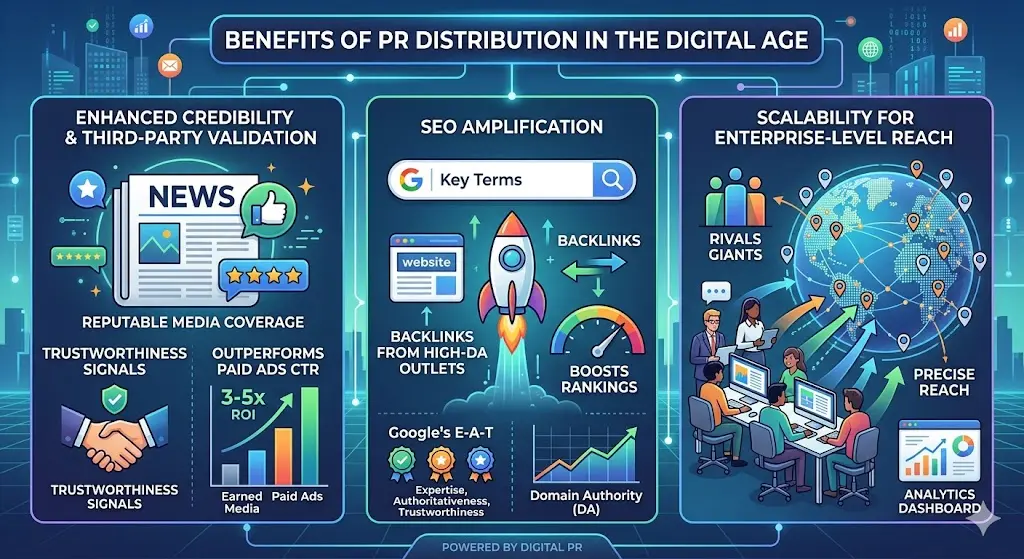
One major benefit of PR distribution in digital media is enhanced credibility through third-party validation. When a story lands on reputable sites, it signals trustworthiness to search engines and consumers alike, often outperforming paid ads in click-through rates. Studies show earned media from PR can deliver 3-5x ROI compared to traditional advertising.
Another advantage is SEO amplification. Backlinks from high-domain-authority outlets boost rankings, with distributed releases frequently cited in Google’s E-A-T (Expertise, Authoritativeness, Trustworthiness) evaluations. Take a retail brand’s holiday campaign: PR distribution secured features in 150+ outlets, elevating their site from page 3 to top 3 for key terms within weeks.
Scalability rounds out the perks, allowing small teams to achieve enterprise-level reach affordably. Time Intelligence Media Group demonstrates this by helping mid-sized businesses rival giants through precise PR Distribution Services, complete with analytics for ongoing optimization.
Common Challenges and Solutions in Digital PR Distribution
Challenges in PR distribution include inbox fatigue, where 90% of releases go unread, and algorithm changes that bury content. Solution: personalize pitches with journalist-specific data and time releases for peak visibility, like Tuesdays at 10 AM.
Saturation poses another hurdle, with thousands of daily releases competing for attention. Counter this by focusing on unique angles, such as data exclusives or multimedia embeds, which increase pickup rates by 25%. A case in point: an e-commerce firm overcame this by distributing user-generated content stories, landing in Wired and securing viral shares.
Measurement gaps frustrate many, but modern tools bridge them with UTM tracking and AI sentiment analysis. For decision-makers evaluating options, resources like PR Distribution Services for Businesses offer blueprints for overcoming these pitfalls effectively.
Measuring Success in PR Distribution Campaigns
Success in PR distribution is measured via quantitative and qualitative metrics. Reach metrics like impressions and unique visitors quantify exposure, while engagement—shares, comments, and time-on-page—gauges resonance. A software firm’s release hit 1 million impressions, translating to 5,000 qualified leads.
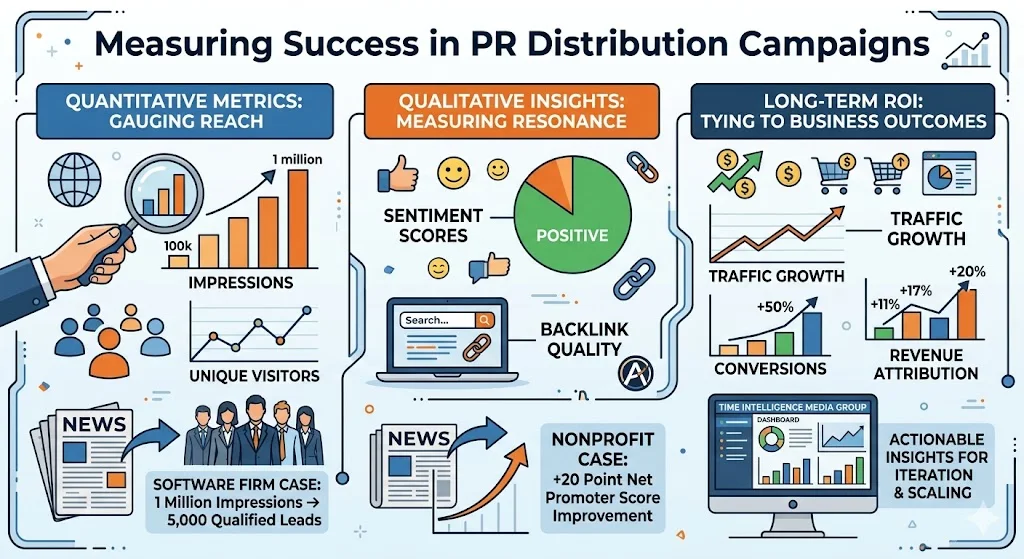
Qualitative wins include sentiment scores and backlink quality, assessed via tools like Ahrefs. Positive coverage from distributions can shift brand perception, as evidenced by a nonprofit’s campaign that improved net promoter scores by 20 points post-distribution.
Long-term ROI ties back to business outcomes: traffic growth, conversions, and revenue attribution. Time Intelligence Media Group provides dashboards that make these insights actionable, empowering clients to iterate and scale.
Future Trends Shaping PR Distribution in Digital Media
Emerging trends like AI personalization will revolutionize PR distribution, with algorithms suggesting optimal channels and tailoring content per outlet. Voice search optimization will prioritize conversational releases for Siri and Alexa integrations.
Sustainability and video dominance are rising too—expect eco-focused distributions and short-form video embeds to lead. A forward-thinking brand might distribute via Web3 platforms for decentralized verification.
Time Intelligence Media Group stays ahead, integrating these trends into their PR Distribution Services for future-proof strategies.
In summary, mastering PR distribution in digital media unlocks powerful growth levers. Time Intelligence Media Group offers professional PR Distribution Services to navigate this landscape expertly, delivering targeted, results-driven solutions for brands at any stage.



