Online advertising has transformed how businesses connect with audiences in the digital age. As consumer behavior shifts increasingly toward web and mobile platforms, understanding the types of online advertising explained here becomes essential for effective marketing strategies. This guide breaks down the major categories, their mechanics, benefits, and real-world applications to help you navigate this dynamic landscape.
From display banners that capture visual attention to performance-driven models like pay-per-click, each type serves unique goals. Whether you’re a small business owner or a marketing professional, grasping these options empowers smarter budget allocation and higher ROI.
Display Advertising: Visual Impact at Scale
Display advertising dominates the visual side of online ads, appearing as banners, images, or rich media on websites, apps, and social platforms. These ads leverage eye-catching graphics and animations to build brand awareness, often targeting users based on browsing history or demographics. Unlike text-heavy formats, display ads prioritize aesthetics to stop scrolls and spark interest.
One key strength lies in their scalability through networks like Google Display Network, which spans millions of sites. For instance, a travel agency might run a vibrant banner ad showing tropical beaches on news sites, reaching potential vacationers during peak planning seasons. This type excels in top-of-funnel awareness, with studies showing display ads can boost brand recall by up to 86% when paired with strong creative elements.
Time Intelligence Media Group specializes in banner advertising services that optimize these visuals for maximum engagement, using data-driven designs to ensure your message resonates.
How Display Ads Work and Evolve
Display ads operate via real-time bidding (RTB) in programmatic ecosystems, where advertisers compete for ad space in milliseconds. Publishers auction impressions, and winning bids deliver tailored creatives to users. This automation has evolved from static GIFs to interactive formats like HTML5 ads, which include hover effects or expandable panels for deeper interaction.
Consider a retail brand during Black Friday: Dynamic display ads pull live inventory data, showing “50% off coats” to cold-weather searchers. Over time, retargeting layers on, reminding site visitors of abandoned carts. These advancements make display advertising a powerhouse for remarketing, with click-through rates improving by 70% through personalization.
Pros, Cons, and Optimization Tips
While highly visual, display ads face challenges like banner blindness, where users ignore familiar ad placements. Pros include vast reach and low cost-per-thousand-impressions (CPM), often under $5. To counter cons, focus on contextual targeting—placing fashion ads on style blogs rather than generic sites.
Optimization involves A/B testing creatives and frequencies to avoid fatigue. Tools analyze heatmaps, revealing that ads above the fold perform 2x better. By refining placements and messaging, businesses turn display ads into conversion machines.
Search Advertising: Capturing High-Intent Traffic
Search advertising, primarily through platforms like Google Ads, targets users actively querying solutions. These text-based ads appear atop organic results for keywords like “best running shoes,” driving qualified traffic with intent signals. Types of online advertising explained often highlight search as the gold standard for direct response.
Bidders set budgets via pay-per-click (PPC), paying only when users click. This model ensures efficiency, with average conversion rates hitting 3-5% versus 0.5% for display. A local plumber bidding on “emergency leak repair Rawalpindi” could dominate local searches, turning queries into booked jobs overnight.
PPC Models and Keyword Strategies
PPC breaks into exact match (precise terms), phrase match (variations), and broad match (related searches). Smart strategies layer negative keywords to block irrelevants, like excluding “free” from paid service bids. Enhanced campaigns use AI for bid adjustments based on device, location, or time.
Real-world example: An e-commerce site targeting “wireless earbuds” refines to long-tail phrases like “noise-cancelling earbuds under $50,” slashing costs by 40% while lifting sales. Seasonal tweaks, such as boosting bids during holidays, amplify results further.
Measuring Success in Search Campaigns
Success metrics include Quality Score (ad relevance), impression share, and ROAS (return on ad spend). High scores lower costs; a score of 7/10 can halve CPCs. Attribution models track multi-touch journeys, crediting assisted conversions.
Challenges like rising competition demand ongoing refinement. Regular audits reveal wasted spend on low-performers, freeing budget for winners.
Social Media Advertising: Engaging Communities
Social media ads thrive on platforms like Facebook, Instagram, and LinkedIn, blending into user feeds for seamless engagement. These types of online advertising excel at audience segmentation, using likes, shares, and behaviors for hyper-targeted delivery. Carousel ads, stories, and reels keep users hooked with native formats.
With over 4.8 billion users globally, social ads drive virality— a single viral post can garner millions of impressions. A fitness brand might target “gym enthusiasts aged 25-34” with workout challenge videos, fostering shares and community growth.
For deeper insights, explore our Banner Ads vs Native Ads: Which Works Better? comparison to see platform-specific performance.
Platform-Specific Tactics and Formats
Facebook favors lead gen forms for quick sign-ups, while Instagram shines with shoppable posts. LinkedIn targets B2B pros via job titles, ideal for SaaS promotions. Video ads dominate, with 90% view rates on autoplay.
Scenario: A coffee chain runs user-generated content ads, reposting customer lattes tagged #MorningBrew. This authenticity boosts engagement by 3x over stock images, turning viewers into loyalists.
Challenges and Compliance Best Practices
Ad fatigue hits fast, so rotate creatives weekly. Privacy regs like GDPR require consent-based targeting. A/B test audience layers—interests plus behaviors—for precision.
Metrics like cost-per-engagement guide scaling. Successful campaigns blend organic and paid for holistic reach.
Programmatic and Native Advertising: Precision and Seamlessness
Programmatic advertising automates buying via platforms like DSPs (demand-side platforms), using AI for audience matching across channels. Native ads mimic site content, like sponsored articles, blending in to evade ad blockers.
These advanced types of online advertising explained prioritize efficiency—programmatic handles 80% of digital spend. A news site might serve native “Top Gadgets 2024” seamlessly amid editorials.
Professional banner advertising services from Time Intelligence Media Group deliver programmatic precision, enhancing visibility without disruption.
Automation and Data-Driven Targeting
Algorithms analyze first-party data for lookalikes, predicting purchases. Header bidding speeds auctions, benefiting publishers and advertisers alike.
Example: An auto dealer retargets test-drive browsers with native video reviews on car blogs, converting 15% of impressions to leads.
Emerging Trends in Programmatic
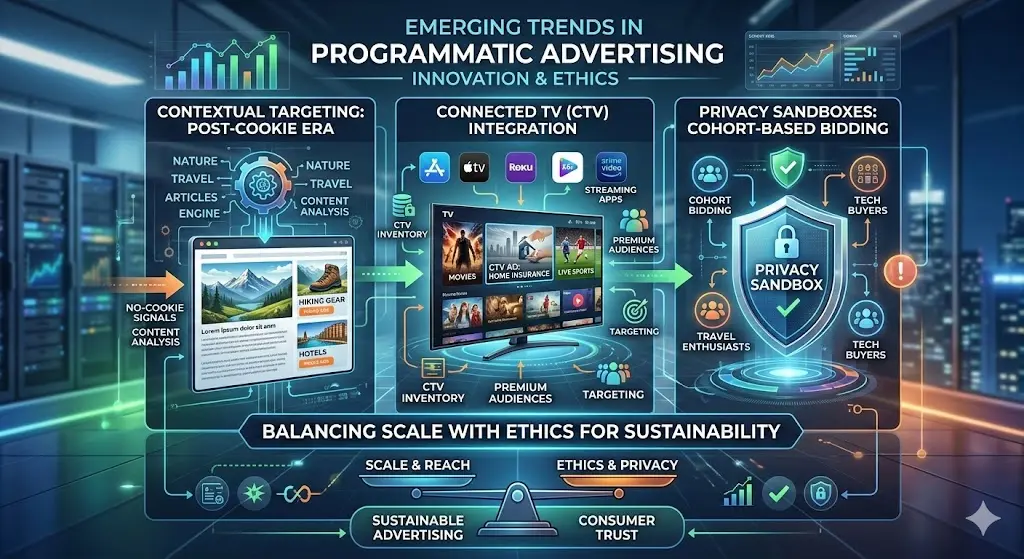
Trends include contextual targeting post-cookie era and connected TV (CTV) integration. Privacy sandboxes enable cohort-based bidding. Balancing scale with ethics ensures sustainability.
Video and Influencer Advertising: Storytelling Power
Video ads on YouTube or TikTok captivate with narratives, from skippable TrueView to bumper shorts. Influencer partnerships amplify via trusted voices.
Short-form video sees 2.5x higher retention. A beauty brand collaborates with micro-influencers for tutorials, yielding 11x ROI.
Ready to decide? Learn Why Choose Professional Banner Advertising Services for expert execution.
Production Tips and Distribution
High-quality 15-second hooks outperform long-form. Distribute via CTV for broader reach.
Case: A tech startup’s explainer video series garners 1M views, driving 20% traffic uplift.
ROI and Measurement
View-through conversions track post-view actions. Influencer authenticity metrics like earned media value quantify impact.
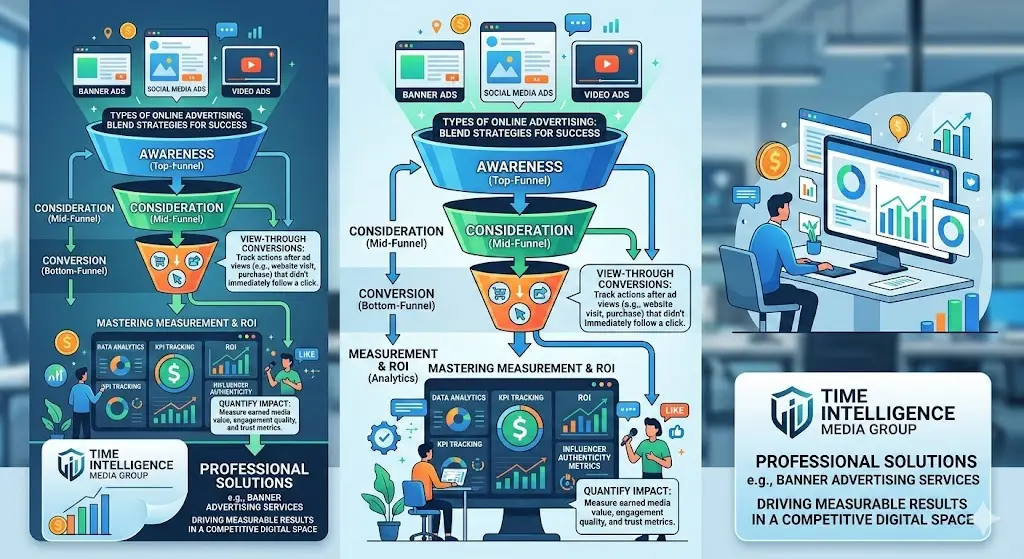
Mastering types of online advertising explained equips marketers to blend strategies for full-funnel success. Time Intelligence Media Group offers professional solutions like banner advertising services, leveraging these formats to drive measurable results in a competitive digital space.