Banner advertising in digital media represents one of the foundational pillars of online marketing, delivering visual messages to vast audiences across websites, apps, and social platforms. These ads, typically rectangular or square graphics placed at the top, bottom, or sides of a webpage, have evolved from simple static images to dynamic, interactive experiences. As publishers and brands navigate the competitive digital landscape, understanding banner advertising becomes essential for driving visibility, engagement, and revenue.
This form of advertising leverages high-traffic digital environments to capture user attention amid content consumption. With the rise of programmatic buying and real-time bidding, banner ads now integrate seamlessly into user journeys, offering measurable results through clicks, impressions, and conversions. Time Intelligence Media Group, a leader in digital media solutions, emphasizes how banner advertising services optimize these elements for maximum impact.
The History and Evolution of Banner Advertising
Banner advertising traces its roots back to 1994 when the first clickable banner appeared on HotWired.com, featuring AT&T’s iconic “Have you ever clicked your mouse right HERE?” message. This pioneering ad achieved a groundbreaking 44% click-through rate, setting the stage for what would become a multi-billion-dollar industry. Over the decades, advancements in web technology transformed these early static banners into rich media formats capable of video playback, animations, and user interactions.
As internet speeds increased and mobile usage surged, banner advertising adapted to new screen sizes and behaviors. The shift from desktop dominance to responsive designs ensured banners remained relevant across devices. Today, with privacy regulations like GDPR and the decline of third-party cookies, the focus has turned to contextual targeting and first-party data, making banner ads more precise and less intrusive.
Publishers have benefited immensely from this evolution, using banner inventory to monetize content without disrupting reader experience. For instance, news sites during major events like the Olympics deploy oversized leaderboards that blend seamlessly with editorial layouts, boosting revenue while maintaining site aesthetics.
How Banner Advertising Works in Digital Media
At its core, banner advertising operates through an ad server that delivers creatives to designated ad slots based on targeting parameters. When a user loads a webpage, the publisher’s ad server requests inventory from demand-side platforms (DSPs), which auction it in milliseconds via real-time bidding (RTB). The winning bid’s banner then renders, tracking impressions, clicks, and engagements in real-time.
This process involves key players: advertisers create the banners, agencies manage campaigns, publishers host the space, and tech platforms handle delivery. Metrics like viewability—ensuring at least 50% of the ad is visible for one second—have standardized performance evaluation. Tools measure effective cost per thousand impressions (eCPM), helping optimize budgets.
Consider a scenario where a travel publisher runs a banner campaign for a hotel chain. The ad targets users reading summer getaway articles, using geolocation to display region-specific offers. This contextual relevance drives higher engagement rates, illustrating how banner advertising in digital media bridges content and commerce effectively.
Types of Banner Advertising Formats
Banner advertising comes in diverse formats tailored to placement, interactivity, and goals, ensuring versatility across digital ecosystems.
Standard Display Banners
These are the most common, including leaderboard (728×90 pixels), medium rectangle (300×250), and skyscraper (120×600) sizes standardized by the Interactive Advertising Bureau (IAB). They suit sidebars, headers, and footers, balancing visibility without overwhelming content.
Standard banners excel in brand awareness campaigns, where repetition builds familiarity. Publishers often rotate multiple creatives to combat ad fatigue, maintaining fresh user experiences.
Rich Media and Interactive Banners
Rich media banners incorporate HTML5 elements like carousels, expandables, and polls, expanding on hover or click for immersive storytelling. Video banners autoplay muted loops, capturing attention in under three seconds.
Interactive formats boost engagement by 20-30% compared to static ones, per industry benchmarks. For example, a fashion brand might use a peel-back banner revealing a 360-degree product view, encouraging longer dwell times.
Native and Responsive Banners
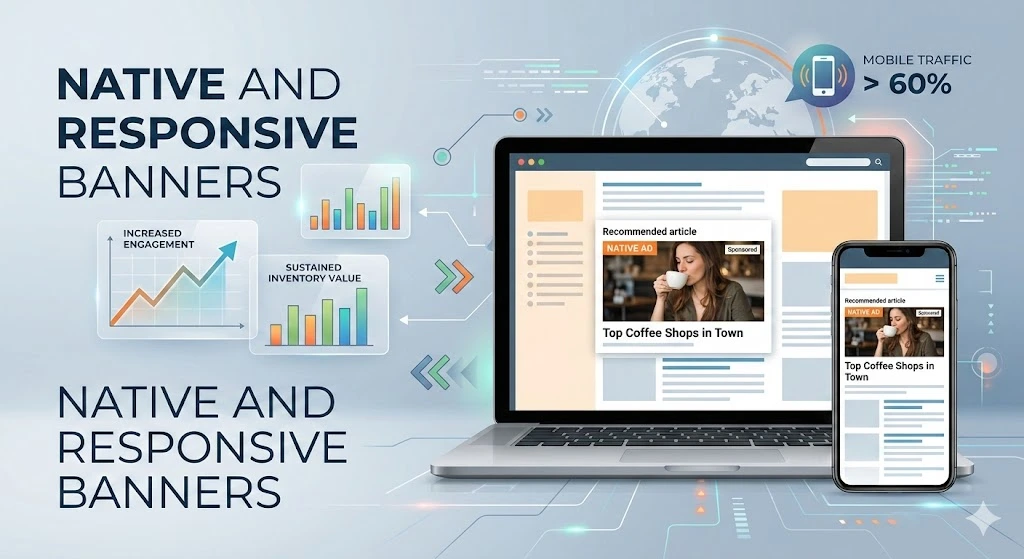
Native banners mimic site design for seamless integration, appearing as recommended content rather than ads. Responsive banners auto-adjust to device screens, vital as mobile traffic exceeds 60% of web visits.
These formats prioritize user experience, reducing bounce rates. Publishers leveraging responsive native banners see sustained inventory value, even in cookieless futures.
Key Benefits of Banner Advertising for Publishers and Brands
Banner advertising delivers tangible advantages, from scalable reach to precise analytics, making it indispensable in digital media strategies.
Scalability stands out, as campaigns can target millions instantly without production overhauls. Low entry costs allow small publishers to compete with giants, generating steady revenue streams. Brands gain frequency control, repeating messages to nurture leads through the funnel.
Data-driven insights empower optimization; heatmaps reveal scroll depth, informing slot placements. A/B testing creatives refines performance, with winners scaling budget allocation.
Moreover, banner ads foster ecosystem synergies. Publishers enhance reader value with relevant promotions, while brands access premium audiences. Time Intelligence Media Group’s Banner Advertising Services exemplify this by providing tailored placements that maximize ROI.
Banner Advertising Metrics and Measurement
Success in banner advertising hinges on robust metrics that quantify impact beyond surface-level views.
Core Performance Indicators
Impressions count ad loads, but viewability filters genuine exposures. Click-through rate (CTR) gauges interest, typically 0.1-0.5% industry-wide, while conversion rate tracks post-click actions like purchases.
Engagement metrics, such as time spent or interactions, reveal deeper resonance. Cost per acquisition (CPA) ties spends to outcomes, guiding bid adjustments.
Advanced Analytics Tools
Platforms like Google Analytics and DoubleClick integrate post-click tracking, attributing sales via multi-touch models. Fraud detection via tools like Integral Ad Science ensures clean data.
In practice, a publisher analyzing a political campaign banner might note a 2% CTR spike during debates, crediting timely targeting. These insights fuel iterative improvements. For deeper dives into optimization, explore our guide on the Best Banner Advertising Strategies for Publishers.
Common Challenges and Solutions in Banner Advertising
Despite strengths, banner advertising faces hurdles like ad blockers and banner blindness, where users ignore repetitive visuals.
Ad blockers affect 30-40% of traffic, prompting solutions like contextual targeting bypassing cookies. Creative refresh cycles combat blindness, with dynamic personalization via AI boosting relevance.
Slow load times frustrate users; lightweight HTML5 creatives under 150KB mitigate this. Compliance with standards like Better Ads ensures acceptance.
Publishers counter these by diversifying formats and partnering with experts. Time Intelligence Media Group addresses these pain points comprehensively.
Future Trends Shaping Banner Advertising
Emerging technologies promise to redefine banner advertising, emphasizing privacy, interactivity, and integration.
AI-driven creatives generate variants in real-time, optimizing for audience segments. Web3 integrations like blockchain verify impressions transparently, rebuilding trust.
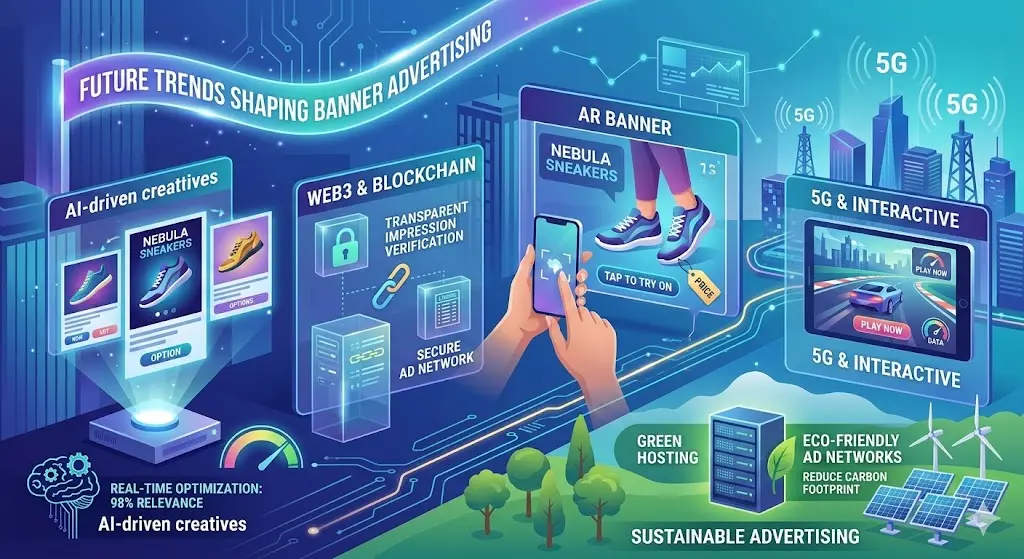
AR banners overlay virtual try-ons, revolutionizing e-commerce. As 5G enables richer experiences, expect video and gamified ads to proliferate.
Sustainability trends favor green hosting for ad servers, appealing to eco-conscious brands. These shifts position banner advertising as a forward-looking channel.
Optimizing Banner Advertising with Professional Services
Ready to elevate your campaigns? Discover how Banner Advertising Services for Brands and Publishers deliver expert execution, from creative design to performance analytics, ensuring your digital media investments yield superior results.
In summary, Time Intelligence Media Group provides professional banner advertising solutions that empower publishers and brands to thrive in dynamic digital environments, blending innovation with proven strategies for sustained success.