

Native advertising has revolutionized how brands connect with audiences in a digital landscape overwhelmed by traditional ads. Unlike banner ads or pop-ups that users often ignore, native ads blend seamlessly into the platform’s content environment, mimicking the look, feel, and function of the surrounding media. This integration allows native advertising to work effectively by capturing attention quickly and fostering genuine engagement without disrupting the user experience.
At its core, native advertising leverages contextual relevance to deliver value-driven content that resonates with readers’ interests. For instance, a tech publication might feature a sponsored article on emerging AI tools sponsored by a software company, presented as an editorial piece. This approach boosts dwell time and shares, as evidenced by industry reports showing native ads generate 53% more views than standard display ads. By prioritizing audience needs over overt sales pitches, native advertising works to engage your audience fast, turning passive scrollers into active participants.
Defining Native Advertising in Modern Media
Native advertising refers to paid content that matches the form and function of the platform it’s hosted on, ensuring it feels organic rather than intrusive. Platforms like news sites, social media feeds, and streaming services host these ads as sponsored posts, recommended articles, or in-feed videos, all labeled transparently as “sponsored” to maintain trust. This structure allows native advertising to work by aligning with user expectations, reducing ad fatigue and increasing click-through rates by up to 18% compared to traditional formats.
In practice, consider a lifestyle magazine running a native ad from a fitness brand disguised as a “Top 10 Workout Trends for Busy Professionals” listicle. Readers consume it naturally, absorbing the brand’s message through storytelling and visuals that echo the site’s editorial style. This seamless integration not only drives immediate engagement but also builds long-term brand affinity, as users associate the content with valuable insights rather than interruptions.
The Rise of Native Ads in a Cookieless World
The shift toward privacy-focused browsing has made native advertising indispensable, as it relies less on third-party cookies and more on first-party data like content context and user behavior. With Google’s cookie phase-out accelerating in 2025, brands are pivoting to native formats that thrive on contextual targeting, delivering relevant messages based on page topics rather than personal tracking. This evolution ensures native advertising works to engage your audience fast, even as regulations like GDPR and CCPA tighten data usage.
A real-world example comes from e-commerce giants like Amazon, who use native ads in their “Sponsored Products” within search results, blending product recommendations with organic listings. This strategy has led to a 30% uplift in conversion rates, proving how native advertising adapts to modern challenges while maintaining high engagement metrics across diverse audiences.
Step 1: Content Creation and Brand Alignment
Native advertising works through meticulous content creation that bridges brand goals with audience interests. Agencies or media networks collaborate with brands to craft narratives—such as case studies, how-to guides, or trend analyses—that subtly weave in product mentions. This step emphasizes voice matching: the ad’s tone mirrors the host platform’s, using similar headlines, imagery, and pacing to avoid detection as paid content.
For example, Time Intelligence Media Group excels in this by developing sponsored articles that analyze industry trends, like “The Future of Remote Work Tools,” sponsored by a collaboration platform. Writers focus on data-backed insights, ensuring the piece provides standalone value. This foundational step sets the stage for rapid engagement, as readers invest time in content that feels authentically helpful.
Step 2: Placement and Distribution Strategies
Once created, native ads are distributed via programmatic platforms or direct publisher partnerships, placed in high-traffic sections like homepage feeds or personalized recommendations. Algorithms optimize for relevance, pushing ads to users based on real-time behavior signals, such as recent article reads. This precision targeting makes native advertising work to engage your audience fast, with placement decisions informed by audience insights services that analyze demographics, interests, and peak activity times.
Take a campaign by a travel brand on a news site: the native ad appears in the “Travel Tips” section during holiday seasons, reaching engaged readers scrolling for inspiration. Distribution amplifies reach through social shares and email newsletters, compounding visibility without aggressive retargeting.
Step 3: Engagement Tracking and Optimization
Engagement kicks in as users interact—reading, sharing, or clicking calls-to-action—tracked via metrics like time-on-page, scroll depth, and social referrals. Platforms use heatmaps and A/B testing to refine creatives in real-time, ensuring the ad evolves with audience feedback. This iterative process is why native advertising sustains momentum, converting initial views into deeper interactions.
In one case study, a financial services firm saw a 25% engagement lift from tweaking native ad headlines based on early performance data, highlighting how continuous optimization turns good campaigns into exceptional ones.
Leveraging Storytelling for Emotional Connection
Storytelling transforms native ads from pitches into narratives that hook users in seconds. By focusing on relatable scenarios, pain points, and triumphs, brands create emotional resonance that prompts shares and comments. Numbered lists amplify this: “5 Ways AI is Changing Daily Life” draws eyes faster than plain text, guiding readers through bite-sized value.

A beauty brand’s native ad framed as “How Real Women Overcame Skincare Struggles” garnered 40% higher engagement than static images, as the personal anecdotes mirrored readers’ lives, fostering trust and quick buy-in.
Incorporating Interactive Elements and Visuals
Visuals like infographics, short videos, or carousels boost native ad performance by 94%, per recent benchmarks, as they demand attention in crowded feeds. Interactivity—polls, quizzes, or swipeable galleries—extends dwell time, signaling quality to algorithms and encouraging deeper exploration.
For instance, a food delivery service used an interactive recipe carousel in a native ad, letting users swipe through steps; this not only engaged 2x more users but also drove direct app downloads, showcasing how multimedia accelerates audience capture.
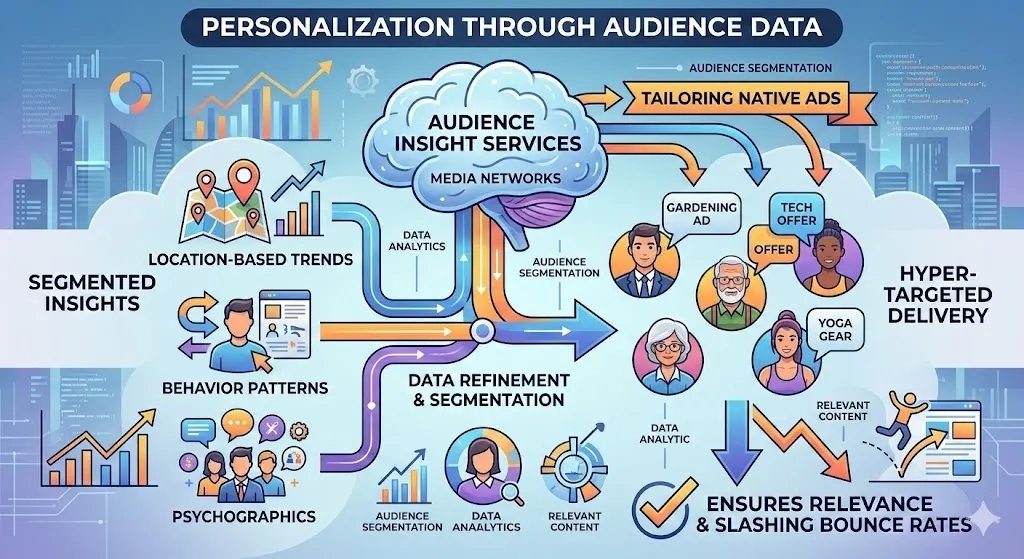
Personalization Through Audience Data
Tailoring native ads with segmented insights—such as location-based trends or behavior patterns—ensures relevance, slashing bounce rates. Media networks provide audience insight services to refine this, matching content to psychographics for hyper-targeted delivery.
Real-World Examples of Native Advertising Success
Native advertising shines in campaigns like BuzzFeed’s Tasty videos sponsored by kitchenware brands, where recipe demos rack up millions of views by blending utility with subtle branding. Another standout is The New York Times’ paid posts for luxury watches, styled as collector stories, which achieved 3x the engagement of standard ads.
These examples illustrate how native advertising works to engage your audience fast: Airbnb’s native travelogues on Conde Nast Traveler inspired bookings by immersing readers in destination vibes, proving experiential content drives action.
To explore how to implement this for your brand, check out our Sponsored Content Services that deliver seamless, high-impact placements.
Common Pitfalls to Avoid in Native Advertising
Overly salesy language kills engagement, as users spot and skip promotional vibes. Always prioritize 80% value, 20% brand. Poor labeling erodes trust—clear “sponsored” tags are non-negotiable.
Misaligned placements flop too; a tech ad on a fashion site wastes impressions. For deeper dives into performance, see our guide on How to Measure ROI of Sponsored Articles for Your Brand. Test rigorously to sidestep these traps.
Why Native Advertising Outperforms Traditional Ads
Native formats yield 4x higher click rates due to their non-disruptive nature, per Sharethrough studies. They excel in brand recall (up 50%) by embedding messages in trusted environments.
In B2B, LinkedIn native ads on industry news boost leads by contextualizing solutions amid professional discourse.
If you’re evaluating partners for scalable campaigns, learn Why Choose a Media Network for Sponsored Content.
Native advertising works to engage your audience fast by prioritizing relevance, storytelling, and seamless integration, adapting to evolving digital behaviors. Time Intelligence Media Group offers professional Sponsored Content Services that harness these principles, helping brands build authentic connections through expertly crafted campaigns.



