Research reports serve as the blueprint for effective marketing strategies in media, transforming raw data into targeted campaigns that drive engagement and revenue. Learning how to use research reports for marketing strategy involves extracting key insights on audience behavior, content performance, and market trends to inform decisions from content ideation to distribution. This MOFU guide builds on foundational knowledge, offering practical frameworks for media professionals to operationalize reports into high-ROI initiatives.
In competitive media landscapes, where attention spans average under 8 seconds, research reports provide the edge by revealing what content cuts through the noise. For example, a report highlighting peak engagement times can shift ad placements, boosting click-through rates by 25%. Mastering how to use research reports for marketing strategy ensures brands don’t just react to trends but anticipate them.
Understanding Research Reports as Marketing Assets
Research reports in marketing strategy compile audience insights, competitor benchmarks, and predictive analytics into digestible formats like executive summaries, data visualizations, and recommendation sections. They go beyond numbers, contextualizing findings—for instance, explaining why a 15% rise in video views correlates with mobile-first audiences during evenings. To use them effectively, start by mapping report sections to strategy pillars: demographics inform targeting, psychographics shape messaging, and trends guide innovation.
Interpreting these assets requires cross-referencing with business goals; a report showing declining newsletter opens might recommend personalization tactics drawn from successful case studies. Time Intelligence Media Group’s Research & Reports Services produce such assets, delivering audience insights services that analyze reader behavior to improve engagement and fuel precise marketing plans.
Regularly auditing reports against KPIs ensures ongoing relevance, preventing strategies from becoming outdated amid shifts like the 2026 AI-content boom.
Step-by-Step Guide to Integrating Reports into Campaigns
Learn how to use research reports for marketing strategy by reviewing the executive summary for high-level takeaways, then dive into data tables for granular details like segment-specific preferences. For a social media campaign, if reports indicate Gen Z favors short-form video, allocate 60% budget there, testing variations based on sentiment scores.
Next, align findings with campaign objectives—use engagement metrics to prioritize channels and conversion data for CTAs. A broadcaster applied this by shifting from TV spots to TikTok after reports showed 40% higher recall, resulting in a 28% sales uplift.
Finally, iterate post-launch: Compare actual performance against report predictions, refining future efforts. This cyclical approach maximizes report value.
Leveraging Audience Insights from Research Reports
Audience insights from research reports power hyper-targeted marketing strategies, segmenting users by behavior patterns like binge-watching habits or genre loyalties. Extract personas—e.g., “Urban Millennials seeking quick news”—to craft tailored content, such as bite-sized infographics that increased open rates by 35% for one publisher.
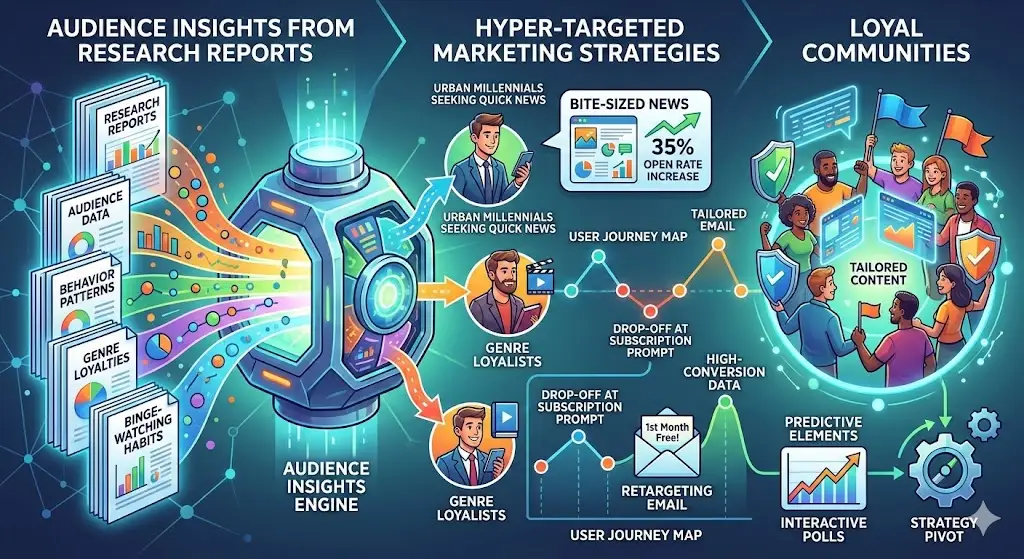
Combine with journey mapping: Reports revealing drop-offs at subscription prompts enable retargeting emails with incentives pulled from high-conversion data. This precision turns broad reaches into loyal communities. Predictive elements forecast shifts, like rising demand for interactive polls, allowing preemptive strategy pivots.
Applying Competitor Analysis in Your Marketing Strategy
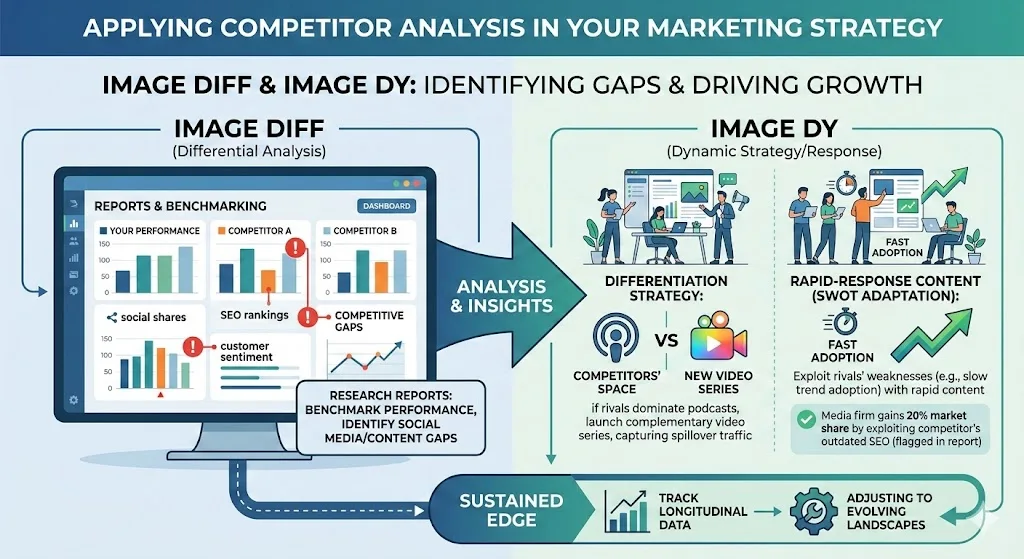
Research reports’ competitor sections benchmark your performance, highlighting gaps like weaker social shares compared to rivals. Use this to differentiate— if reports show competitors dominate podcasts, launch complementary video series, capturing spillover traffic.
SWOT adaptations from reports guide tactics: Exploit rivals’ weaknesses, such as slow trend adoption, by rapid-response content. A media firm gained 20% market share this way after reports flagged a competitor’s outdated SEO. Track longitudinal data for sustained edges, adjusting as landscapes evolve.
Content Optimization Using Research Report Data
To optimize content via research reports, prioritize high-engagement formats identified in performance metrics, like long-form articles for desktop users versus reels for mobile. A/B test headlines and visuals based on heatmaps, refining until alignment with report benchmarks.
Repurpose top performers: If reports flag evergreen topics, create series expansions, extending lifecycle and SEO value. This drove 50% traffic growth for a content hub.
Monitor post-optimization KPIs against reports for continuous refinement.
Measuring ROI and Iterating with Research Reports
Quantify how to use research reports for marketing strategy by tying insights to ROI metrics like CAC reduction or LTV increases. Pre-campaign baselines from reports enable accurate attribution—a 22% engagement lift post-report tweaks proved direct impact.
Post-campaign audits compare outcomes, identifying wins like channel shifts for further scaling. Tools automate this, but human oversight ensures nuance.
Scale successes while A/B testing report-inspired variants for evolution. For basics, revisit What Is Market Research in Media?.
Case Studies: Success Stories in Report-Driven Strategies
A streaming platform used reports to pivot from generic thrillers to niche documentaries, per audience data, surging subscribers 32%. Detailed segmentation revealed untapped demographics, guiding personalized pushes.
A digital agency leveraged competitor reports to undercut pricing on high-demand slots, capturing 25% more clients via targeted LinkedIn ads informed by behavioral insights.
News outlets applied trend forecasts to launch viral series, validating reports’ predictive power with 45% viewership gains.
Overcoming Common Pitfalls When Using Research Reports
Misinterpreting data leads to flawed strategies; counter by validating with multiple sources and expert reviews. One brand avoided over-investing in fads by cross-checking reports.
Siloed teams dilute impact—foster collaboration via shared dashboards for unified applications.
Outdated reports mislead; schedule quarterly updates to stay current.
Tools and Best Practices for Report Implementation
Digital platforms like Google Data Studio visualize reports for strategy sessions, enhancing buy-in. Integrate with CRM for automated personalization.
Best practices include executive sponsors for accountability and training on interpretation. Time Intelligence Media Group’s Research & Reports Services offer outcome-oriented solutions like these, streamlining implementation.
Effectively learning how to use research reports for marketing strategy unlocks exponential growth for media brands. Time Intelligence Media Group delivers professional Research & Reports Services for Brands, empowering data mastery without the hype.