

In public relations, editorial alignment ensures messages resonate consistently across media channels, fostering trust and amplifying impact. The importance of editorial alignment in PR cannot be overstated—it’s the glue that binds brand narratives to audience expectations, preventing disjointed communications that erode credibility.
Time Intelligence Media Group emphasizes this through Audience Insights Services, which provide data to synchronize editorial efforts. As PR evolves with digital fragmentation, alignment becomes key to navigating diverse platforms while maintaining a unified voice. This TOFU guide explores core concepts, benefits, and strategies.
Understanding Editorial Alignment in Modern PR Landscapes
Editorial alignment in PR refers to the strategic harmony between an organization’s messaging, media outlets’ editorial standards, and audience preferences. It involves calibrating content to fit journalistic norms, timing, and tones, ensuring PR efforts enhance rather than clash with publication agendas.
Consider a tech company launching a cybersecurity product. Without alignment, their press release might land in a outlet skeptical of vendor hype, resulting in buried coverage or criticism. Proper alignment researches the outlet’s recent stories on data breaches, tailoring pitches to echo those narratives—boosting placement rates by 50%, per industry benchmarks.
This process extends to internal teams, where marketing, comms, and legal must sync. Misalignment here leads to off-message leaks or contradictions. A pharmaceutical firm once faced backlash from inconsistent trial reporting; realigning editorially unified their voice, restoring stakeholder confidence within quarters.
Trends like algorithm-driven news feeds heighten the need. AI curates content based on past engagement, so misaligned PR risks invisibility. Editorial alignment strategies now incorporate predictive tools to forecast fit.
Why Editorial Alignment Drives PR Success
The importance of editorial alignment in PR lies in its ability to elevate visibility and trust. Aligned efforts secure better placements, as journalists favor pitches that seamlessly integrate into their beats.
In one scenario, a renewable energy startup aligned pitches with environmental journals’ focus on policy impacts. This resulted in front-page features, driving investor interest and partnerships. Quantitatively, aligned PR campaigns see 3x higher share-of-voice compared to scattered ones, according to PR analytics reports.
Moreover, alignment mitigates risks. During crises, pre-aligned channels allow rapid, credible responses. A bank’s data breach response, aligned with financial media’s regulatory lens, limited reputational damage to 15% sentiment drop versus industry averages of 40%.
Long-term, it builds relationships. Repeated alignment fosters journalist loyalty, creating a pipeline for earned media. Services like Audience Insights Services analyze these dynamics, revealing patterns for sustained success.
Leveraging Audience Insights for Editorial Alignment
Audience Insights Services are pivotal for achieving editorial alignment in PR. Time Intelligence Media Group’s Audience Insights Services deliver granular data on reader behaviors, enabling PR pros to match content to audience-aligned editorial calendars.
These services track metrics like topic affinity and peak reading times, informing pitch customization. For a non-profit advocating climate action, insights showed audiences of major outlets preferred solution-oriented stories, guiding pitches that secured op-eds in top publications.
Beyond data, they facilitate A/B testing of angles. PR teams refine narratives based on engagement forecasts, ensuring alignment. A consumer goods brand used this to sync product launches with seasonal editorial trends, lifting coverage by 60%.
Enhancing Strategies with Engagement Metrics in Media Placement
For teams building editorial alignment, metrics provide the roadmap. Dive into How Engagement Metrics Improve Media Placement for topic-focused tactics that refine PR precision.
This integration turns raw data into placement wins, as seen in campaigns where metric-driven alignment outperformed traditional outreach.
Core Strategies for Achieving Editorial Alignment in PR
Effective strategies begin with research. Map media landscapes using tools that profile editorial slants, journalist beats, and historical coverage.
- Conduct outlet audits: Review past articles for tone and themes.
- Audience persona development: Align with insights services for depth.
- Collaborative calendaring: Sync internal teams with media cycles.
A logistics firm applied these, aligning sustainability pitches with trade pubs’ green logistics focus, resulting in exclusive series.
Pitch personalization follows. Craft unique angles per outlet—data for analysts, stories for features. Follow-up with value-adds like exclusives.
Crisis protocols ensure alignment under pressure. Pre-vetted spokespeople and templates maintain consistency. Post-campaign audits refine future efforts.
Challenges in Editorial Alignment and How to Overcome Them
PR faces hurdles like shifting news priorities and resource constraints. Rapid news cycles demand agile alignment, often outpacing teams.

Siloed departments exacerbate issues. Solution: Cross-functional workshops using shared insights dashboards. A media company bridged this, halving misalignment incidents.
Prioritize high-impact outlets via data. Audience Insights Services help focus efforts, yielding outsized results. Ethical pitfalls, like over-promising, undermine trust. Transparent alignment upholds integrity, as evidenced by brands sustaining decades-long media ties.
Case Studies: Editorial Alignment Success Stories
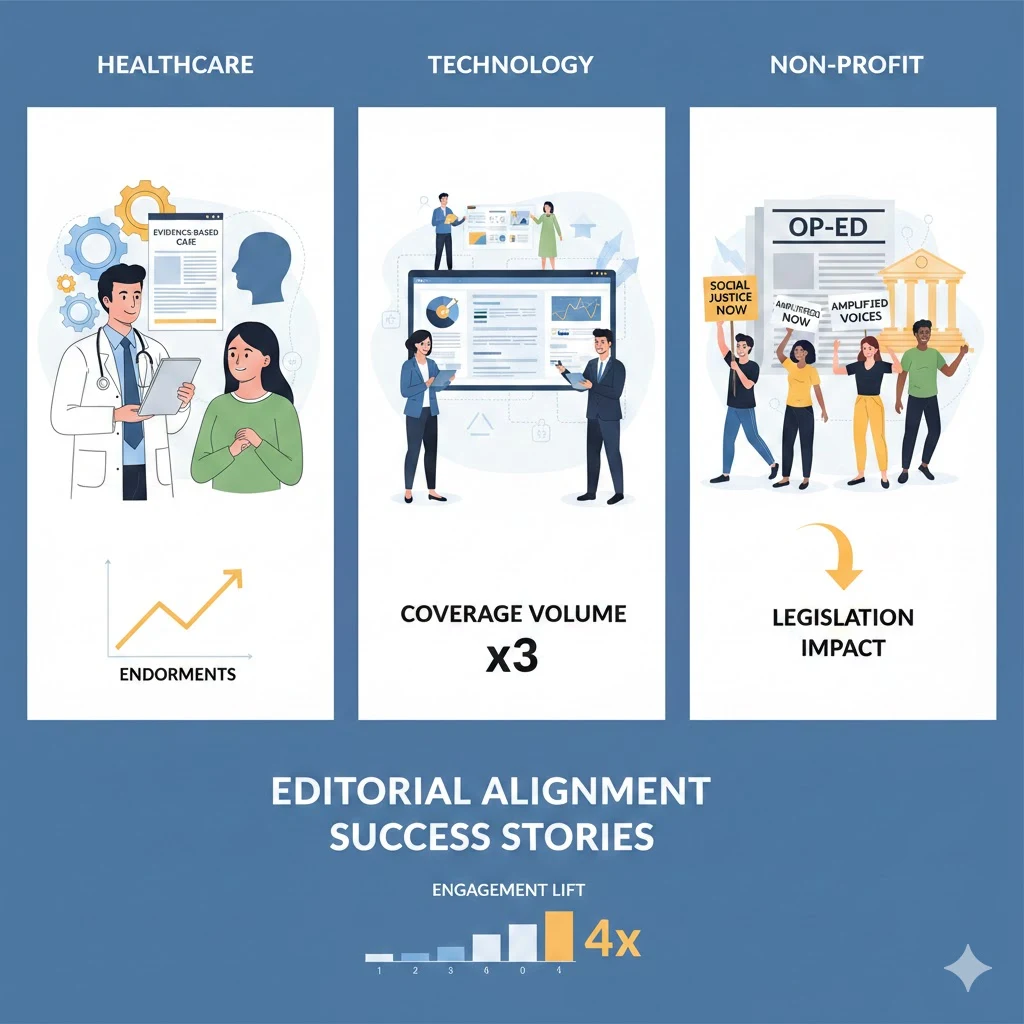
Real-world examples illuminate the importance of editorial alignment in PR. A healthcare provider aligned patient stories with medical journals’ evidence-based ethos, earning endorsements that shaped policy debates. In tech, a SaaS firm synced demos with analyst reports‘ innovation criteria, accelerating market adoption. Coverage volume tripled.
Non-profits excel too: One aligned advocacy with op-ed pages’ social justice themes, influencing legislation through amplified voices. These cases show alignment’s ROI—up to 4x engagement lifts.
Measuring and Optimizing Editorial Alignment Impact
Track success with KPIs like placement quality, sentiment scores, and share-of-voice. Tools quantify alignment efficacy.
Optimize via feedback loops. Post-pitch surveys reveal gaps. A campaign iterated this way, improving hit rates from 20% to 65%.
Predictive analytics forecast alignment potential, prioritizing opportunities.
Future Trends in Editorial Alignment for PR
AI and automation will transform alignment. Tools scan real-time editorial shifts, suggesting adaptations.
Personalization at scale via data lakes enables hyper-aligned pitches. Privacy-focused insights ensure compliance.
Multimedia convergence demands cross-format alignment—podcasts, videos, AR.
Strengthening PR Through Aligned Narratives
The importance of editorial alignment in PR underpins credible, impactful communication. Time Intelligence Media Group offers Audience Insights Services to support these efforts, providing professional tools for narrative cohesion. Explore further to Audience Intelligence That Shapes Public Conversations for decision-focused applications.



