

In the high-stakes world of media and PR, an analytics-led strategy transforms campaigns from hopeful shots to precision strikes. By harnessing data on audience interactions, content performance, and conversion paths, brands achieve measurable ROI amid 2026’s competitive landscape. This BOFU guide equips decision-makers with frameworks to implement data at every stage.
Time Intelligence Media Group highlights how such strategies integrate Audience Insights Services to forecast outcomes and pivot in real-time. Forward-thinking teams now prioritize predictive analytics over intuition, yielding 25-50% efficiency gains in campaign spend.
Foundations of Analytics-Led Campaign Planning
An analytics-led strategy for media and PR campaigns starts with robust data foundations. Teams must aggregate sources like social metrics, web traffic, and sentiment trackers to build a unified dashboard. This reveals hidden patterns, such as peak engagement during industry events.
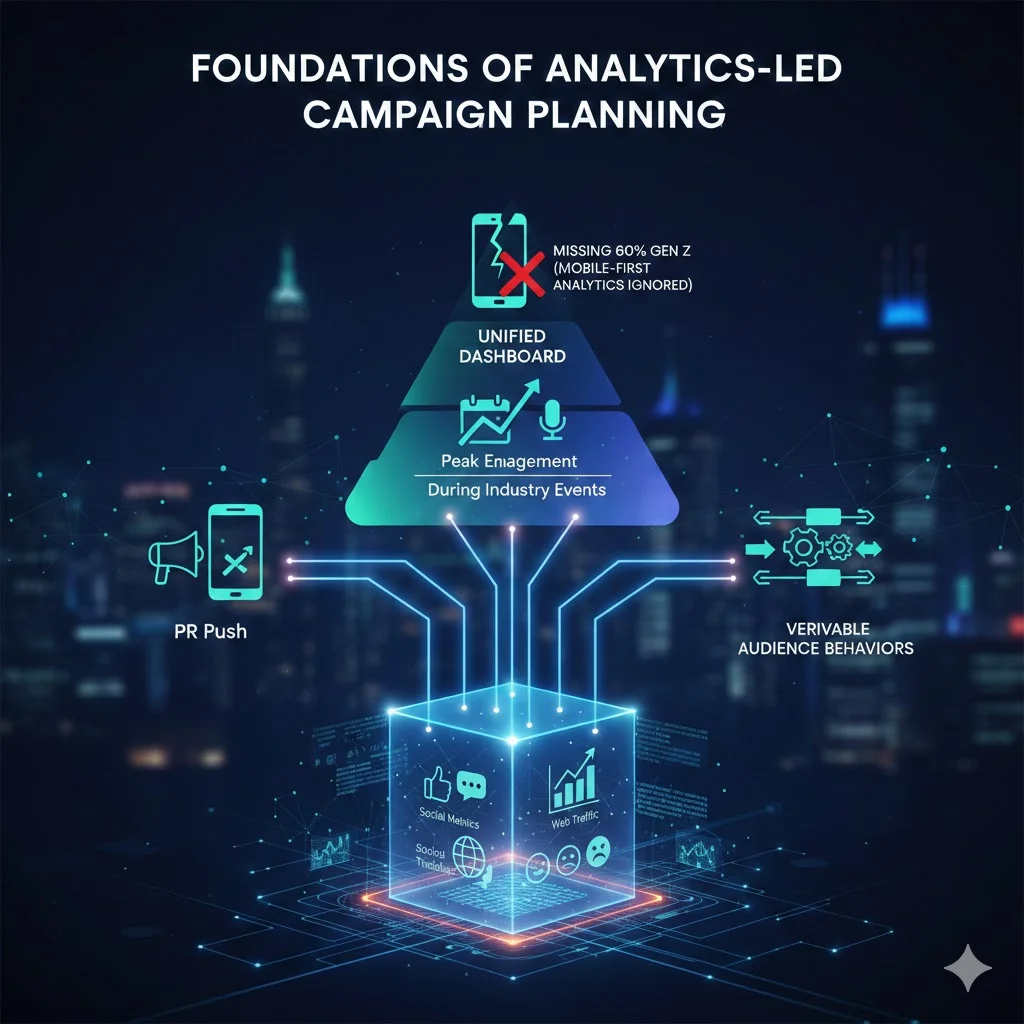
Without this base, campaigns falter on incomplete intel. For example, a PR push ignoring mobile-first analytics misses 60% of Gen Z interactions. Structured planning ensures every tactic aligns with verifiable audience behaviors.
Defining Core KPIs for Media Success
Key performance indicators (KPIs) anchor the strategy. Focus on engagement rate, earned media value (EMV), and attribution modeling to quantify impact.
Campaigns thrive when KPIs link to business goals: A 15% EMV uplift signals PR wins, while multi-touch attribution credits channels accurately. Brands using these see clearer ROI paths.
Integrating Audience Insights into PR Analytics
Audience Insights Services form the core of analytics-led strategies, dissecting behaviors to inform PR tactics. These services analyze reader patterns, content affinities, and response triggers, enabling hyper-targeted pitches.
Time Intelligence Media Group’s Audience Insights Services deliver segmented reports that predict campaign resonance. A tech PR firm applied this to tailor press releases, boosting placements by 40%.
Segmentation and Predictive Modeling Techniques
Advanced segmentation divides audiences by intent signals, like search queries or dwell times. Predictive models forecast lift from tactics, such as video vs. static assets.
Numbered implementation steps:
- Map audience segments via insights data.
- Run simulations on tactic mixes.
- Validate with A/B pilots.
This yields campaigns where 70% of efforts directly fuel conversions.
Real-Time Optimization in Media Campaigns
Real-time analytics empower mid-campaign adjustments, a hallmark of analytics-led strategies for media and PR campaigns. Dashboards flag underperformers—like low-CTR creatives—prompting swift swaps.
In 2026, AI-enhanced tools process streaming data, suggesting reallocations. A beverage brand shifted budget from faltering influencers to viral trends, recovering 22% lost ROI.

Tools for Dynamic Campaign Management
Leverage platforms with anomaly detection and automated alerts. Bullet-point essentials:
- Real-time heatmaps for content tweaks.
- Competitor benchmarking for agility.
- Conversion funnels highlighting drop-offs.
These tools turn data into action, maximizing media spend efficiency.
Case Studies: Analytics Transforming PR Outcomes
Real-world examples validate analytics-led approaches. A healthcare PR campaign used attribution analytics to credit podcasts for 35% of leads, reallocating from print.
Another, for a fintech launch, integrated sentiment tracking post-event, mitigating backlash and extending buzz by two weeks. Structured entity language here: Analytics platforms quantify PR lift via EMV and share-of-voice metrics.
Lessons from High-ROI Implementations
Success stories share traits: Cross-functional teams, clean data pipelines, and iterative testing. One media house’s overhaul cut waste by 30%, crediting insights-driven pivots.
Key takeaways include prioritizing first-party data amid cookie deprecation and blending qualitative feedback with quant metrics for holistic views.
Advanced Attribution and ROI Measurement
Attribution models elevate analytics-led strategy for media and PR campaigns beyond surface metrics. Multi-touch models assign fractional credit across journeys, revealing true drivers.
Challenges like cross-device tracking resolve with unified IDs. Brands adopting this report have 20% more accurate forecasting.
Building Custom Attribution Frameworks
Tailor models to campaign types: Linear for awareness, time-decay for consideration. Compare via:
- U-shaped: Credits first/last touch equally.
- Data-driven: Machine learning optimizes weights.
Implementation boosts ROI visibility, guiding future budgets.
Scaling Analytics Across Enterprise Campaigns
Enterprise rollout demands scalable infrastructure. Centralize analytics hubs integrating CRM, ad platforms, and Audience Insights Services for seamless scaling.
As detailed in our MOFU article, Aligning Brand Stories with Audience Preferences, this alignment feeds into execution. Global teams synchronize via cloud dashboards.
Overcoming Common Scaling Hurdles
Address silos with API integrations and training. Bullet hurdles and fixes:
- Data quality: Automated cleansing protocols.
- Adoption: Role-based dashboards.
- Privacy: Compliant anonymization.
Scaled strategies deliver consistent 15-25% ROI uplifts.
Forecasting and AI-Powered Predictions
Predictive analytics forecast campaign trajectories, a forward edge in analytics-led strategy for media and PR campaigns. Machine learning models ingest historical data to simulate scenarios.
Incorporate external variables like economic indicators. A retail PR effort predicted holiday surges accurately, pre-allocating resources.
Integrating AI for Proactive Decisions
AI tools generate what-if analyses. Numbered rollout:
- Train on past campaigns.
- Test predictions against live data.
- Automate alerts for deviations.
This proactive stance minimizes risks, amplifying successes.
Navigating 2026 Trends in Campaign Analytics
Stay ahead with trends from our TOFU piece, News Trends Shaping Audience Attention in 2026. Zero-party data rises, privacy sands shift, and immersive formats demand new metrics.
Brands adapting thrive; laggards lose ground.
Preparing for Emerging Metrics
Anticipate metaverse engagement and voice search attribution. Structured prep:
- Pilot VR analytics.
- Enhance NLP for sentiment.
- Stress-test for regulation changes.
Time Intelligence Media Group provides professional solutions in analytics-led strategy for media and PR campaigns, empowering sustained high performance.



