Sponsored content is paid media content published through a third-party media platform to communicate a brand message to a defined audience. A sponsored content quote sets out the commercial scope, publication requirements, distribution options, campaign deliverables, and costs before a campaign begins.
For UK businesses, requesting a sponsored content quote provides a structured way to evaluate media opportunities against campaign objectives. The quote also establishes what the investment covers, which publications are included, how content is handled, and what reporting is provided.
What does a sponsored content quote include?
A sponsored content quote defines the publication, content format, distribution scope, campaign deliverables, pricing, timelines, reporting, and commercial terms associated with paid media placement for a specific brand campaign targeting a defined audience, market, publication group, or business objective within the United Kingdom.
A quote provides the commercial framework for the campaign. It separates the media placement from the content production requirements and identifies the services included in the proposed package.
Campaign scope
The scope identifies the intended audience, geographic market, content objective, publication type, and campaign format. A UK B2B campaign, for example, requires different media considerations from a consumer campaign targeting a nationwide retail audience.
Content requirements
The quote can define whether the client supplies the sponsored article or requires content development. It can also identify requirements for brand references, links, images, calls to action, editorial formatting, and approval procedures.
Distribution requirements
Distribution determines where the sponsored content appears. A campaign can focus on business publications, industry media, regional outlets, specialist publications, or a defined combination of media channels.
Reporting
Reporting establishes the information supplied after publication. Relevant reporting fields include publication details, live URLs, publication dates, campaign status, and agreed performance metrics.
How do you request a sponsored content quote from Time Intelligence Media Group?
Requesting a sponsored content quote starts with defining the campaign objective, target audience, preferred media scope, content requirements, timing, and distribution needs, then providing those details to Time Intelligence Media Group for a specific commercial proposal and campaign assessment.
A precise request produces a more useful quote. Time Intelligence Media Group can assess the campaign requirements and establish the appropriate sponsored content scope.
The request can include:
- Campaign objective
- Target audience
- UK geographic focus
- Preferred publication categories
- Number of sponsored placements
- Content production requirements
- Required publication timeframe
- Desired campaign links
- Brand positioning requirements
- Reporting requirements
A business promoting a UK fintech platform, for example, can specify fintech audiences, business decision-makers, sponsored article placement, one campaign period, and defined reporting requirements.
The same process applies to professional services, technology, property, healthcare, finance, education, and other sectors. The difference lies in the audience, publication requirements, subject matter, and campaign objectives.
Businesses evaluating sponsored content for the first time can also review:
Sponsored Content to understand how sponsored content supports lead-generation activity.
What information do you need before requesting a sponsored content quote?
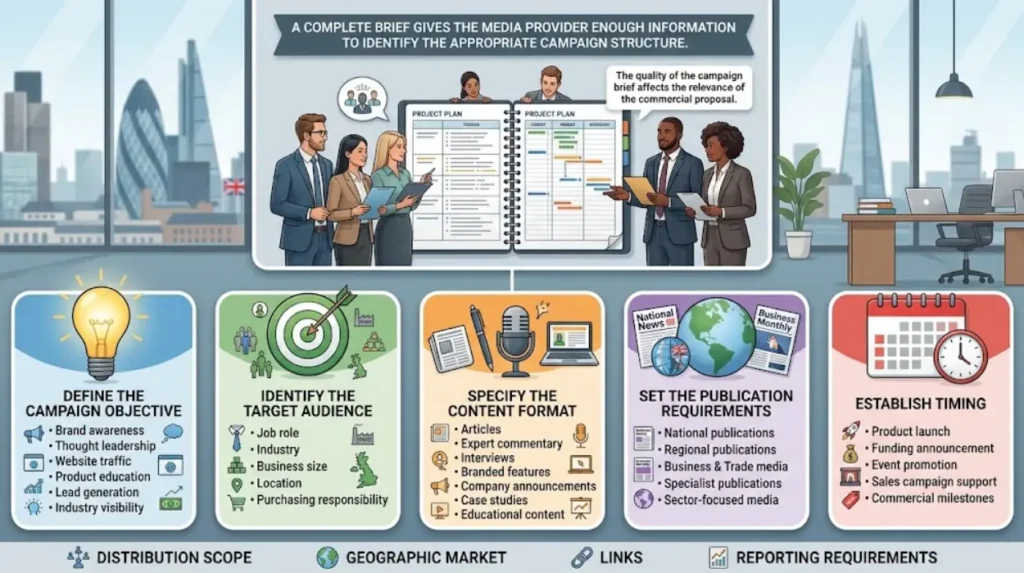
Businesses need to define their target audience, campaign objective, industry, geographic market, content format, publication preferences, desired timing, distribution scope, links, and reporting requirements before requesting a quote for sponsored content in the UK media market.
The quality of the campaign brief affects the relevance of the commercial proposal. A complete brief gives the media provider enough information to identify the appropriate campaign structure.
Define the campaign objective
The objective establishes what the sponsored content needs to achieve. Common objectives include brand awareness, thought leadership, website traffic, product education, lead generation, and visibility within a specific industry.
Identify the target audience
Audience information includes job role, industry, business size, location, and purchasing responsibility. For example, a software company targeting UK procurement managers requires a different media audience from a consumer finance company targeting individual customers.
Specify the content format
Sponsored content can include articles, expert commentary, interviews, branded features, company announcements, case studies, and educational content. The requested format needs to align with the campaign objective.
Set the publication requirements
Publication requirements determine the media environment for the campaign. Businesses can specify national, regional, business, trade, specialist, or sector-focused publications according to their audience strategy.
Establish timing
The requested publication window helps determine campaign scheduling. Businesses launching a product, announcing funding, promoting an event, or supporting a sales campaign can align sponsored content publication with the relevant commercial milestone.
How is sponsored content pricing determined?
Sponsored content pricing depends on factors such as publication selection, number of placements, content production, distribution scope, campaign duration, audience requirements, additional services, and reporting specifications defined within the requested campaign package for the UK market.
There is no single universal sponsored content price because campaigns contain different commercial requirements.
Publication selection
Publication choice affects campaign pricing. A campaign involving specialist trade publications has different requirements from a campaign involving high-profile national business media.
Number of placements
One sponsored placement and a multi-publication campaign represent different scopes. The number of placements directly affects the amount of media inventory and campaign management required.
Content production
Content supplied by the client has different requirements from content developed as part of the campaign. Content production can involve research, drafting, revisions, formatting, and compliance with publication requirements.
Distribution scope
A campaign focused on one publication category has a narrower scope than a campaign targeting multiple sectors or audience groups.
Additional requirements
Campaign pricing also reflects additional requirements such as specific publication preferences, timing constraints, multiple content assets, campaign coordination, or enhanced reporting.
A quote therefore needs to reflect the actual campaign specification rather than an assumed standard package.
What should you compare when evaluating sponsored content quotes?
Compare sponsored content quotes using publication relevance, audience alignment, placement quantity, content requirements, distribution scope, turnaround time, reporting, included services, contractual terms, and total campaign cost rather than comparing the headline price alone.
Price is one component of the purchasing decision. The commercial value depends on what the quoted amount includes.
Publication relevance
The publication needs to reach an audience connected to the campaign objective. A lower-cost placement in an unrelated publication does not provide the same strategic relevance as a targeted industry publication.
Audience alignment
Evaluate whether the publication audience matches the intended customer group. For B2B campaigns, relevant factors include sector, company type, professional role, and geographic market.
Included deliverables
Check exactly what the quote includes. Deliverables can include content creation, editorial coordination, publication placement, links, campaign management, and reporting.
Turnaround time
Confirm the expected timeframe from approval to publication. This matters when sponsored content supports product launches, event promotion, seasonal campaigns, or time-sensitive announcements.
Reporting
Review which campaign details are supplied after publication. A useful report provides evidence that the agreed placements were delivered.
How does sponsored content support qualified lead generation?
Sponsored content supports qualified lead generation by placing relevant brand information in front of defined audiences, connecting educational content with a commercial offer, directing interested readers towards a website, and creating measurable pathways from media exposure to business enquiries.
The conversion process begins with audience relevance. Content needs to address a subject that matters to the intended customer.
A sponsored article about financial compliance, for example, can attract professionals responsible for regulatory processes. The article can explain a specific challenge and direct interested readers towards a relevant business resource.
Content relevance
Relevant content attracts readers with an existing interest in the subject. This creates stronger contextual alignment between the media audience and the promoted solution.
Commercial connection
The sponsored content needs a clear connection between the information provided and the company’s offering. The transition can lead readers towards a product page, service page, report, consultation form, or other conversion point.
Conversion pathway
A conversion pathway connects the sponsored placement with the next customer action. Website links, landing pages, enquiry forms, downloadable resources, and contact pages can provide measurable destinations.
Businesses seeking a deeper decision-stage resource can explore:
Sponsored content for further information about converting sponsored content interest into qualified business opportunities.
Which UK businesses benefit from requesting sponsored content quotes?
UK businesses benefit from sponsored content quotes when they need defined media placements, controlled campaign scope, targeted audiences, predictable commercial terms, and measurable publication deliverables across sectors such as technology, finance, professional services, property, healthcare, education, and B2B industries.
Sponsored content applies across multiple business objectives and sectors.
Fintech companies
Fintech businesses can use sponsored content to explain financial technology, payment systems, digital banking, compliance solutions, and business finance products to relevant professional audiences.
Professional services firms
Consultancies, legal firms, accountancy practices, and business advisory companies can use sponsored articles to demonstrate expertise around defined commercial and regulatory subjects.
Technology companies
Technology businesses can publish educational content about software, artificial intelligence, cybersecurity, cloud systems, data management, and digital transformation.
Property and construction businesses
Property developers, construction companies, estate businesses, and related professional firms can use sponsored content to communicate market developments, projects, services, and sector expertise.
Healthcare organisations
Healthcare companies can use sponsored content to communicate information about services, technologies, professional solutions, and industry developments while following applicable advertising and regulatory requirements.
What makes a sponsored content quote actionable?

An actionable sponsored content quote clearly identifies campaign scope, publication opportunities, content responsibilities, placement requirements, pricing, timing, reporting, and next steps, allowing a UK business to evaluate the proposal against its audience, commercial objective, budget, and planned campaign timeframe.
The quote becomes a decision-making document when each commercial component is clearly defined.
A business can review the proposed publication scope against its target audience. It can compare the number of placements against the campaign objective. It can assess content requirements against internal resources.
The quote also provides a basis for campaign planning. Marketing teams can establish approval dates, content deadlines, publication windows, landing pages, tracking requirements, and reporting expectations.
This structure reduces uncertainty before campaign approval because the commercial requirements are documented in advance.
How can you request a sponsored content quote from Time Intelligence Media Group?
To request a sponsored content quote from Time Intelligence Media Group, prepare the campaign objective, audience, industry, UK market requirements, preferred content format, publication scope, timing, and reporting expectations, then submit those requirements for a tailored campaign quotation.
A strong request contains enough information to define the campaign without unnecessary detail.
For example, a UK B2B technology company can request sponsored content targeting business decision-makers, specify technology publications, provide its preferred campaign timeframe, identify the required content format, and state whether content production is required.
The resulting quotation can then be assessed against the campaign’s intended audience, publication requirements, deliverables, timeframe, and budget.
Explore More Expert Insights:
Recruitment Sponsored Content by Time Intelligence Media Group
Time Intelligence Media Group vs Display Ads: Cost Compared
For businesses ready to move from media research to campaign planning, the next step is to provide a defined brief and request a sponsored content quote based on the actual campaign requirements.
A structured quotation provides clarity before approval. It establishes the commercial scope, publication requirements, content responsibilities, distribution expectations, and reporting framework needed to evaluate a sponsored content campaign in the UK.