

Times Intelligence stands out through multi-site UK distribution, structured event reporting, editorial-focused content, measurable coverage, and search visibility. Its approach connects event activity with news publication, brand exposure, backlinks, and measurable digital outcomes.
Times Intelligence provides event news coverage for organisations that need more than an event recap. The service turns conferences, exhibitions, launches, corporate events, and industry gatherings into publishable news stories distributed across UK media sites.
The competitive difference sits in the complete delivery model. Event coverage includes content development, publication planning, multi-site distribution, and reporting. This structure gives brands a defined route from event activity to media visibility.
For organisations comparing providers, the decision depends on measurable delivery rather than the number of promotional claims. A useful comparison examines site reach, content quality, publication volume, turnaround, reporting, and relevance to the event.
Brands evaluating the full model can review the:
Event Coverage Package to understand the components included across a 15-site event coverage package.
How does Times Intelligence structure UK event coverage?
Times Intelligence structures event coverage around four connected stages: event information collection, editorial content creation, UK media distribution, and performance reporting. Each stage has a defined purpose and creates measurable outputs for the organisation.
The process starts with event information. This includes the event name, location, date, organisers, speakers, exhibitors, announcements, products, partnerships, and business developments.
The information then becomes a news-focused article. The content prioritises facts that establish why the event matters to its intended audience.
Distribution follows content production. The completed story reaches a network of UK publication sites rather than remaining on a single company-owned page.
The final stage is reporting. Coverage records identify where the story appeared and provide evidence of publication activity.
What happens before an event story is published?
The preparation stage determines the information used in the article. Event organisers provide verified details about the event and its newsworthy developments.
For example, a fintech conference can provide details about a product announcement, executive appointment, funding milestone, regulatory discussion, or technology launch. These details create stronger editorial material than a generic event description.
The process also separates event facts from marketing claims. This supports clearer news writing and improves the relevance of the published content.
How does multi-site distribution improve event visibility?
Multi-site distribution places an event story across multiple publication environments. A 15-site package creates more publication opportunities than relying on one website.
The value comes from distribution breadth and content consistency. Each publication creates another location where audiences, search engines, and professional networks can encounter the event story.
This structure also creates a larger digital footprint. A corporate event, for example, receives coverage that extends beyond the organiser’s website and social channels.
What does a full UK event coverage package include?
A full UK event coverage package includes event-based content production, publication across multiple UK sites, structured distribution, coverage monitoring, and reporting. The package connects event communications with measurable media visibility and digital publication outcomes.
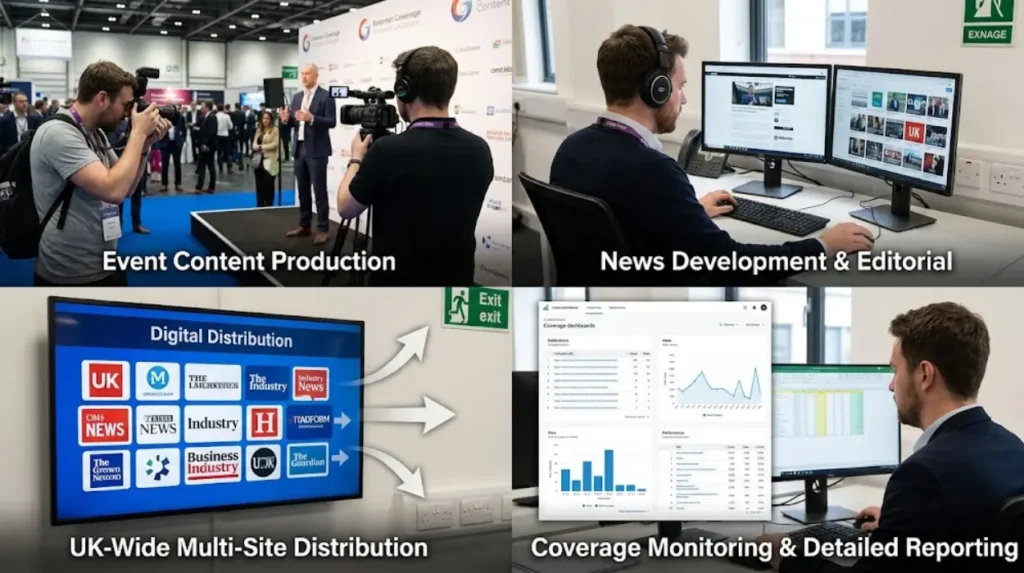
A complete package covers the operational elements required to move from event information to published coverage.
Key components include:
- Event information assessment
- News article development
- Editorial formatting
- UK publication distribution
- Multi-site coverage
- Publication monitoring
- Coverage documentation
- Performance reporting
The number of publication sites provides an important comparison point. A 15-site package creates a defined distribution scope that buyers can evaluate before purchasing.
Why does publication volume matter?
Publication volume provides a measurable delivery criterion. Buyers can compare a defined 15-site distribution package with providers offering unspecified or single-site exposure.
For example, a property developer launching a major regeneration project can use multi-site coverage to communicate the announcement across several UK publication environments.
Publication volume does not replace content quality. Both factors work together. A large distribution network requires relevant, accurate content to create useful coverage.
What role does reporting play in event coverage?
Reporting confirms the delivery of the service. A professional report identifies published coverage and gives the organisation evidence of distribution.
Useful reporting includes publication URLs, publication names, article titles, publication dates, and relevant performance information.
This information supports internal marketing reports. It also helps organisations compare future campaigns against previous coverage activity.
How does Times Intelligence support SEO and AI search visibility?
Times Intelligence supports search visibility by placing event-related content on external publication sites, creating additional indexed pages, contextual mentions, and potential referral pathways. The coverage extends an organisation’s digital presence beyond owned media channels.
Event coverage has a direct connection with search content because every published article creates another searchable reference to the organisation, event, speakers, products, or announcements.
The content also establishes relationships between entities. A technology company, its executive, its product, its event, and its industry can appear together within one published article.
This entity structure helps search systems interpret the relationship between the organisation and its event activity.
Why are external publication pages valuable for event campaigns?
External publication pages provide third-party locations for event information. They create digital references that exist outside the organisation’s own domain.
For example, a healthcare company attending a major UK exhibition can receive coverage discussing its participation, product announcement, executive speaker, and industry relevance.
The resulting pages provide additional search surfaces for branded queries and event-related searches.
How does event coverage support long-term content visibility?
Published articles remain part of the organisation’s external digital footprint after the event ends. They provide references to the event, announcement, company, and participants.
This creates a different function from temporary social media posts. Social updates are designed for rapid engagement, while published news pages create durable online references.
The coverage also gives marketing teams material to reuse in reporting, presentations, investor communications, newsletters, and post-event campaigns.
How does Times Intelligence compare with other UK event coverage competitors?
Times Intelligence competes through defined multi-site distribution, event-specific content, measurable publication delivery, and structured reporting. Buyers can compare these factors directly against competitors instead of relying on general claims about reach or exposure.
A practical comparison uses measurable criteria.
| Comparison factor | Times Intelligence approach |
|---|---|
| Distribution | Multi-site UK publication coverage |
| Package scope | Defined 15-site coverage option |
| Content | Event-focused news articles |
| Audience | UK media and business audiences |
| Reporting | Published coverage documentation |
| SEO value | External indexed publication pages |
| Campaign use | Conferences, exhibitions, launches and corporate events |
| Buyer evaluation | Defined deliverables and publication evidence |
Competitor evaluation becomes clearer when buyers ask the same questions of every provider.
How many sites are included? What type of publications receive the story? Who creates the article? What information does the provider require? How is publication confirmed? What does the final report contain?
These questions expose differences between genuine media distribution and basic content posting.
What makes defined deliverables important when choosing a provider?
Defined deliverables create accountability. A buyer knows the expected distribution volume, content output, and reporting requirements before the campaign starts.
For example, a brand purchasing a 15-site package has a specific publication target. This makes supplier comparison easier than evaluating an undefined promise of broad exposure.
Defined deliverables also improve internal procurement processes. Marketing teams can connect the purchased service with documented outputs.
Which UK events benefit most from this approach?
Corporate events, conferences, exhibitions, product launches, trade shows, fintech events, healthcare events, property events, and technology gatherings benefit from structured news distribution because each generates specific developments suitable for publication.
Different event types produce different news angles.
Corporate events
Corporate events generate announcements involving leadership, partnerships, expansion, investment, strategy, and business milestones.
Conferences
Conferences generate coverage around keynote speakers, industry findings, panel discussions, new research, and executive commentary.
Exhibitions and expos
Exhibitions provide opportunities to report on product launches, demonstrations, partnerships, market developments, and exhibitor participation.
Product launches
Product launches create a clear news event. Coverage can explain the product, target market, business purpose, and launch context.
Industry events
Fintech, healthcare, property, energy, technology, and professional-services events provide sector-specific angles that support more relevant publication targeting.
How can UK brands evaluate an event coverage provider before buying?
UK brands can evaluate an event coverage provider by checking distribution scope, publication quality, content process, delivery times, reporting standards, SEO considerations, previous coverage examples, and the exact number of sites included in the package.
A procurement checklist creates a practical buying framework.
- Confirm the number of publication sites.
- Identify the UK publications included.
- Review previous event coverage examples.
- Confirm article production requirements.
- Check expected turnaround.
- Establish reporting deliverables.
- Confirm whether publication URLs are supplied.
- Assess relevance to the event sector.
- Review the package price against defined outputs.
- Confirm the process for submitting event information.
This approach prevents brands from selecting a provider based solely on promotional language.
The strongest buying decision connects the provider’s delivery model with the event’s communication objectives.
Why is Times Intelligence a decision-stage option for UK event coverage in 2026?
Times Intelligence provides a defined event coverage model for UK organisations seeking multi-site publication, structured news content, measurable delivery, and broader digital visibility. Its 15-site approach gives buyers a clear service scope for comparison.
The key advantage for a decision-stage buyer is clarity.
The organisation knows what the service is designed to deliver: event-focused news content, distribution across UK publication sites, documented coverage, and a measurable media footprint.
This model suits brands that need external publication rather than event content limited to owned channels.
For a conference organiser, the coverage extends the event narrative beyond attendees. For an exhibitor, it creates external references to the company’s participation. For a product launch, it provides publication opportunities around the announcement.
The service also fits campaigns where reporting matters. Marketing teams receive evidence of published coverage that supports campaign evaluation.
Brands ready to compare providers can review the:
Professional News Coverage and assess how a complete event coverage package supports a measurable media campaign.
What should UK brands expect from event coverage in 2026?
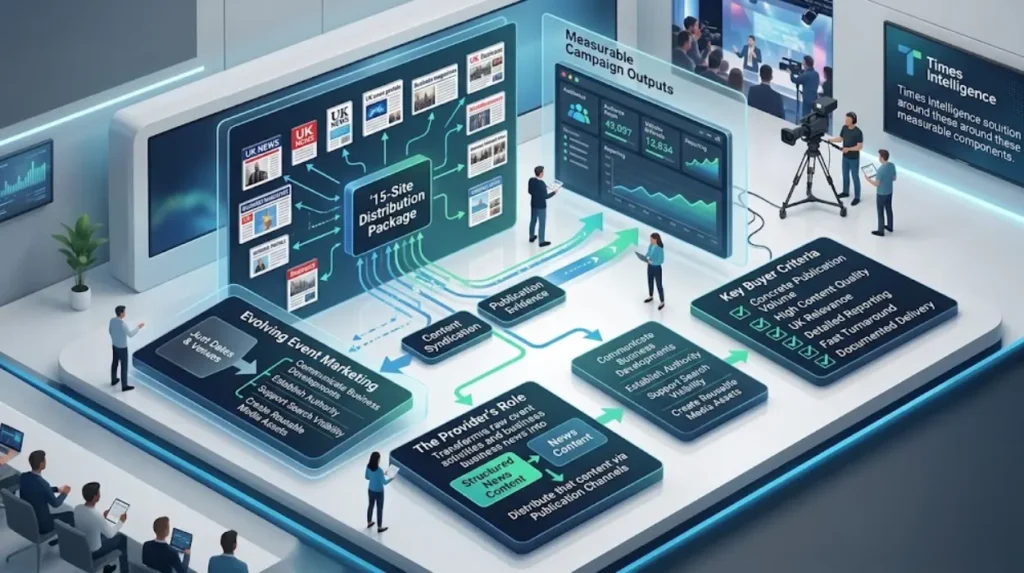
UK brands should expect event coverage to combine editorial content, multi-site distribution, search visibility, publication evidence, and measurable campaign outputs. A defined 15-site package provides a clear framework for assessing coverage providers and campaign value.
Event marketing has moved beyond announcing dates and venues. Organisations now use events to communicate business developments, establish authority, support search visibility, and create reusable media assets.
The provider’s role is to convert those developments into structured news content and distribute that content through relevant publication channels.
Explore More Expert Insights:
Expo News Coverage Services Across 15 UK Sites
Glasgow Event Coverage Across 15 UK News Websites
For buyers, the most important criteria remain concrete: publication volume, content quality, UK relevance, reporting, turnaround, and documented delivery.
Times Intelligence positions its event coverage around these measurable components. That makes the service relevant for UK brands comparing event coverage providers in 2026 and looking for a defined route from event activity to published media coverage.



