
A digital press kit is a structured collection of brand assets, company information, product details, and media resources that helps journalists create accurate stories quickly. For e-commerce businesses in the United Kingdom, a well-built press kit improves communication with lifestyle editors, supports consistent brand messaging, and increases the efficiency of media outreach.
What is an e-commerce digital press kit?
An e-commerce digital press kit is a central online resource containing verified company information, brand assets, product images, executive profiles, media contacts, and supporting documents. It gives lifestyle editors immediate access to accurate materials, reducing research time and improving editorial efficiency.
A digital press kit replaces scattered email attachments with a single organised destination. Lifestyle editors work under strict publishing deadlines. They prefer brands that provide complete information in one location.
For an e-commerce business, the press kit becomes the official source of media information. Every image, statistic, logo, and product description remains consistent across publications.
What information defines a digital press kit?
A complete digital press kit includes:
- Company overview
- Brand story
- Product catalogue
- High-resolution product photography
- Lifestyle photography
- Company logo files
- Founder biography
- Leadership headshots
- Media contact details
- Recent press coverage
- Fact sheet
- Frequently asked questions
Each document serves a specific editorial purpose.
Why do lifestyle editors expect a complete digital press kit?
Lifestyle editors review hundreds of brand submissions every month. A complete digital press kit provides verified information, publication-ready images, and accurate product details. This allows editors to assess stories quickly and publish content without requesting multiple follow-up materials.
Lifestyle journalism focuses on fashion, beauty, homeware, wellness, food, travel, and consumer products. Editors evaluate products based on quality, originality, seasonal relevance, and audience interest.
A missing image or incomplete product description often delays editorial decisions.
Editors prioritise brands that supply:
- Professional photography
- Clear pricing
- Product availability
- Retail information
- Brand background
A structured press kit supports every requirement.
What sections belong in a high-quality digital press kit?
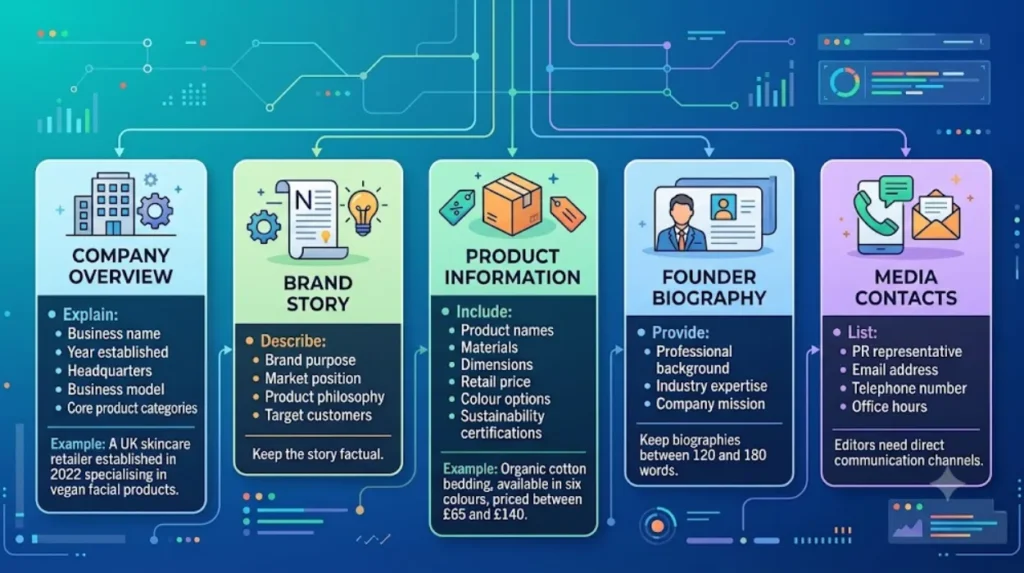
A structured digital press kit contains clearly labelled sections that allow editors to locate information within minutes. Each section performs a specific communication function and supports faster editorial review, product evaluation, and accurate media reporting.
Company overview
Explain:
- Business name
- Year established
- Headquarters
- Business model
- Core product categories
Example:
A UK skincare retailer established in 2022 specialising in vegan facial products.
Brand story
Describe:
- Brand purpose
- Market position
- Product philosophy
- Target customers
Keep the story factual.
Product information
Include:
- Product names
- Materials
- Dimensions
- Retail price
- Colour options
- Sustainability certifications
Example:
Organic cotton bedding, available in six colours, priced between £65 and £140.
Founder biography
Provide:
- Professional background
- Industry expertise
- Company mission
Keep biographies between 120 and 180 words.
Media contacts
List:
- PR representative
- Email address
- Telephone number
- Office hours
Editors need direct communication channels.
How do professional product images improve editorial interest?
Professional product photography allows lifestyle editors to evaluate products immediately. High-resolution images reduce production work, improve visual consistency, and increase the likelihood of inclusion in buying guides, seasonal features, and product recommendation articles.
Photography directly affects editorial usability.
Include:
- White background images
- Lifestyle photography
- Packaging images
- Multiple product angles
- Close-up detail shots
Example categories include:
- Fashion garments
- Kitchen appliances
- Cosmetics
- Furniture
- Pet accessories
Each product benefits from several image styles.
Image specifications:
- Minimum 300 dpi
- JPEG format
- PNG logos
- Landscape and portrait orientation
Editors frequently require both formats.
How should product information be presented?
Product information must remain factual, organised, and easy to reference. Editors require consistent specifications, pricing, availability, and distinguishing features. Standardised formatting improves readability and supports accurate editorial publication across multiple media outlets.
Each product page should contain:
Product summary
Describe the product in one paragraph.
Technical specifications
Include:
- Size
- Weight
- Material
- Colours
- Warranty
Retail information
State:
- Recommended retail price
- Launch date
- Online availability
- Stock status
Key selling points
List factual product features.
Avoid promotional language.
How does a digital press kit support seasonal editorial planning?
Lifestyle publications plan editorial calendars several months before publication. A digital press kit allows editors to identify seasonal products, campaign assets, and launch schedules early, improving planning efficiency and supporting timely product selection for future features.
Lifestyle publications regularly publish:
- Christmas gift guides
- Summer essentials
- Spring home collections
- Back-to-school products
- Mother’s Day features
- Father’s Day recommendations
Each campaign requires updated photography.
Include future launch calendars where appropriate.
Editors value advance visibility.
How can brands organise digital assets for faster media access?
Organised digital assets reduce search time and simplify editorial workflows. Logical folder structures, consistent file names, and downloadable resources help journalists locate approved materials quickly without requesting additional files from the company.
Organise folders using categories.
Example:
- Logos
- Product Images
- Executive Photos
- Press Releases
- Fact Sheets
- Awards
- Brand Guidelines
Use descriptive filenames.
Example:
- organic-cotton-duvet-white.jpg
- founder-headshot-jane-smith.jpg
- logo-black.png
Avoid generic filenames.
What common mistakes reduce the effectiveness of a digital press kit?
Several recurring issues reduce editorial usability. Outdated information, inconsistent branding, missing product specifications, poor-quality photography, and incomplete contact details create unnecessary delays and reduce confidence in the supplied information.
Common mistakes include:
- Low-resolution images
- Expired pricing
- Broken download links
- Missing founder profile
- No company fact sheet
- Inconsistent logos
- Unlabelled photographs
- Multiple versions of the same document
Regular updates prevent these issues.
A quarterly review keeps materials accurate.
How does a digital press kit fit into a wider PR strategy?
A digital press kit supports broader media relations by providing a permanent reference point for journalists. Combined with structured outreach, targeted pitching, and planned campaign activity, it strengthens communication throughout the editorial process without replacing personalised media engagement.
A press kit works alongside:
- Media lists
- Product launch announcements
- Brand collaborations
- Seasonal campaigns
- Influencer partnerships
It supports every stage of media engagement.
Businesses comparing broader awareness strategies can also explore:
The Direct Impact of Brand Awareness on Reducing Customer Acquisition Costs (CAC) to understand how consistent visibility supports long-term customer acquisition efficiency.
As media programmes mature, organisations evaluating professional distribution options can review:
Enterprise Retail PR to compare structured retail PR solutions with generic wire distribution approaches.
How can e-commerce businesses maintain an effective digital press kit?

An effective digital press kit remains current through scheduled updates, accurate product information, refreshed photography, and verified contact details. Regular maintenance ensures editors receive reliable information that reflects the latest products, campaigns, and company developments.
Establish a maintenance schedule.
Review the press kit every three months.
Update immediately after:
- Product launches
- Leadership changes
- Brand refreshes
- Award announcements
- Pricing revisions
- Seasonal collections
Archive outdated assets instead of deleting them immediately.
Maintain version control for downloadable documents.
Monitor download links regularly.
Accurate information strengthens editorial confidence and supports efficient media communication.
Explore More Expert Insights:
Step-by-Step Blueprint: Turning a Standard Product Rollout Into a Major Digital Media Event
The Online Retailer’s Guide to Crafting High-Conversion Pitches for Holiday Gift Guides
A well-structured e-commerce digital press kit gives lifestyle editors immediate access to verified information, professional images, product specifications, and media resources. It simplifies editorial workflows, improves information accuracy, and supports consistent brand representation across publications. By maintaining organised assets, current documentation, and clear contact information, UK e-commerce businesses create a reliable resource that strengthens media relationships and supports effective public relations activity over time.